Pennsylvania's fracking industry plans to continue, whoever wins White House / Photo: Rebecca DROKE - AFP

 Gary, Indiana Blackout Exposes FEMA Relief Disparities Along Racial Lines

 Turkish Energy Minister Highlights Qatar as Key Partner for Regional and Global Energy Security

 London Museum Granted 24/7 License Ahead of November Opening

 Dana White Confirms Flight to Washington for Trump Meeting on Press Secretary Role

 Dengue Fever Expands Into High Himalayas as Climate Change Warms Nepal

 IoT Refrigerator Hacks Disrupt Blood Labs and Supermarkets Across Europe and US
 Post-election pressures complicate US and Israeli decisions on Iran

 UN members approve talks on treaty protocol against environmental crime

 Family-run West Sussex beach café prepares for first winter season

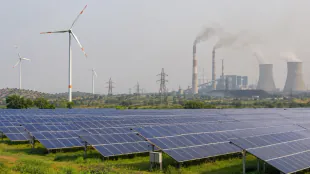
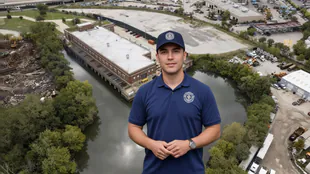
Pennsylvanians working in the controversial fracking industry are confident that the sector will endure, whoever wins the White House in November's presidential election.
With an eye firmly on winning over voters in the gas-rich battleground state, both Republican candidate Donald Trump and his Democratic opponent Kamala Harris are vowing to support the hydraulic fracturing industry.
But Trump's consistently strong support for the practice – and Harris's past opposition to it – have led some voters in the largely rural Republican county of Washington to conclude that the former president would be better.
"I absolutely adore Trump, but I think he's very contentious," said Jennifer McIntyre, a 47-year-old sales and operations representative for Keystone Clearwater Solutions, which provides water transfer services for the fracking industry.
McIntyre, who is active in the local Washington County Republican party, told AFP she thinks the former president is "incredibly pro-oil and gas," and that Democrats at both the state and national level have put up regulations that make it harder for the industry to succeed.
"I think that sometimes those regulations are not necessarily appropriate," said McIntyre, 47, in an interview at the company's offices in the suburban business park of Southpointe, where many fracking businesses are located.
- More gas than Qatar -
Pennsylvania's embrace of new fracking and drilling techniques in the first decade of the 21st century kicked off a boom in natural gas extraction which has pushed the state's annual production higher than Canada or Qatar.
There are currently more than 2,000 active so-called "unconventional" gas wells in Washington County, and close to 13,000 across the state, according to data from Pennsylvania's Department of Environmental Protection.
At Diversified Energy's site in South Franklin Township in southwestern Pennsylvania, seven 10-year-old wells hum quietly as they extract natural gas from the Marcellus Shale thousands of feet below.
The gas is first cleaned, and then sold into a nearby pipeline, generating profits for Diversified, royalties for landowners, and revenues for state and local government.
Together, these seven wells produce more than four million cubic feet of gas per day, on average, (approximately 113,000 cubic meters), Jason John Mounts, the company's director of operations in southern Pennsylvania, told AFP during a tour of the site.
Asked whom he supports in the 2024 presidential election, the 40-year-old, who grew up nearby, said he backs "whoever is going to be driving our business."
"At the end, it'll take care of itself," he said. "Every four years, it always takes care of itself."
Unlike some of the largest players in the fracking sector, Diversified Energy does not do the actual fracking – an expensive and dangerous process in which water, sand, and chemicals are pumped thousands of feet underground at high pressure to create fractures in the bedrock and release the gas trapped inside.
Instead, it buys operating wells from other companies once they are up and running, and then fine-tunes them to increase production.
Diversified expects its existing portfolio of wells across the United States to continue producing gas for the next 50 to 75 years on average, according to the company’s vice president of investor relations, Douglas Kris.
"This is going to be part of our economy here for as long as we need it," he told AFP.
- Environmental concerns -
Scientists, environmentalists, and public health experts around the world have called for fracking to be banned, citing the health and climate impacts of the fracking phase of the extraction process, and the long-term environmental damage caused by the continued burning of fossil fuels.
In response to these concerns, governments across Europe – including France and Germany – have either banned or suspended the process, as have several provinces of Canada, and US states that include New York.
But in Pennsylvania, support for fracking has grown over the past decade, with 48 percent in favor and 44 percent opposed, according to a 2022 poll from the Muhlenberg College Institute of Public Opinion. When asked if fracking was good for the economy, 86 percent said yes.
Across the state, where coal was once the dominant source of energy, fracking supported more than 120,000 jobs in 2022, paying an average of around $97,000, according to a study commissioned by the Marcellus Shale Coalition (MCS), an industry trade group.
"Those jobs are across the spectrum," MCS president David Callahan told AFP in an interview. "Many blue collar jobs. But many white collar jobs as well."
M.O.Allen--AT