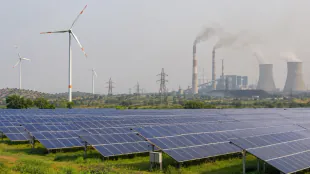
Climate finance talks make little progress before UN summit / Photo: TOFIK BABAYEV - AFP/File

 Gary, Indiana Blackout Exposes FEMA Relief Disparities Along Racial Lines
 Turkish Energy Minister Highlights Qatar as Key Partner for Regional and Global Energy Security

 London Museum Granted 24/7 License Ahead of November Opening
 Dana White Confirms Flight to Washington for Trump Meeting on Press Secretary Role

 Dengue Fever Expands Into High Himalayas as Climate Change Warms Nepal

 IoT Refrigerator Hacks Disrupt Blood Labs and Supermarkets Across Europe and US

 Post-election pressures complicate US and Israeli decisions on Iran

 UN members approve talks on treaty protocol against environmental crime

 Family-run West Sussex beach café prepares for first winter season

International negotiations on money to help developing countries tackle climate change concluded without a breakthrough this week, just two months before Azerbaijan hosts the United Nations climate summit.
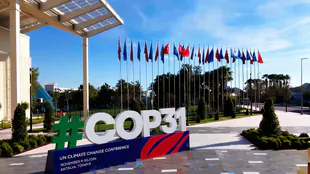
The Azerbaijani chair of the COP29 summit voiced concern after the four-day talks concluded on Thursday, while NGOs accused richer nations of blocking efforts to reach a deal.
The November 11-22 talks in Baku are meant to produce a global agreement on how much wealthy nations should pay to help developing countries transition to renewable energy and cope with the effects of global warming.
"Determination and leadership is needed from all parties to bridge the gaps that still divide us in this critical final phase," said COP29 president Mukhtar Babayev, Azerbaijan's ecology and natural resources minister.
"Everyone now needs to take ownership of finding an agreement. Sticking to set positions and failing to move towards each other will leave too much ground to be covered at COP29," he said.
Wealthy nations have been under pressure to commit to new financing targets that go well beyond the $100 billion a year they committed to provide until 2025.
Developing countries say $1 trillion a year are needed.
Under a landmark 1992 UN climate accord, industrialised nations recognised their historical responsibility for greenhouse gas emissions and laid the groundwork for them to provide financial assistance to the developing world.
But the United States and the European Union nations now want the pool of contributors widened to include oil-rich Gulf states and China, now the world's second biggest economy and top emitter of greenhouse gases.
Gulf states and China reject their call to contribute.
The UN published a draft document in late August setting out seven rough options for a finance deal, laying bare the conflicting positions between nations.
Negotiators from around the world failed at this week's four-day talks in Baku to reconcile their differences.
"There was some progress. But all that could collapse at any moment," said Rebecca Thissen of the Climate Action Network, which includes 1,900 civil society organisations from over 130 countries.
Mariana Paoli, global advocacy lead at Christian aid, said developed countries have yet to put a number on the table.
"It is shameful how developed countries have been undermining these finance negotiations," Paoli said.
Azerbaijan is seeking to hold a meeting of ministers on the sidelines of the UN General Assembly on September 27 in order to bridge differences.
M.Robinson--AT