US statewide bans on plastic bags reduced beach pollution: analysis / Photo: EDUARDO MUNOZ ALVAREZ - GETTY IMAGES NORTH AMERICA/AFP/File

 Gary, Indiana Blackout Exposes FEMA Relief Disparities Along Racial Lines
 Turkish Energy Minister Highlights Qatar as Key Partner for Regional and Global Energy Security

 London Museum Granted 24/7 License Ahead of November Opening

 Dana White Confirms Flight to Washington for Trump Meeting on Press Secretary Role

 Dengue Fever Expands Into High Himalayas as Climate Change Warms Nepal

 IoT Refrigerator Hacks Disrupt Blood Labs and Supermarkets Across Europe and US
 Post-election pressures complicate US and Israeli decisions on Iran
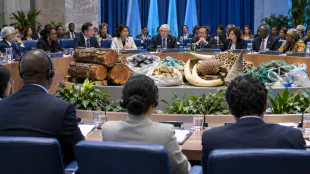 UN members approve talks on treaty protocol against environmental crime

 Family-run West Sussex beach café prepares for first winter season

 CT scans reveal health and burial clues from Egypt’s Braided Lady mummy

 Oxford faces complaints over lecturer’s classroom attire
Statewide bans on plastic bags in the United States have led to significant reductions in the number of bags found on beaches and waterways, according to a scientific analysis published Monday.
The number of grocery bags collected by volunteers for Ocean Conservancy's International Coastal Cleanup (ICC) doubled during the Covid-19 pandemic, a period marked by a surge in plastic bag use and the temporary suspension of bans.
But since 2020, as the percentage of the US population covered by statewide bans has risen from 12 to 25 percent, there has been a 29 percent reduction in the number of bags collected per volunteer from 2022-23 compared to pre-pandemic levels (2013-2019).
California was the first of eleven states to pass a plastic bag ban, effective since 2015.
"Plastic bags are well-known to be one of the most deadly types of plastic pollution in our oceans," Anja Brandon, Ocean Conservancy's director of plastics policy, told AFP.
"We were really excited to see that with the increase in percentage of Americans who are covered by a strong plastic bag ban, we see less plastic bag pollution within our ICC dataset," added Brandon, an environmental engineer who has helped draft state and national legislation on plastic pollution.
The data was drawn from the ICC, an annual international cleanup effort that has run since 1986, as well as other voluntary cleanup efforts recorded in the Clean Swell app or data sheets that contribute to Ocean Conservancy's marine litter database.
Ocean Conservancy applies statistical methods to weigh the citizen-science data, accounting for variations in the volume of information gathered across different locations.
As the largest database of its kind, the ICC data informs scientists, conservationists and policymakers. It has played a key role in shaping two California laws on plastic pollution and Florida's balloon release ban, which passed earlier this year.
Turtles and birds mistake plastic bags as jellyfish and ingest them.
"Once they're ingested, they can bunch up and coil inside the stomach or intestines on an animal," explained Brandon. This can cause blockages and leave them unable to feed, leading to starvation. It can also impact turtles' buoyancy, preventing them from swimming down.
The analysis comes ahead of the next round of UN plastic treaty talks, set to take place in Busan, South Korea, in November.
"Every year, 11 million metric tons of plastic enter our oceans -- that's over a garbage truck of plastic every single minute," said Brandon.
"I think it's a great reminder that systemic challenges of plastic pollution are not going to solve themselves -- we need strong, effective policy interventions, we know what those are, we have the data to support them, we just need more of them."
She encouraged people to participate in the next International Coastal Cleanup slated for September 21, not only to remove trash but to contribute to data collection efforts.
O.Gutierrez--AT