Australia tackles poor Great Barrier Reef water quality / Photo: DAVID GRAY - AFP/File

 South African election results renew debate over identity-based voting

 South African voters report smoother local election but declining IEC trust

 Dolly Parton museum and Nashville hotel open after singer’s death

 George and Amal Clooney attend New York political-comedy reading

 British buyers pay substantial premiums for period-home appearance

 Thomas Markle released to house arrest after child-abuse-image charge

 Dawn of War 4 developers chose Adeptus Mechanicus for tactical variety

 Italy face unbeaten South Africa in Turin Nations Championship match

 ChatGPT interactive interface feature tested across six custom tools
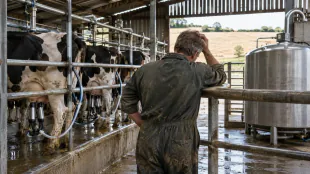 Freshways milk-price cut deepens pressure on UK dairy farms
 Labour and National remain virtually tied as New Zealand vote count advances

 The Good Daughter adapts Karin Slaughter thriller with Rose Byrne and Meghann Fahy

 Heavy-lift drone evacuates wounded Ukrainian soldier from frontline kill zone

 Morrison says West Brom recovered after pressure from successive derby losses

 Britain considers 2027 state visit for Ukraine’s Zelensky

 Survey Finds Majority of Brits Use Polite Language with AI Assistants

Australia on Friday launched a multi-million dollar effort to stop pesticide runoff and other water quality issues on the Great Barrier Reef, the latest effort to save the ailing natural wonder.
Environment Minister Tanya Plibersek unveiled a US$130 million bid to reduce nutrient and pesticide runoff, improve invasive species management, and support better land management across some of the most vulnerable spots along the reef.
Often dubbed the world's largest living structure, the Great Barrier Reef is a 2,300-kilometre (1,400-mile) long expanse, home to a stunning array of biodiversity that includes more than 600 types of coral and 1,625 fish species.
But repeated mass bleaching events -- when extreme heat saps the coral of nutrients and colour -- threaten the reef's fragile ecosystem.
Mass bleaching events along the reef occurred in 1998, 2002, 2016, 2017, 2020, 2022 and now 2024.
Such is the damage to the reef that the UN's cultural organisation UNESCO has weighed labelling the world heritage site "at risk", a move that could put millions of tourist dollars at risk.
Plibersek said the latest funding was vital to stop some of the other problems plaguing the ecosystem and "make sure the beauty and majesty of the Reef can be enjoyed for our kids and grandkids".
"Sediment run-off is one of the biggest threats to the Great Barrier Reef," she said.
"Poor water quality stops coral from regrowing, kills seagrass, and blocks the sunlight needed for a healthy reef."
- Beyond recovery? -
This year's bleaching event has left 81 percent of the reef with extreme or high levels of damage -- one of the most severe and widespread on record, the latest government data shows.
It will take scientists a few more months to determine how much of the reef is beyond recovery.
Coral bleaching occurs when water temperatures rise more than one degree Celsius (1.8 degrees Fahrenheit).
Australian Marine Conservation Society marine ecologist Lissa Schindler welcomed the government's funding boost but said more needed to be done to address the root cause of climate change.
Historically, investment had been spread thin across the reef rather than a targeted approach, she said.
"Water pollution is one of the biggest threats to the reef outside of climate change," she told AFP.
"The reef needs every bit of help it can get."
But Australia, one of the world's largest gas and coal exporters, has only recently set targets to become carbon neutral.
E.Rodriguez--AT