In Colombia, hungry beetle larvae combat trash buildup / Photo: Luis ACOSTA - AFP

 South African election results renew debate over identity-based voting

 South African voters report smoother local election but declining IEC trust

 Dolly Parton museum and Nashville hotel open after singer’s death

 George and Amal Clooney attend New York political-comedy reading
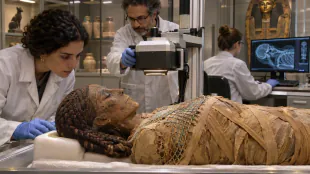
 British buyers pay substantial premiums for period-home appearance

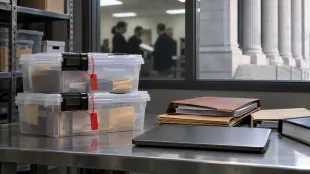 Thomas Markle released to house arrest after child-abuse-image charge

 Dawn of War 4 developers chose Adeptus Mechanicus for tactical variety

 Italy face unbeaten South Africa in Turin Nations Championship match

 ChatGPT interactive interface feature tested across six custom tools

 Freshways milk-price cut deepens pressure on UK dairy farms

 Labour and National remain virtually tied as New Zealand vote count advances

 The Good Daughter adapts Karin Slaughter thriller with Rose Byrne and Meghann Fahy

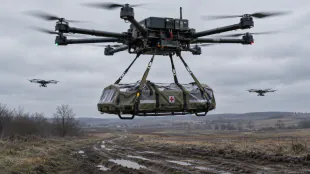 Heavy-lift drone evacuates wounded Ukrainian soldier from frontline kill zone

 Morrison says West Brom recovered after pressure from successive derby losses

 Britain considers 2027 state visit for Ukraine’s Zelensky

 Survey Finds Majority of Brits Use Polite Language with AI Assistants

 Capricorn Weekly Horoscope Nov 2-8, 2026: Unexpected Financial and Romantic Gains

In the far-flung Colombian highlands, beetles are the secret weapon in an innovative project to combat the ever-growing problem of trash buildup.
Here, larvae of the enormous rhinoceros beetle eat through piles of organic garbage that would otherwise end up in polluting landfills.
But that's not all. The larvae poop is gathered and sold as fertilizer, and when the beetles reach adulthood, they are sold as pets to clients as far afield as Japan.
"The beetles have the answer" to rubbish disposal, said environmental and health engineer German Viasus, who runs the project in Colombia's central Boyaca region.
The concept is simple, cheap and, Viasus believes, an example that would be easy to replicate elsewhere in the world.
Each week, his facility in the city of Tunja receives about 15 tons of waste generated by some 40,000 inhabitants of neighboring municipalities.
It is piled up as food for the voracious larvae, which can grow to the length of a human hand.
Other larvae are held in tanks where they consume leachate -- a fluid produced by organic waste decomposition that can be damaging to ecosystems.
- 'Cutting edge' -
Official Colombian estimates are that the South American country produces some 32,000 tons of garbage every day -- more than 2,600 school buses -- about half of it organic.
Worldwide, some 11.2 billion tons of trash are generated each year, according to the UN.
With the landfill in Tunja fast approaching its end date, Viasus's larvae offer an alternative solution to a major headache.
The engineer stumbled on the idea by chance when in 2000, after a similar project using earthworms had failed, he found scarab beetle larvae feasting on the contents of a garbage bag.
The ones he has today are all descendents of those first foundlings.
The larvae live for about four months before starting their metamorphosis and acquiring their characteristic hard shells. The beetles have a lifespan ranging from a few months to about three years.
At this point, Viasus sells them to clients in countries including Germany, Canada, France, the United States and Japan -- where they are a popular pet.
Some find homes in Colombia, where many see them as good luck charms.
To avoid the fees associated with payments in yen, euros and dollars, Viasus teamed up with crypto wiz Carmelo Campos to develop a digital currency called Kmushicoin after the Japanese name for a horned beetle.
Today in Tunja, but also cities such as Bogota and Medellin, a handful of businesses accept the currency as payment.
"The world is so polluted, we are suffocating with this junk," electronics vendor Jefferson Bastidas told AFP in Tunja, saying he joined the initiative to aid the environment and place his business at the "cutting edge of technology."
R.Garcia--AT