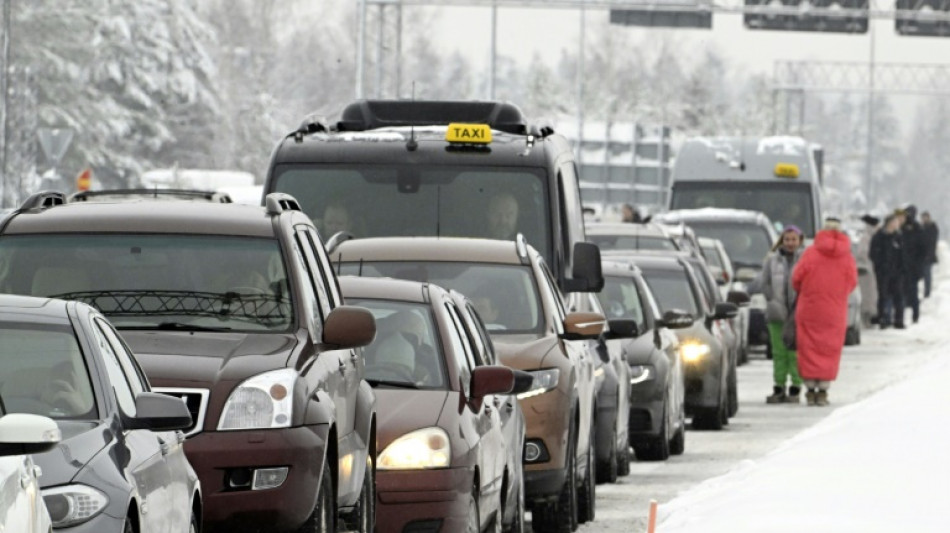
EU election could force sharp turn in electric car policy / Photo: Heikki Saukkomaa - Lehtikuva/AFP

 Indonesia doing 'everything' but still struggling to curb fires
 Once decried as 'human cockfighting', MMA wants Olympic spot

 China's Yu, 13, great for swimming says multiple Olympic medallist
 Putin's party set to retain power after Russia vote hit by cyberattacks, drones

 Germany's Merz under pressure after bruising state election losses

 Messi, Miami frustrated in 2-2 draw with San Diego
 Thousands march in France against 'licence to kill' draft law

 Best Gold IRA Accounts 2026 Rankings Released: Top Precious Metals IRA Companies Compared in New Guide

 Braves clinch division title as Red Sox reach MLB playoffs

 Bordeaux-Begles hammer Stade Francais despite Jalibert injury

 Milan and Juventus end blips with home wins
 Bridgeman wins PGA Biltmore title with sizzling 61

 Williams injured as Bears shut down by Vikings

 US warns of rapid escalation in Middle East war
 Germany's far-right AfD celebrates another state election win
 Russia vows revenge for election-day attacks as poll shows ruling party win

 Spaun late shows snatches PGA Championship win

 Conceicao strikes as Juventus beat Atalanta
 Britain, Zverev-inspired Germany, Spain complete Davis Cup finals
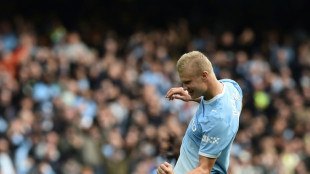
 Man Utd salvage Fulham draw as pressure mounts on Carrick
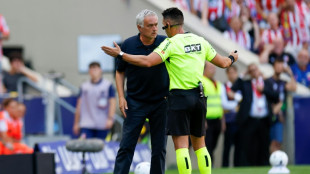
 Spanish civil war drama 'The Black Ball' wins at Toronto festival
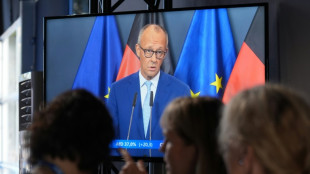 Germany's Merz shaken by far-right and far-left gains in state votes

 Macron welcomes Canada's Carney to French Atlantic territory
 Fiorentina frustrate Napoli with Serie A draw, Como upset

 Five-star Man City top Premier League after Sunderland thriller

A change at the top of European institutions could herald a change in the 2035 target to phase out sales of internal combustion engine cars even though the automotive industry is already well down the road towards transitioning to electric vehicles.
Following lengthy negotiations, EU member states reached a historic agreement in 2022: from January 1, 2035 the only new cars that can be sold in the bloc are those with no tailpipe CO2 emissions.
Thus in slightly more than a decade there will be no more petrol and diesel cars in showrooms with sales limited to battery electric or hydrogen-powered vehicles.
- Right-wing reluctance -
Cancelling the 2035 deadline has become a rallying cry for Europe's right-wing parties.
The European car industry is a major employer and a leader in traditional cars but is far behind Chinese upstarts in developing electric vehicles, particularly at low prices.
The ECR parliamentary group, which includes the Brothers of Italy and Spain's VOX, still denies the need to move to electric vehicles.
"We stand firm in our belief that the internal combustion engine, a testament to the power of European creativity and ingenuity, can remain commercially viable for years to come by embracing cutting-edge technology and investing in ground-breaking research on alternative low-emission fuels," its election manifesto reads.
The other right-wing group in the European Parliament, Identity and Democracy that includes the RN in France and AfD in Germany, has taken aim at expensive electric vehicles hurting consumers, calling the impending ban a discriminatory and socially excluding measure.
The outgoing majority party, the centre-right European People's Party, is divided.
The two German parties in the group, the CDU and CSU, want to scrap the 2035 deadline to continue to benefit from "state-of-the-art German internal combustion engine technology".
That didn't make it into the EPP manifesto because it was the head of their list, outgoing Commission chief Ursula von der Leyen, who negotiated the deadline as part of the EU "Green Deal".
"It would be surprising if the Commission that put into place the Green Deal backtracked on it, but there are risks on its implementation," said Diane Strauss at the NGO Transport & Environment.
- Populists or progressives? -
The automobile industry, which employs 12 million people in Europe, is well on its way in shifting to electric vehicles.
The number of fully electric models available has increased and their share of the market has climbed to around 13 percent at the end of last year, even if growth has flagged slightly.
But the head of the European car lobby group ACEA, Renault CEO Luca de Meo, recently indicated a delay would be welcome.
"I hope the ban will come into force a bit later because I think we won't be able to do it without damaging all of the European auto industry and value chain," he told AFP in February.
Carlos Tavares, the head of Stellantis, acknowledged at the start of this year that Europe's second-largest carmaker was watching the European and US elections closely.
He said the shift to electric vehicles would speed up if "dogmatic progressives" win office but would slow if "populists" carry the elections.
Transport & Environment's Strauss said the success of the 2035 deadline depends on several factors such as a sufficient deployment of charging stations as well as reducing prices, such as via subsidised leasing programmes.
"A parliament very opposed to electromobility could slow the implementation of all the factors necessary for the success of the effort," she said, by reducing subsidies for example.
- Alternatives in 2026? -
A review of the progress towards electrification is already planned for 2026. While this doesn't mean there will be another vote on the 2035 deadline, the review could determine progress is behind schedule and strengthen the hand of those that argue for alternatives, like German Transport Minister Volker Wissing who has called for allowing synthetic fuels.
Synthetic fuels, or e-fuels as they are also known, are currently energy intensive and expensive to produce, but are being pursued as a means to reduce the carbon footprint of the aviation industry.
Yet automakers like Porsche, Stellantis and Renault have looked at them for cars as they could be used in existing motors.
Sceptics point out the difficulties in making e-fuels fully carbon neutral and that they are less efficient than battery electric vehicles.
N.Walker--AT