
-
 Martin wins Austrian MotoGP sprint after Acosta crash
-
Aston Villa compound Tottenham's misery despite late rally

-
 Japan edge Fiji to win Pacific Nations Cup
-
Asian Games offer 'deepest apologies' for South Korea anthem blunder

-
 Black smoke, flames rising near Riyadh airport: residents to AFP
-
Inter Milan and Italy icon Mazzola dies aged 83

-
 UK actor Naomi Watts honoured at Spain film festival
-
Saudi capital issues first air raid alert since renewed fighting in Yemen

-
 Japan emperor declares Asian Games open after turbulent build-up
-
Martin edges title rival Marquez for Austrian MotoGP pole

-
 Asian Games open with unity message after troubled build-up
-
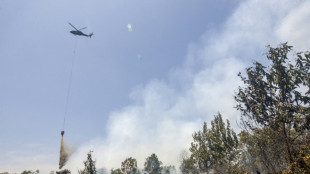
Indonesia accepts Malaysia's help to tackle wildfires
-
 Denmark hails 'binding' Greenland deal with Trump
-
Indians living in Japan on stand-by to house Asian Games athletes

-
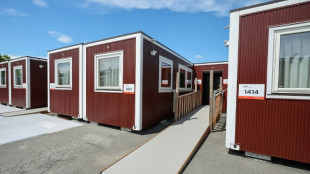 We don't want Games host Japan losing money, says Asian Olympic official
-
Trump signs bill authorizing sweeping Russia sanctions
-
 Ed Sheeran returns to stage after Palestinian controversy
-
Protesters form human chain at Kennedy Center after Trump threat

-
 Asian Games to open in Japan after troubled build-up
-
Death toll from attack at police HQ in Pakistan rises to 31

-
 Drone owners rush to offload devices ahead of Beijing ban
-
Trump says Denmark to give US 'permanent control' over Greenland security

-
 Trump's beef policies irk Texas ranchers, testing their loyalty
-
Batman Appears Atop the Sydney Opera House for Batman Day 2026

-
 Kennedy Center: future unclear for iconic Washington arts hub
-
Nvidia, OpenAI CEOs to attend Xi dinner at White House

-
 Trump claims 'infinite' Greenland security deal with Denmark
-
Anthropic picks Accenture for in-house AI safety evaluation

-
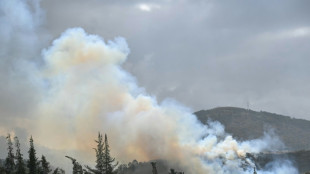 Helicopters battle wildfire threatening Ecuador's capital
-
Balogun returns as Monaco beat Lens to continue strong Ligue 1 start

-
 Brentford batter Chelsea to undo Alonso's promising start
-
'Pause' on overt repression in Venezuela, but reforms still needed: HRW

-
 Kane hits Bundesliga century as Bayern rout Union
-
Global stocks mixed as yen falls despite Bank of Japan rate hike
-
 Trump says CNN, MS NOW, Politico banned from White House
-
Cuba hit with seventh major blackout of the year

-
 Hushing and hedging: US companies retreat on climate
-
Murray out with concussion so Wentz will start for Vikings

-
 Springboks to face Fiji before 2027 Rugby World Cup
-
UN chief 'deeply regrets' US visa refusal to Abbas for annual meeting

-
 Nigeria miners struggled to breathe in cell before 37 died: survivors
-
England quick Carse to face no charges over alleged nightclub assault

-
 McIlroy on the charge at PGA Championship as Reed withdraws
-
Mancini brings nine newcomers into the first squad of his Italy comeback

-
 McIlroy on the charge at PGA Championship
-
Czechs level Davis Cup tie against USA as South Korea eye Finals

-
 Crisis-wracked Volkswagen warns of 10-bn-euro hit to profits
-
New France boss Zidane confirms Mbappe as captain after naming first squad

-
 Costa Rica's Grynspan tops third informal poll for UN chief: diplomat
-
California governor signs order to explore AI 'kill switch'

'Now or never' to avoid climate catastrophe, warns UN
Humanity has less than three years to halt the rise of planet-warming carbon emissions and less than a decade to slash them almost in half, the UN said Monday in a landmark report on stopping global warming and ensuring a "liveable future".
That daunting task is still -- and only just -- possible, but current policies are leading the planet towards catastrophic temperature rises, the UN's Intergovernmental Panel on Climate Change (IPCC) made clear.
The world's nations, they said, are taking our future right to the wire.
The 2,800-page report -- by far the most comprehensive assessment of how to halt global heating ever produced -- documents to "a litany of broken climate promises", said UN chief Antonio Guterres in a blistering judgement of governments and industry.
"Some government and business leaders are saying one thing -- but doing another. Simply put, they are lying. And the results will be catastrophic," Guterres said in a video message released at the same time as the UN report.
In recent months, the IPCC has published the first two instalments in a trilogy of mammoth scientific assessments covering how greenhouse gas emissions are heating the planet and what that means for life on Earth.
This third report outlines what we can do about it.
"We are at a crossroads," said IPCC chief Hoesung Lee. "The decisions we make now can secure a liveable future. We have the tools and know-how required to limit warming."
There are solutions, the report says, but they touch on virtually all aspects of modern life and require significant investment and need "immediate action".
The very first item on the global to-do list is to stop greenhouse gas emissions from rising any further.
That must be done before 2025 to have a hope of keeping within even the less ambitious warming targets of the Paris deal of two degrees Celsius above preindustrial levels.
Scenarios of catastrophic 2.5C of warming also have emissions peaking within three years.
Beyond that, the report said carbon emissions need to drop 43 percent by 2030 and 84 percent by mid-century to meet the more ambitious Paris goal of 1.5C.
"It's now or never, if we want to limit global warming to 1.5C," said Jim Skea, a professor at Imperial College London and co-chair of the working group behind the report.
"Without immediate and deep emissions reductions across all sectors, it will be impossible."
And cutting emissions is no longer enough, the IPCC said. Technologies to suck CO2 out of the atmosphere -- not yet operating to scale -- will need to be ramped up enormously.
- Fossil fuels -
The 1.5C target is presently "beyond reach", even with the most updated global climate pledges, the IPCC said.
To get there the world must radically reduce the fossil fuels behind the lion's share of emissions.
Nations should stop burning coal completely and slash oil and gas use by 60 and 70 percent respectively to keep within the Paris goals, the IPCC said.
It warned that current fossil fuel infrastructure, if used to the end of its expected lifetime without capturing carbon emissions, would make it impossible to limit global warming to 1.5 degrees Celsius above preindustrial levels, the IPCC said.
While government policies, investments and regulations will propel emissions cuts, the IPCC made clear that individuals can also make a big difference.
Cutting back on long-haul flights, switching to plant-based diets, climate-proofing buildings and other ways of cutting the consumption that drives energy demand could reduce greenhouse gas emissions 40 to 70 percent by 2050.
"Rapid and deep changes in demand make it easier for every sector to reduce greenhouse gas emissions," including construction, food consumption and transport, the report said.
With war in Ukraine spurring urgent efforts to transition away from Russian oil and gas in the West, observers said the report should sharpen nations' focus on climate commitments.
Th.Gonzalez--AT



