Nearly entire global population breathing polluted air: WHO

 Martin wins Austrian MotoGP sprint after Acosta crash

 Japan edge Fiji to win Pacific Nations Cup

 Black smoke, flames rising near Riyadh airport: residents to AFP

 UK actor Naomi Watts honoured at Spain film festival

 Japan emperor declares Asian Games open after turbulent build-up

 Asian Games open with unity message after troubled build-up
 Denmark hails 'binding' Greenland deal with Trump

 We don't want Games host Japan losing money, says Asian Olympic official
 Ed Sheeran returns to stage after Palestinian controversy

 Asian Games to open in Japan after troubled build-up
 Drone owners rush to offload devices ahead of Beijing ban

 Trump's beef policies irk Texas ranchers, testing their loyalty

 Kennedy Center: future unclear for iconic Washington arts hub

 Trump claims 'infinite' Greenland security deal with Denmark

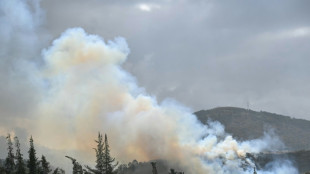 Helicopters battle wildfire threatening Ecuador's capital

 Brentford batter Chelsea to undo Alonso's promising start

 Kane hits Bundesliga century as Bayern rout Union

 Trump says CNN, MS NOW, Politico banned from White House
 Hushing and hedging: US companies retreat on climate

 Springboks to face Fiji before 2027 Rugby World Cup

 Nigeria miners struggled to breathe in cell before 37 died: survivors

 McIlroy on the charge at PGA Championship as Reed withdraws

 McIlroy on the charge at PGA Championship

 Crisis-wracked Volkswagen warns of 10-bn-euro hit to profits

 Costa Rica's Grynspan tops third informal poll for UN chief: diplomat

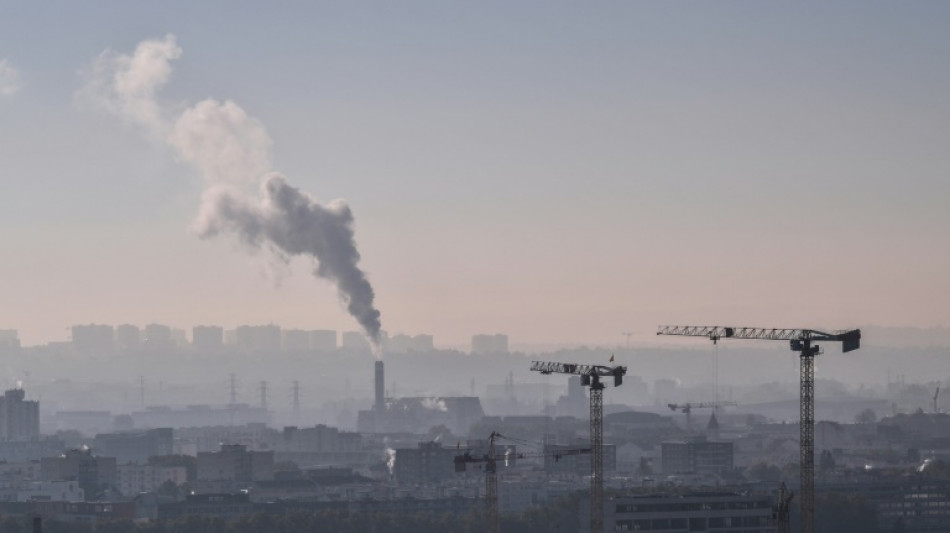
A full 99 percent of people on Earth breathe air containing too many pollutants, the World Health Organization said Monday, blaming poor air quality for millions of deaths each year.
Fresh data from the UN health agency showed that every corner of the globe is dealing with air pollution, although the problem is much worse in poorer countries.
"Almost the entire global population (99 percent) breathes air that exceeds WHO air quality limits, and threatens their health," the agency said in a statement.
In its previous report four years ago, WHO had already found that over 90 percent of the global population was affected, but it has since tightened its limits, it said.
"The evidence base for the harm caused by air pollution has been growing rapidly and points to significant harm caused by even low levels of many air pollutants," WHO said.
While UN data last year indicated that pandemic lockdowns and travel restrictions caused short-lived improvements in air quality, WHO said air pollution remains a towering problem.
"After surviving a pandemic, it is unacceptable to still have seven million preventable deaths and countless preventable lost years of good health due to air pollution," Maria Neira, the head of the WHO's department of public health and environment, said in a statement.
WHO's study provides air quality data from more than 6,000 cities and towns across 117 countries.
The findings were alarming, the organisation said, and highlighted the importance of rapidly curbing fossil fuel use.
- 'Healthier energy systems' -
WHO chief Tedros Adhanom Ghebreyesus stressed that worries over soaring energy prices, due in part to Russia's invasion of Ukraine, should help propel change.
"Current energy concerns highlight the importance of speeding up the transition to cleaner, healthier energy systems," he said in a statement.
"High fossil fuel prices, energy security, and the urgency of addressing the twin health challenges of air pollution and climate change, underscore the pressing need to move faster towards a world that is much less dependent on fossil fuels."
The report provides data on concentrations of dangerous particulate matter with a diameter of between 2.5 and 10 micrometres (PM10), and particles with a diameter of less than 2.5 micrometres (PM2.5).
PM2.5 includes toxins like sulfate and black carbon, which pose the greatest health risks since they can penetrate deep into the lungs or cardiovascular system.
And for the first time, the report also provides ground measurements of annual mean concentrations of nitrogen dioxide (NO2), a common urban pollutant, which is associated with respiratory diseases, particularly asthma.
The report found problems related to particulate pollution were far worse in poorer countries, but that most cities had trouble with nitrogen dioxide.
While the air in 17 percent of cities in high-income countries fell below WHO's air quality guidelines for PM2.5 or PM10, less than one percent of cities in low and middle-income countries complied with the recommended thresholds, the report said.
Out of the around 4,000 cities across 74 countries that collected NO2 data, measurements meanwhile showed only 23 percent of people breathed annual average concentrations of the gas that met levels in WHO's recently updated guidelines.
F.Wilson--AT



