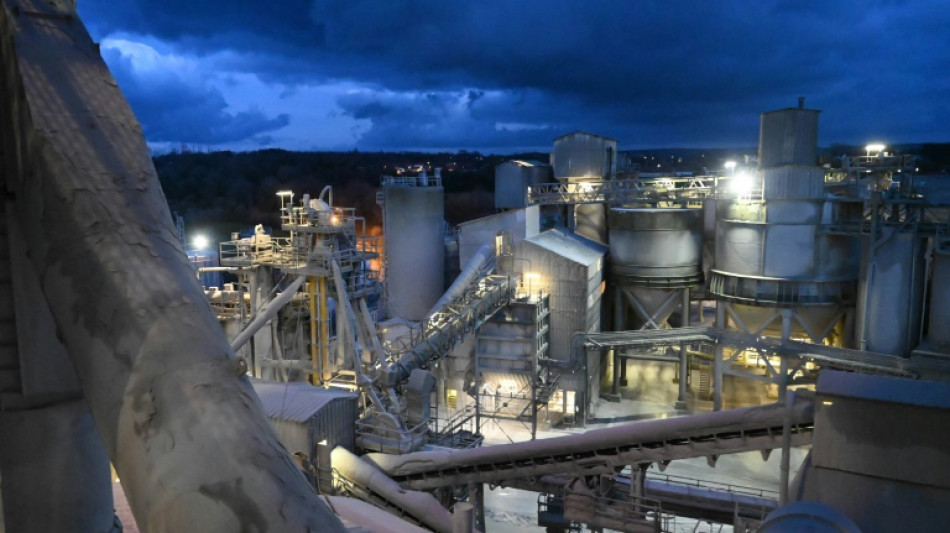
Heavy industry turns to carbon capture to clean up its act / Photo: DENIS CHARLET - AFP

 Liverpool boss Iraola urges Isak to raise his level

 Evenepoel wins record 4th straight world time-trial title
 France's Macron, Canada's Carney announce closer ties
 Carrick defends troubled Man Utd after Fulham escape

 Horror movie 'Resident Evil' tops N. American box office

 Germany's Merz vows to stay course despite new vote losses

 Man City outgun Sunderland despite Brobbey hat-trick, Man Utd rescue Fulham draw

 Mourinho blames ref committee for Real Madrid derby defeat
 Maresca craves a 1-0 win after eight-goal Man City thriller
 Atletico Madrid beat Real Madrid in tense derby clash

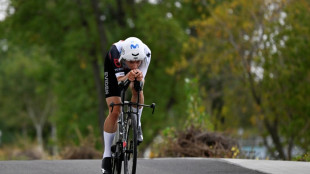 Reusser retains world time-trial title

 Man City outgun Sunderland despite Brobbey hat-trick, Liverpool win at Bournemouth

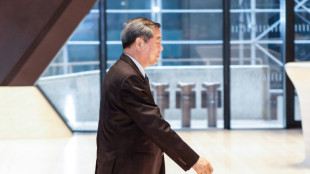 Top US, Chinese economic officials meet ahead of Trump-Xi summit
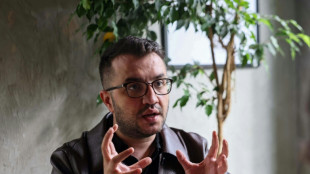 Erdogan's LGBTQ crackdown 'first step of election campaign': activist
 Mass drone barrage on Moscow kills two

 82-year-old dies after beach fight in Greece over sun lounger
 US warns of rapid escalation in Mideast war

 Iran 'put hearts on the court' to win Asian Games basketball bronze

 School girl Yu helps China dominate in Asian Games swimming openers
 Myanmar win first Asian Games teqball gold as Spain great Puyol watches
 China's 13-year-old Yu scorches to first major gold at Asian Games

 Russians vote on last day of parliamentary elections

 Hong Kong pays final respects to former city leader Tung

 Typhoon put people off Asian Games opening ceremony, official says

 China's 13-year-old Yu cruises as Asian Games swimming begins

For decades heavy industry around Dunkirk in northern France has belched out millions of tonnes of climate-heating gases.
Now the area close to the Belgium border -- one of Europe's industrial powerhouses -- wants to catch its pollution before it escapes.
With factories turning out steel, cement and fertilisers, the Dunkirk area produces more carbon dioxide (CO2) than any other industrial region in France.
In Rety, about an hour's drive from the port city, a never-ending stream of lorries brings limestone to a plant run by Belgian giant Lhoist, the world leader in quicklime production.
The limestone is heated to more than 1,000 degrees Celsius (1,830 degrees Fahrenheit) for 24 hours in kilns 50 metres (165 feet) tall to produce the calcium oxide needed by the steel and paper pulp industries.
"We have the capacity to produce 700,000 tonnes of quicklime a year, so we emit about an equivalent amount of CO2," said Yves Boraccino, the manager of the plant in Rety, where nearly every surface is coated in white dust from a nearby quarry.
- Freezing the CO2 -
Two-thirds of that CO2 is belched out of the plant's chimneys during the limestone calcination process.
The remainder comes from the fossil fuels used to fire up the kilns.
In 2025, the site hopes to start equipping itself with a new mini-factory to capture the CO2.
Carbon capture and storage will be pushed hard by industry at the UN COP28 climate talks in November as a way to slow the rise in the planet's average temperature to around 1.5 degrees Celsius.
But there are still big questions over technologies that are in their infancy, and the world does not have much time.
The International Energy Agency (IEA) says that even if it works, carbon capture would have to be scaled up 100,000-fold by 2050 to hit net-zero targets.
Lhoist has turned to industrial gas giant Air Liquide for help to capture carbon emissions from its Rety plant.
They have developed a technology called CryoCap which will capture the gases and cool them down to -50C (-58F) when CO2 turns to liquid, said Nicolas Droin of Air Liquide.
The CO2 will then be separated off and piped to a terminal in Dunkirk that will hold 1.5 million tonnes of the gas when it opens in 2028.
- 'Industrial revolution' -
The Lhoist site in Rety is not the only one in the area aiming to clean up its act.
A few kilometres away, a cement plant owned by Eqiom is also planning to sequester its carbon pollution and send it to Dunkirk.
"From there, it could be taken by ship to deep geological storage sites in the North Sea," Boraccino said.
The whole project -- estimated to cost 530 million euros ($560 million), much of it with European Union funds -- could, in the medium term, store up to four million tonnes of CO2 per year, according to Air Liquide and its partner, Dunkerque LNG.
That would enable steel giant ArcelorMittal, which is testing a different carbon capture procedure, to connect up to the terminal at some point in the future.
Patrice Vergriete, head of the urban Dunkirk authority, said the region is transforming itself through this low-carbon "industrial revolution".
Carbon capture projects almost tripled globally in 2021 and have almost doubled again since then, according to the IEA.
But in a report in July it also warned against relying on technologies that are "expensive and unproven at scale". So far, it said, only five percent of capture projects have got the green light from investors.
Instead the IEA insisted that the best solution is to reduce the amount of CO2 being generated in the first place.
O.Gutierrez--AT



