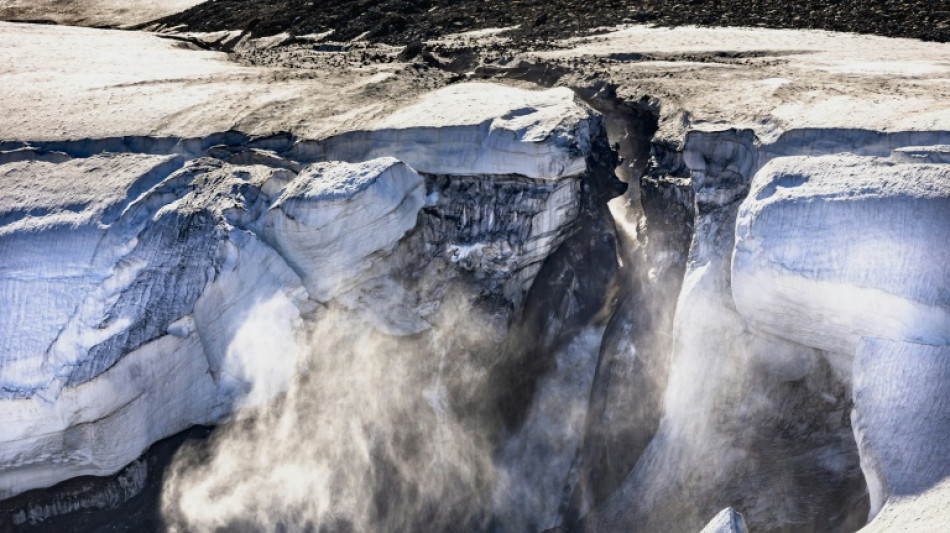
Reversing warming may stop Greenland ice sheet collapse: study / Photo: Kerem Yücel - AFP

 Germany's Merz vows to stay course despite new vote losses

 Man City outgun Sunderland despite Brobbey hat-trick, Man Utd rescue Fulham draw

 Mourinho blames ref committee for Real Madrid derby defeat

 Maresca craves a 1-0 win after eight-goal Man City thriller

 Atletico Madrid beat Real Madrid in tense derby clash

 Reusser retains world time-trial title

 Man City outgun Sunderland despite Brobbey hat-trick, Liverpool win at Bournemouth

 Top US, Chinese economic officials meet ahead of Trump-Xi summit
 Erdogan's LGBTQ crackdown 'first step of election campaign': activist

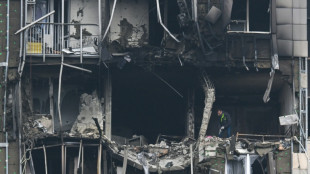 Mass drone barrage on Moscow kills two

 82-year-old dies after beach fight in Greece over sun lounger

 US warns of rapid escalation in Mideast war

 Iran 'put hearts on the court' to win Asian Games basketball bronze

 School girl Yu helps China dominate in Asian Games swimming openers

 Myanmar win first Asian Games teqball gold as Spain great Puyol watches

 China's 13-year-old Yu scorches to first major gold at Asian Games

 Russians vote on last day of parliamentary elections

 Hong Kong pays final respects to former city leader Tung

 Typhoon put people off Asian Games opening ceremony, official says

 China's 13-year-old Yu cruises as Asian Games swimming begins

 AI 'warning shots' focus Beijing on national security risks

 Philippine tribe in limbo over US-led tech hub

 Leo XIV, first US pope transcends his restrained style

 Singer Ed Sheeran says Gaza situation 'unjustifiable' following controversy

 In 'Tenzing', a Sherpa mountaineer gets his due

Breaching the global warming limits of the world's climate goals could see the melting of Greenland's ice sheet add more than a metre to rising sea levels, according to new research on Wednesday.
But the study by an international team of researchers found there would still be hope to prevent a collapse of the ice sheet -- if warming is reversed and brought back to the safer level.
The melting of Greenland's vast ice sheet -- the world's second-largest after Antarctica -- is estimated to have contributed more than 20 percent to observed sea level rise since 2002.
Rising sea levels threaten to intensify flooding in coastal and island communities that are home hundreds of millions of people, and could eventually submerge whole island nations and seafront cities.
A study published in the journal Nature on Wednesday used two models to simulate how Greenland's ice sheet would respond to future temperature increases over timescales ranging from hundreds to thousands of years.
Researchers suggested abrupt ice sheet losses would be triggered if global average temperatures reached a range of 1.7C-2.3C above pre-industrial levels.
That would risk a permanent "tipping point" that would see near-complete melting of the Greenland ice sheet over hundreds or thousands of years and could lift oceans by seven metres (23 feet), redrawing the world map.
But if the temperature increases were rolled back to the Paris deal 1.5C limit quickly enough -- by removing planet-heating pollution from the atmosphere using vast reforestation or technologies to capture carbon and permanently store it -- then the worst could be avoided.
"We found that the ice sheet reacts so slowly to human-made warming that reversing the current warming trend by cutting greenhouse gas emissions within centuries may prevent it from tipping," said study co-author Niklas Boers from the Potsdam Institute for Climate Impact Research.
"Yet, also just temporarily overshooting the temperature thresholds can still lead to a peak in sea level rise of more than a metre in our simulations."
- Tipping points breached -
Other tipping points in the Earth system may be breached far sooner, the researchers said, including rainforests and ocean current systems that change in much shorter timeframes.
"The Greenland ice sheet is likely more resistant to short-term warming" than previously thought, said Nils Bochow, a researcher at the Arctic University of Norway and lead author of the study.
But the researchers stressed that returning temperatures to below the "safe" threshold for the Greenland ice sheet would be far harder than keeping them below the limit in the first place.
World leaders will gather in Dubai from November 30 for crunch UN talks on slashing planet-warming greenhouse gas emissions, adapting to and financially bracing for the impacts of climate change.
Technologies to reduce temperatures on such a vast scale may not exist, Bochow told AFP.
"We should try everything today to keep the temperatures in a safe range rather than betting that we can reduce them later," he said.
A.Anderson--AT