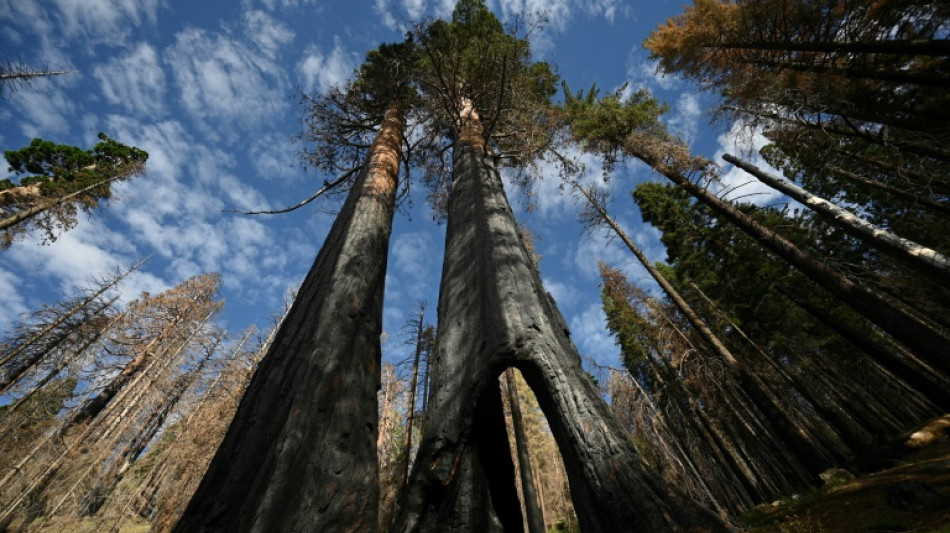
Helping or hindering? US scientists debate how to save giant sequoias / Photo: Robyn Beck - AFP

 Reusser retains world time-trial title

 Man City outgun Sunderland despite Brobbey hat-trick, Liverpool win at Bournemouth

 Top US, Chinese economic officials meet ahead of Trump-Xi summit
 Erdogan's LGBTQ crackdown 'first step of election campaign': activist

 Mass drone barrage on Moscow kills two

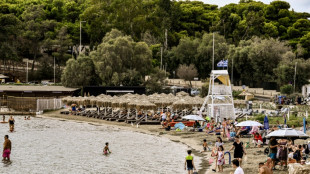 82-year-old dies after beach fight in Greece over sun lounger

 US warns of rapid escalation in Mideast war

 Iran 'put hearts on the court' to win Asian Games basketball bronze

 School girl Yu helps China dominate in Asian Games swimming openers

 Myanmar win first Asian Games teqball gold as Spain great Puyol watches

 China's 13-year-old Yu scorches to first major gold at Asian Games

 Russians vote on last day of parliamentary elections

 Hong Kong pays final respects to former city leader Tung

 Typhoon put people off Asian Games opening ceremony, official says
 China's 13-year-old Yu cruises as Asian Games swimming begins

 AI 'warning shots' focus Beijing on national security risks

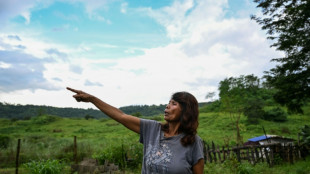 Philippine tribe in limbo over US-led tech hub

 Leo XIV, first US pope transcends his restrained style

 Singer Ed Sheeran says Gaza situation 'unjustifiable' following controversy

 In 'Tenzing', a Sherpa mountaineer gets his due

 Gridko's New Live Drive PTO Roll-Off Trailer Wins the Heavy-Duty TRAILmakER Award 2026 at NATDA Awards

 Chile's Bachelet quits race to be next UN chief

 Raphinha treble fires perfect Barca to win at Sevilla

 Thiam makes winning heptathlon return at Decastar meet

 Czechs beat USA to qualify for Davis Cup finals

When ferocious wildfires tore through California's prized giant sequoia forests, they killed towering trees that have lived there for thousands of years -- and perhaps changed the nature of the groves forever.
Now the US National Park Service (NPS) wants to give Mother Nature a helping hand, planting lab-grown seedlings it says will kick-start the return of these magnificent stands.
"The goal is to reestablish enough sequoias in the first few years after fire so that we have trees 60, 100, 400 years from now," says Christy Brigham, chief of resources management and science at Sequoia and Kings Canyon National Parks.
Giant sequoias are truly impressive -- so disproportionately huge they look like holdouts from the age of the dinosaurs.
The biggest rise taller than 300 feet (90 meters) with trunks almost 30 feet in diameter; the oldest sprouted more than 3,200 years ago.
Once widespread, they are now only found in a narrow range in California.
- Climate change and fire suppression -
"When you see a sequoia, they're these huge, quirky, broken old things, and you recognize them as an individual that's lived a really long time," Brigham told AFP in the heart of California's Redwood Mountain Grove.
"That helps us think about long timescales when we're thinking about our actions, things like climate change and forest management."
It's these two issues that have combined to bring the sequoias to their current pass.
Decades of well-intentioned fire-suppression policies have left many sequoia groves stuffed with unburned smaller trees and shrubs.
When human-caused climate change supercharged a drought last decade, this greenery dried out, becoming a tinderbox ready to explode.
Giant sequoia need fire to reproduce -- the flames clear and nourish the soil, making it ready to receive the seeds the heat has prised out of their cones.
But, the NPS says, the fires of 2020 and 2021 were just too much, killing as many as 14,000 adult trees -- up to a fifth of all the specimens on the planet.
- Dead, blackened spires -
"What we saw in those groves is that the fire just roared in there," says Brigham. "It got into the canopy of the sequoias, and torched these trees that are 200 feet tall, which we've never seen before."
Instead of the thriving scenes of rebirth they had hoped for, forest managers who ventured into the groves found mostly dead, blackened spires.
"We saw very few cones and we saw almost no seedlings, which is unheard of," says Brigham.
The situation is so bad in six groves in Kings Canyon and Sequoia National Parks that there aren't enough living trees or viable seedlings to keep the population going, the NPS says.
They fear that without help, these spaces could be taken over by shrubs and faster-growing pines and oaks.
The plan, which Brigham and her colleagues hope will be given the green light in October, is to plant hundreds of cultivated seedlings per acre (hectare).
Work crews will be trekking in on mules or using helicopters to drop off supplies, in a $4.4 million project that envisages several years of planting and decades of monitoring.
Andrew Bishop, a restoration ecologist at the NPS, says two or three years on from the fires there are some self-seeded plants, but nowhere near enough.
"The critical concern is, we are standing in the middle of a 400-acre block of high severity fire, and we have no living reproductive giant sequoias.
"When there are future fires, there's not a chance, there's no insurance policy.
"These groves are not going to recover without restoration."
- 'Serious risks' -
Not everyone agrees.
"These groves do not need to be planted, and there are serious downsides and risks to planting," says Chad Hanson, a research ecologist and the director of the John Muir Project, an environmental campaign group.
Hanson and his team of researchers say the NPS has undercounted the number of natural seedlings, in some cases by thousands per acre.
"There are so many sequoia seedlings in these high intensity fire patches that it's hard to walk," he said.
Sending in large teams of workers and mules would likely result in crushing the self-seeded plants.
"They're probably going to kill a lot more than they even plan to plant."
Nursery-grown seedlings also bring with them the risk of root pathogens the groves have never seen before, says Hanson, which could compromise the health of reproductive adult trees.
And if the replanting program doesn't work the way the NPS envisages, Hanson fears authorities will propose ever-more aggressive interventions.
"That may include what they call thinning -- which in most cases is a euphemism for some type of logging -- and spraying herbicides and then planting again," he said.
None of which should be happening in a wilderness, where the most complete and fully functioning ecosystems are found.
"When humans intervene, we are rarely very helpful, even when we say we're going to be helpful," he said.
But for Brigham, at the NPS, the idea that this wilderness is untouched is itself fallacious.
Fire suppression over the last few decades left fuel that shouldn't be there, and human activity is making the planet hotter, altering the forest's ecosystem.
"Those two things together mean that we've already affected this wilderness area," she says.
"It's not nature doing its own thing without people, and it's had a result here that if we do not intervene, we will lose portions of this forest."
N.Walker--AT



