Melting glaciers, fast-disappering gauge of climate change

 Martin wins Austrian MotoGP sprint after Acosta crash

 Japan edge Fiji to win Pacific Nations Cup

 Black smoke, flames rising near Riyadh airport: residents to AFP

 UK actor Naomi Watts honoured at Spain film festival
 Japan emperor declares Asian Games open after turbulent build-up

 Asian Games open with unity message after troubled build-up
 Denmark hails 'binding' Greenland deal with Trump

 We don't want Games host Japan losing money, says Asian Olympic official
 Ed Sheeran returns to stage after Palestinian controversy

 Asian Games to open in Japan after troubled build-up
 Drone owners rush to offload devices ahead of Beijing ban

 Trump's beef policies irk Texas ranchers, testing their loyalty

 Kennedy Center: future unclear for iconic Washington arts hub

 Trump claims 'infinite' Greenland security deal with Denmark

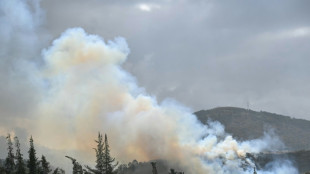 Helicopters battle wildfire threatening Ecuador's capital

 Brentford batter Chelsea to undo Alonso's promising start

 Kane hits Bundesliga century as Bayern rout Union
 Trump says CNN, MS NOW, Politico banned from White House
 Hushing and hedging: US companies retreat on climate

 Springboks to face Fiji before 2027 Rugby World Cup

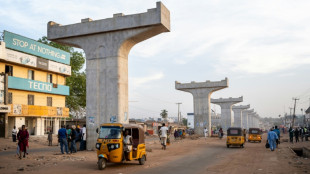 Nigeria miners struggled to breathe in cell before 37 died: survivors

 McIlroy on the charge at PGA Championship as Reed withdraws

 McIlroy on the charge at PGA Championship

 Crisis-wracked Volkswagen warns of 10-bn-euro hit to profits

 Costa Rica's Grynspan tops third informal poll for UN chief: diplomat

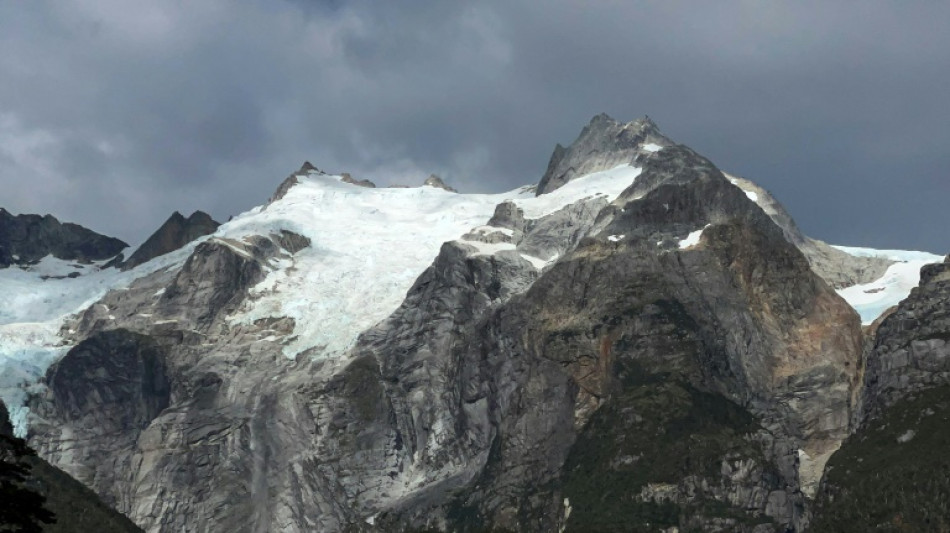
A crack widens in the San Rafael glacier in Chile's extreme south, and a ten-storey iceberg crashes into the lake by the same name -- a dramatic reminder of the impacts of global warming.
In the lake San Rafael, about 100 icebergs float today, pieces broken off from the glacier that 150 years ago stretched out over two-thirds of the body of water now free of ice cover.
The San Rafael glacier is one of 39 in the Northern Patagonian Ice Field (3,500 square kilometers or 1,350 square miles), which with the Southern Patagonian Ice Field (11,000 km2) in Chile's Aysen region forms one of the world's biggest ice masses.
According to the European Space Agency satellite images show San Rafael to be one of the world's most actively calving glaciers and the fastest-moving in Patagonia, "flowing" at a speed of about 7.6 kilometers (4.7 miles) per year -- "receding dramatically under the influence of global warming."
Glaciers are bodies of slowly-moving ice on land that can be several hundred or several thousand years old.
Seasonal glacier melt is a natural phenomenon that with global warming has accelerated "significantly," Jorge O'Kuinghttons, a regional head of glaciology at Chile's water directorate, told AFP.
- 'Excellent indicator' -
At the moment, Patagonia's glaciers are retreating faster than anywhere else in the world.
"Glaciers are an excellent indicator of climate change," said Alexis Segovia, another government glaciologist who works in the remote region of southern Chile.
All but two of Chile's 26,000 glaciers are shrinking, he said, due to rising temperatures caused by manmade greenhouse gas emissions.
It is a vicious cycle.
Ice-covered surfaces of Earth reflect excess heat back into space, and if these are reduced through melting, temperatures rise even more.
Melting glaciers also add to sea level rise, which increases coastal erosion and elevated storm surges.
And water dammed by glaciers can be released by a sudden collapse.
"Areas are being flooded these days that were never flooded before," said O'Kuinghttons.
To learn more about what to expect in the future, glaciologists study the evolution of Chile's glaciers, which contain a frozen record of how the climate has changed over time.
According to the WWF, more than a third of the world's remaining glaciers will melt before 2100 even if mankind manages to curb emissions from the burning of fossil fuels.
- The heat is 'strong' -
East of San Rafael, on the lake General Carrera that is shared by Chile and Argentina, small-scale sheep and cattle farmer Santos Catalan has been living on the forefront of the change.
To augment his income, he criss-crosses the lake in a wooden boat with glacier-watching tourists.
Over the last 15 to 20 years, he told AFP, the landscape has become a lot less white as the ice has melted and snow dwindled.
"Things have changed a lot," he said. "The heat is very strong."
E.Flores--AT



