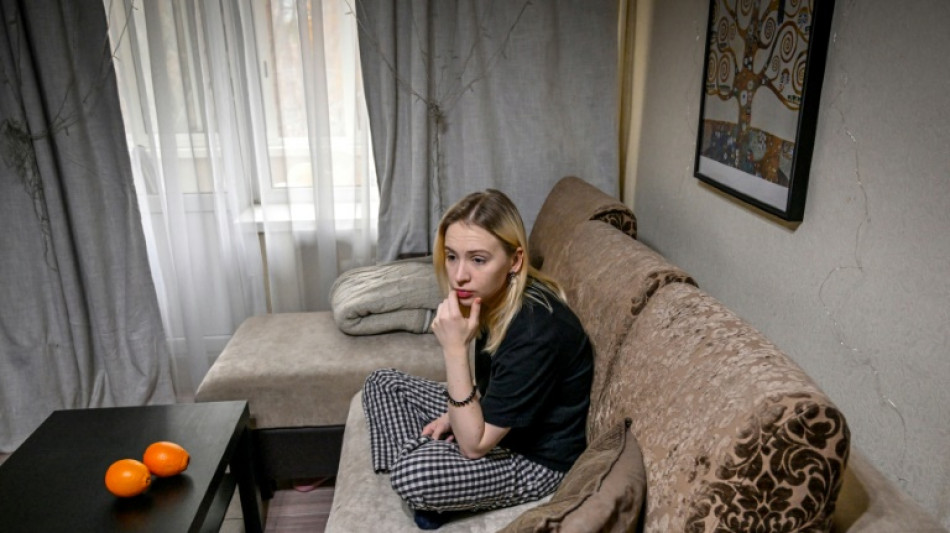
'Worried about the future': Russians despair in uncertain times / Photo: Yuri KADOBNOV - AFP

 Dangote to launch $16bn refinery in Kenya
 North Korean leader 'extremely obese': Seoul spy agency
 Yankees and pope-backed White Sox start MLB playoffs with wins

 Malaysia's ex-PM Mahathir in hospital for observation
 'No limits': Marathon world record holder Sawe chasing history
 Countdown begins to biggest-ever Rugby World Cup

 Bangladesh women lose ground after quota reform
 Vietnam admits 'differing opinions' on Hanoi development
 Stocks temper gains as oil pares heavy losses, US data in focus
 New Zealand denies breaching climate commitments to EU
 Albert becomes youngest US scorer in 4-2 win over Chile
 Pirate island's plunging population shows Greece's demographic decline
 With elections ahead, Latvia's Russian-speakers reject Moscow's help
 Brazil football clubs face massive sponsorship blow from betting ban
 ChatGPT maker wants to be the App Store for AI as safety concerns grow

 Women fight fires and sexism in Indonesian Borneo

 Forsling's OT blast lifts Florida over Carolina in NHL opener

 Alpha Growth Management Opens Rep Office in Japan

 NBA close to picking new $12-13bn Vegas team owners: report

 LA28 Olympics torch relay to visit all 50 states
 Spain brush aside Croatia in Nations League, England down Czechs
 Trump hails 'morally binding' AI self-regulation pledge
 Yamal inspires Spain to Croatia romp on World Cup homecoming

 UN to hold fourth informal poll of secretary-general candidates
 Who are the Emiratis behind crisis-hit Manchester City?
When President Vladimir Putin announced in February that Russian forces were entering Ukraine, a wave of shock washed over 22-year-old student Vasilina Kotova that turned quickly to despair and then depression.
"I didn't leave my house for two months," Kotova, a computer science student, told AFP.
"I had no energy anymore to do anything. It wasn't even so much the energy but the desire to do anything, like there wasn't any point," she said.
Eight months into the stagnating conflict, fighting in Ukraine has brought with it threats of nuclear weapons, sanctions that have isolated Russians and a conscription drive that has sent thousands fleeing the country.
Kotova is just one among a rising tide of Russians who have grown more anxious and depressed with the conflict grinding on, with its shockwaves being felt back home and the future uncertain.
The result, professionals in the industry say, is a creeping mental health crisis that is spurring shortages of anti-depressants and soaring demand for psychological support.
At first, Kotova admitted, she thought that the hundreds of thousands of Russians who rushed to flee after the conflict began were "fools" and that the Kremlin's "special military operation" would not touch her personally.
But then Putin began drafting hundreds of thousands of men into the Russian army in September and Kotova began to worry her father or brother could be sent to the front.
And when Moscow began to sound the alarm -- without providing evidence -- that Ukraine was preparing to use a so-called dirty bomb, her mother's concern grew.
"And then you start thinking: 'what if I'm the real fool?' and your anxiety just gets worse and worse," said Kotova.
- Rush for medication -
After Putin announced the mobilisation drive, a record number of Russians -- nearly 70 percent -- reported feeling "anxious", the Kremlin-friendly pollster FOM said.
The independent Levada Centre one month later found that nearly 90 percent of Russians were "worried" by the conflict.
The pollster said 57 percent backed talks with Kyiv -- up nine percentage points from the previous month -- suggesting growing support for a speedy resolution.
Around Kotova, that concern is beginning to show.
Last month, after Putin said the world was facing "perhaps the most dangerous and unpredictable decade" since World War II, local media reported that some residents of her neighbourhood had begun building a bomb shelter in a nearby underground parking.
Others, including Kotova, are turning to more conventional coping aid: medication. And she said the measure has had a positive impact.
In the first nine months of the year, spending on drugs to cope with depression jumped 70 percent year-on-year, official figures show.
And the YouTalk psychological consultation service has seen "the number of online requests increase by 40 percent since the mobilization", its co-founder Anna Krymskaya told AFP.
Clients concerned about depression have grown by 50 percent in that time, she said.
- 'Everyone is worried' -
The growing sense of doom is being felt across Russia's political divide.
Ilya Kaznacheyev says he was "happy and proud" when Putin launched Moscow's "special military operation" in Ukraine.
But the 37-year-old has been in a state of "permanent anxiety" since March after Russian troops failed to capture the Ukrainian capital Kyiv.
"What's worse than a war launched? A war lost!" the bearded man told AFP in a Moscow bookstore.
Kaznacheyev said he was considering taking anti-depressants and was worried about shortages of imported drugs due to Western sanctions.
Zoloft, one of the most commonly prescribed medications, has already disappeared from pharmacies in the Russian capital.
"A lot of people rushed to stock up," neurologist Oleg Levin told AFP.
"And they did the right thing."
Irrespective of their stance on Ukraine, "everyone is worried about the future," Levin added.
He said the number of his patients taking depression medication had increased by a quarter since February.
As the conflict drags on, psychologists are worried about its long-term mental health impact on Russians.
Amina Nazaraliyeva, a therapist at the private Moscow clinic, Mental Health Centre, said she worried that some returning troops would "inevitably suffer from post-traumatic stress disorder and alcoholism".
She pointed to a spike in "pro-violence rhetoric" and said Russia would be dealing with the consequences "for a long time".
"The whole country will process this trauma," she said.
W.Moreno--AT