Monkeypox mostly spreads before symptoms appear, study suggests / Photo: Ernesto BENAVIDES - AFP/File

 Dangote to launch $16bn refinery in Kenya

 North Korean leader 'extremely obese': Seoul spy agency

 Yankees and pope-backed White Sox start MLB playoffs with wins

 Malaysia's ex-PM Mahathir in hospital for observation

 'No limits': Marathon world record holder Sawe chasing history

 Countdown begins to biggest-ever Rugby World Cup

 Bangladesh women lose ground after quota reform
 Vietnam admits 'differing opinions' on Hanoi development

 Stocks temper gains as oil pares heavy losses, US data in focus
 New Zealand denies breaching climate commitments to EU

 Albert becomes youngest US scorer in 4-2 win over Chile

 Pirate island's plunging population shows Greece's demographic decline
 With elections ahead, Latvia's Russian-speakers reject Moscow's help
 Brazil football clubs face massive sponsorship blow from betting ban
 ChatGPT maker wants to be the App Store for AI as safety concerns grow

 Women fight fires and sexism in Indonesian Borneo

 Forsling's OT blast lifts Florida over Carolina in NHL opener

 Alpha Growth Management Opens Rep Office in Japan

 NBA close to picking new $12-13bn Vegas team owners: report

 LA28 Olympics torch relay to visit all 50 states
 Spain brush aside Croatia in Nations League, England down Czechs

 Trump hails 'morally binding' AI self-regulation pledge

 Yamal inspires Spain to Croatia romp on World Cup homecoming

 UN to hold fourth informal poll of secretary-general candidates
 Who are the Emiratis behind crisis-hit Manchester City?

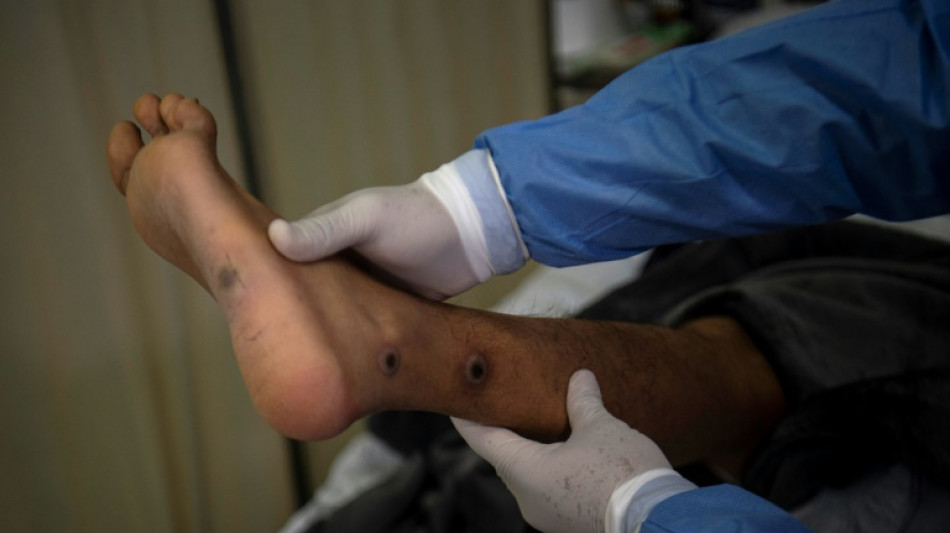
People with monkeypox can spread the virus up to four days before symptoms appear, with more than half of transmissions potentially taking place during this period, a UK study estimated Tuesday.
While the findings have yet to be confirmed, they suggest that many monkeypox infections cannot be prevented by asking patients to isolate once they realise they have the virus, the study said.
Since May, when the virus suddenly started spreading beyond the West African countries where it has long been endemic, monkeypox has killed 36 people out of more than 77,000 cases, according to the World Health Organization.
However case numbers have steadily fallen since peaking in July, particularly in Europe and North America, the hardest hit areas in the early stages of the global outbreak.
The new study published in the journal BMJ was carried out in Britain, the first nation to detect a cluster of cases outside of Africa in May.
Researchers from the UK Health Security Agency looked at contract tracing data and questionnaires for 2,746 people who tested positive for monkeypox in the country between May and August.
Some 95 percent of the participants were men who have sex with men, a community that has been overwhelmingly affected by the global outbreak.
Analysing the data using two different statistical models, the researchers found that it took an average of nearly eight days for symptoms to appear after a patient was exposed.
That period was more commonly longer than the time between when the first patient and their contact case showed symptoms, which is called the serial interval.
"The median serial interval was estimated to be shorter than the incubation period, which indicates considerably greater pre-symptomatic transmission than previously thought," the study said.
Fifty-three percent of the cases were transmitted before the person had any monkeypox symptoms, the study estimated.
Transmission was detected a maximum of four days before symptoms set in, it added.
Monkeypox symptoms include fever, muscular aches and large boil-like skin lesions.
Boghuma Kabisen Titanji, a virus expert at Emory University in the United States who was not involved in the study, said the "robust analysis" was "interesting and convincing".
"This needs confirmation by more studies but has implications for vaccination-based disease elimination strategies which should be seriously considered," she said.
M.White--AT