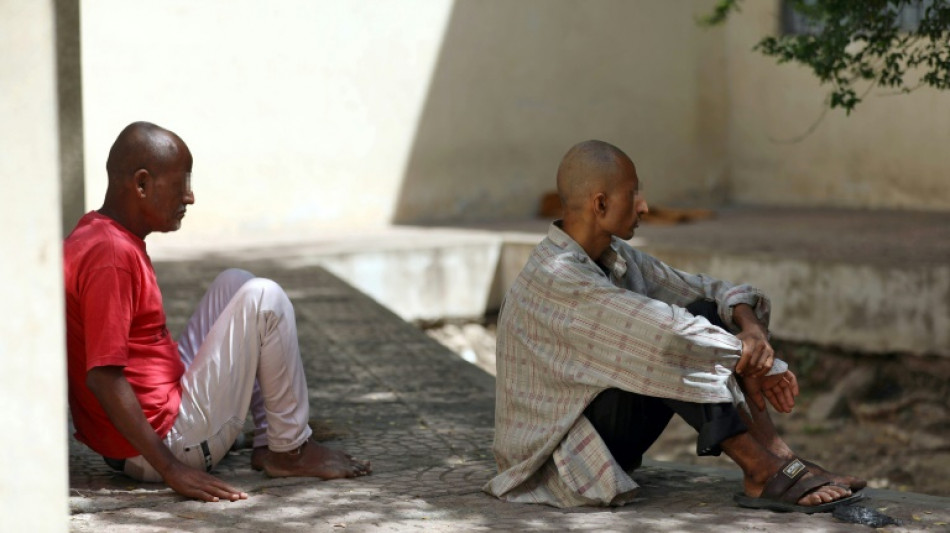
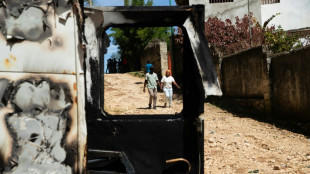
War-torn Yemen battered by mental health crisis / Photo: AHMAD AL-BASHA - AFP

 Dangote to launch $16bn refinery in Kenya

 North Korean leader 'extremely obese': Seoul spy agency

 Yankees and pope-backed White Sox start MLB playoffs with wins

 Malaysia's ex-PM Mahathir in hospital for observation

 'No limits': Marathon world record holder Sawe chasing history

 Countdown begins to biggest-ever Rugby World Cup

 Bangladesh women lose ground after quota reform

 Vietnam admits 'differing opinions' on Hanoi development

 Stocks temper gains as oil pares heavy losses, US data in focus

 New Zealand denies breaching climate commitments to EU

 Albert becomes youngest US scorer in 4-2 win over Chile

 Pirate island's plunging population shows Greece's demographic decline

 With elections ahead, Latvia's Russian-speakers reject Moscow's help

 Brazil football clubs face massive sponsorship blow from betting ban

 ChatGPT maker wants to be the App Store for AI as safety concerns grow

 Women fight fires and sexism in Indonesian Borneo

 Forsling's OT blast lifts Florida over Carolina in NHL opener

 Alpha Growth Management Opens Rep Office in Japan

 NBA close to picking new $12-13bn Vegas team owners: report

 LA28 Olympics torch relay to visit all 50 states

 Spain brush aside Croatia in Nations League, England down Czechs

 Trump hails 'morally binding' AI self-regulation pledge

 Yamal inspires Spain to Croatia romp on World Cup homecoming

 UN to hold fourth informal poll of secretary-general candidates
 Who are the Emiratis behind crisis-hit Manchester City?

Depression, post-traumatic stress disorder, psychosis: Yemen's seven years of brutal civil war have caused an explosion of mental illness overwhelming the basic health care services.
"We try to provide treatment, but we cannot treat everyone", said Adel Melhi, director of a psychiatric hospital in the rebel-blockaded city of Taez, one of the places hardest hit by the conflict.
Iran-backed Huthi rebels have fought a Saudi-led pro-government coalition since 2015 in a grinding war that has killed hundreds of thousands and pushed the impoverished nation to the brink of famine.
Aid groups have raised alarm with more than 23 million people -- more than two-thirds of Yemen's population -- dependent on aid.
While the government-run Taez psychiatric hospital has space for 200 patients, the numbers needing care because of the "tragedies caused by the war" have surged far higher, Melhi said.
The hospital lacks the necessary staff and drugs to cope. As government funds cover just a quarter of its budget, it relies on donations for the rest.
- 'Toll of conflict' -
Yemen, with around 30 million people, had just 59 psychiatrists in 2020 -- or one for every half a million people -- according to health ministry figures.
Add in therapists, caregivers and nurses, and the number of professionals dedicated to mental health rises to 300, divided across seven hospitals.
The authorities have not published any recent data on mental illness in Yemen, long the Arab peninsula's poorest country.
One 2017 study, by Yemen's Family Development and Guidance Foundation based in the rebel-held capital Sanaa, estimated that nearly a fifth of all residents had mental health issues.
The report said the population "faces constant pressure, loss and serious shocks -- whether as a result of food insecurity, unemployment, cholera, arbitrary detention, torture, indiscriminate attacks, air strikes or poor basic public services."
The United Nations, in a report this year, said the number could now be even higher because of the additional strain of the Covid pandemic and the "continuing toll of the conflict".
A UN-brokered ceasefire since April brought a sharp reduction in hostilities and facilitated moves to alleviate the dire humanitarian situation, according to aid agencies.
But that truce expired on October 2, and failed attempts to extend it have stoked fears of fresh conflict.
- 'It's heartbreaking' -
In Hajja, northwest of Sanaa, the aid agency Doctors Without Borders (MSF) runs a specialised mental health clinic.
"We help people who went through a traumatic situation, mostly related to violence because of the context of war," said Aura Ramirez Barrios, who leads the clinic's operations.
"We have a lot of people who lost family members, their homes, and suffer from displacement."
About three-quarters of the patients present "severe mental health disorders", she added, including "psychosis, depression, bipolar disorder or post-traumatic stress disorder".
Barrios said she sees the clinic as a place of hope, where Yemenis feel safe "after all the violence they have and continue to suffer".
One challenge is that many Yemenis only seek medical advice once symptoms have become "unmanageable", after a suicide attempt or experiencing hallucinations, for example.
Part of that is due to the stigma of mental illness in Yemen, she explained.
Coming to the clinic is particularly difficult for women, who must ask permission from their family or their husbands.
"It is heartbreaking because when you hear their stories, you realise they needed help a long time ago," Barrios said.
"Women suffer through a lot of losses, traumatic events and violence -- and what was grief, with the years, becomes depression."
A.Ruiz--AT