Lawsuits Emerge Over 'Smart' Knee Implants and Rising Health Costs

 Construction Boarding to Launch AI Training Program for Vocational Students in October 2026

 Kuwait’s CMA to Launch Fourth Strategic Plan in April 2027

 Belgian F-16s Deploy Counter-Drone Rockets in Riga for First Time

 The Historical Origins of Thanksgiving: From Pilgrims to National Holiday

 Guanajuato Silver Closes Lourdes Option Agreement
 Azarga Metals Completes Marg Drill Program

 RMTG's ISSCA Division Concludes Its 2026 International Conference Calendar in Dubai, December 4-5
 NextSource Materials Annual General and Special Meeting of Shareholders

 Plaintree Systems Inc. Reports Second Quarter Fiscal 2027 Results

 Harvard Grace Capital Announces Acquisition of 470 Providence in Huntsville, Alabama

 Banyan Intersects 1.67 g/t Au over 32.2 metres in the Airstrip-Powerline Gap at AurMac, Yukon

 LASE Reports $5.0 Million Order Backlog Driven by Continued Demand for Pharmaceutical Laser Systems
 GMV Minerals Announces Significantly Upgraded Mineral Resource Estimate for Its Mexican Hat Gold Deposit in Southeastern Arizona
 InterContinental Hotels Group PLC Announces Transaction in Own Shares - November 23
 Akkodis Launches Global AI Factory as a Service to Scale AI Across Engineering and Delivery
 SMX Announces Onboarding to World's First Digital Plastic Passport and Global Circularity Marketplace

 Konica Minolta's Laura Blackmer Named Best Female Executive for 10th Time

 General Holdings Limited Sets Out Its Role as a Project Sponsor in Energy Infrastructure and Commodity Trade

 Tiderock Companies Reports Third Quarter 2026 Results: Revenue Up 64%, Net Loss Cut by More Than Half

 Cubic Defense to Showcase Connected Air and Ground Training Ecosystem at I/ITSEC 2026

 Olympian Roberto Mandje Visits With Students at Maple Bear Angola as Part of ABO Capital's Africa 7 Initiative

 State Marijuana Is Next: Hemp's Failure To Self-Police Comes Due December 11
 VASRO Research Highlights Ainos' Record $9 Million AI Nose Agreement and Expanding Semiconductor Commercial Scale
 SMX Introduces Digital Plastic Passport and Global Marketplace to Advance the Circular Plastics Economy

 Armanino Foods Announces Fourth Quarter 2026 Dividend

Two patients have filed lawsuits against Zimmer Biomet and its partners after discovering they received 'smart' knee implants capable of transmitting personal health data without their explicit consent. The cases highlight a growing conflict in American medicine, where the expansion of connected medical devices is driving up healthcare costs through reimbursed monitoring services, despite limited evidence that such technology improves patient outcomes.
Two patients in the United States have initiated legal proceedings against Zimmer Biomet, a major orthopedic manufacturer, and Canary Medical, alleging that they received connected knee implants without proper informed consent. The lawsuits underscore a widening tension in the American healthcare system between the rapid adoption of internet-enabled medical devices and the lack of rigorous evidence supporting their clinical value, even as public and private insurers increasingly reimburse doctors for monitoring the data these devices collect.
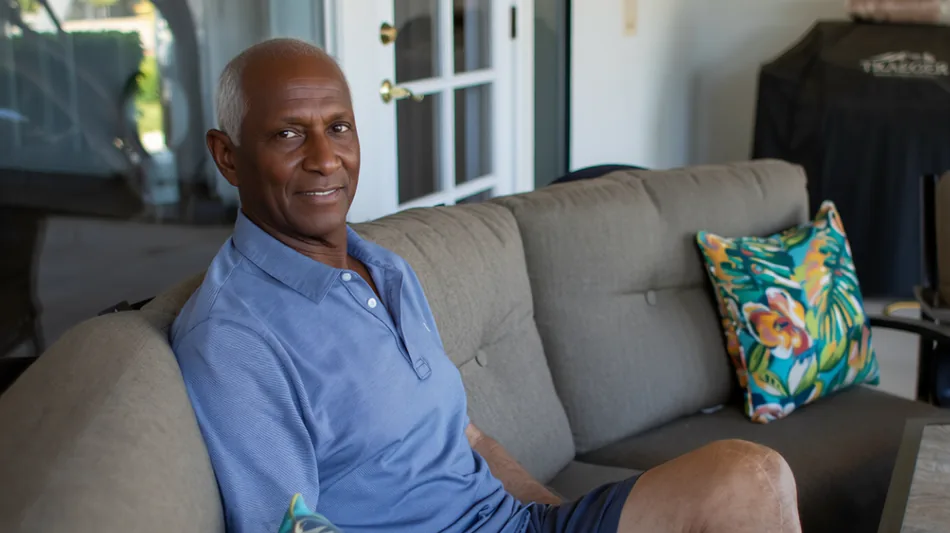
Steve Russak, a 70-year-old resident of Santa Rosa Valley, California, reported waking from knee replacement surgery last year to receive text messages from Zimmer Biomet. Over several days, the company contacted him four times, urging him to download an application and set up accessories for his new joint. When a company representative called to offer assistance, Russak stated he had no knowledge of what was being discussed.
Russak subsequently learned that he had not received a standard prosthetic but rather a "smart knee," specifically the Persona IQ model. This device contains a lithium-ion battery, sensors, and a transmitter designed to send data regarding his gait and range of motion to clinicians and Zimmer Biomet, provided the patient authorizes the connection. Russak has refused to activate this feature, citing privacy concerns and practical complications, such as an inability to undergo magnetic resonance imaging (MRI) scans due to compatibility issues.
In his lawsuit, Russak claims the implantation was unauthorized and that he was denied the option to opt out of data collection or decline the device entirely. He is suing his surgeon, Zimmer Biomet, and Canary Medical on grounds including lack of informed consent. While Russak has dropped earlier allegations of fraud and breach of fiduciary duty, the case remains active, with a hearing scheduled for December. His attorney noted that the doctor had allegedly admitted to not disclosing the electronic nature or data-collection capabilities of the Persona IQ to prior patients.
Zimmer Biomet and Canary Medical have denied all allegations in their initial responses. Zimmer’s legal team argued that any damages were caused by unforeseeable actions or reactions attributable to other parties, while also asserting that the company does not practice medicine and therefore had no legal duty to obtain consent for the treatment provided by the physician. A spokesperson for Zimmer, Troy Kirkpatrick, declined to comment on the litigation but noted that nearly 90% of surveyed patients who received Zimmer’s joint replacements said they would choose a device with remote monitoring capabilities again.
A parallel case involves Jodi Murphy, a patient from Contra Costa County, California, who filed suit against her doctor, Zimmer Biomet, and Canary Medical after receiving a Persona IQ implant and being registered for the company’s app without specific consent. Her lawsuit alleges that the defendants acted without disclosing the device or obtaining informed consent. A hearing in Murphy’s case is scheduled for February. Both patients’ doctors have declined to comment on the proceedings.
The legal disputes arise against the backdrop of a burgeoning trend in American medicine toward internet-connected devices, ranging from implants to external monitors like blood pressure cuffs. Proponents argue these tools offer better care by providing real-time measurements of patient conditions. However, researchers and some physicians caution that there is little evidence such monitoring improves health outcomes.
Sanket Dhruva, a cardiologist and digital health researcher at the University of California-San Francisco, acknowledged the potential of remote monitoring but emphasized the need for more rigorous data. "We’re getting all this data — is this helping our patients recover better? That’s what we really care about," Dhruva said. He noted that while enthusiasm for these technologies is high, the field lacks the evidence base to justify their widespread adoption.
Despite the uncertainty regarding clinical benefits, the financial incentives for providers are significant. Both Medicare and private insurers reimburse medical professionals for reviewing data from smart devices under "remote patient monitoring" codes. According to the Department of Health and Human Services’ Office of Inspector General, nearly 1 million Medicare beneficiaries received this service in 2024. Medicare paid medical providers $536 million for remote monitoring that year, more than double the amount paid three years earlier. A review by the Peterson-KFF Health System Tracker found that approximately 300,000 adults with employer-sponsored insurance received at least one remote monitoring claim in 2023.
The expansion of these payments has drawn scrutiny from federal watchdogs. The Department of Health and Human Services’ inspector general warned that remote monitoring poses fraud risks, noting that about 43% of patients in 2024 did not receive the full suite of services required by the program, which includes educating patients about the device and actively monitoring data for health changes. The watchdog also cautioned that companies sometimes cold-call patients to sign them up for devices they may not need.
Privacy risks are another concern. In 2018, ProPublica reported that insurers monitored the usage of continuous positive airway pressure (CPAP) machines and denied coverage for replacement supplies when patients did not use them as prescribed. Kate Black, a health data privacy lawyer, stated that consent standards for implanted devices should be high because they remain in the body for years. "Every step you take, they know every step you take," Russak said regarding his implant.
Centers for Medicare & Medicaid Services (CMS) spokesperson Christopher Krepich stated that CMS payment does not constitute an endorsement of a manufacturer’s marketing claims or a guarantee that technology improves outcomes for every patient. He added that the agency regularly evaluates its reimbursement policies.
The financial dynamics surrounding smart implants are further complicated by Medicare’s "new technology add-on payment" program, which temporarily subsidizes the adoption of new devices to encourage innovation. This subsidy effectively increases the average cost of procedures, thereby driving up the basis for future reimbursements. Dhruva noted that this mechanism contributes to the problem of payments for unproven services. The specific subsidy for the Persona IQ lapsed in fall 2024.
Research on the clinical efficacy of smart knees remains limited. Kevin Bozic, chair of surgery and perioperative care at the University of Texas-Austin, reviewed research provided by Zimmer Biomet and found that none of the studies compared the Persona IQ to conventional knee implants. Bozic described orthopedic surgeons as "ambivalent" about the devices, with many choosing not to use them. He characterized the implant as a "nice-to-have" rather than a necessity, stating it is "overkill" given that surgeons already monitor patient recovery through standard check-ins.
Zimmer Biomet, which sold $3.3 billion in knee joints last year, markets the Persona IQ as a tool to help care teams "monitor and personalize" patient experiences. However, the company’s website also states that the implant is "not intended to support clinical decision-making" and has "not been shown to provide any clinical benefit." The site mentions potential financial rewards for surgeons who implant the device, including ongoing payments for remote monitoring.
Russak’s Medicare records show that the program paid for his surgery and implant but has not received any claims for remote monitoring of the device, as he has not set it up to transmit data. The legal cases against Zimmer Biomet and Canary Medical continue to develop, raising questions about informed consent and the sustainability of reimbursement models for technologies whose clinical value remains unproven.
M.Robinson--AT