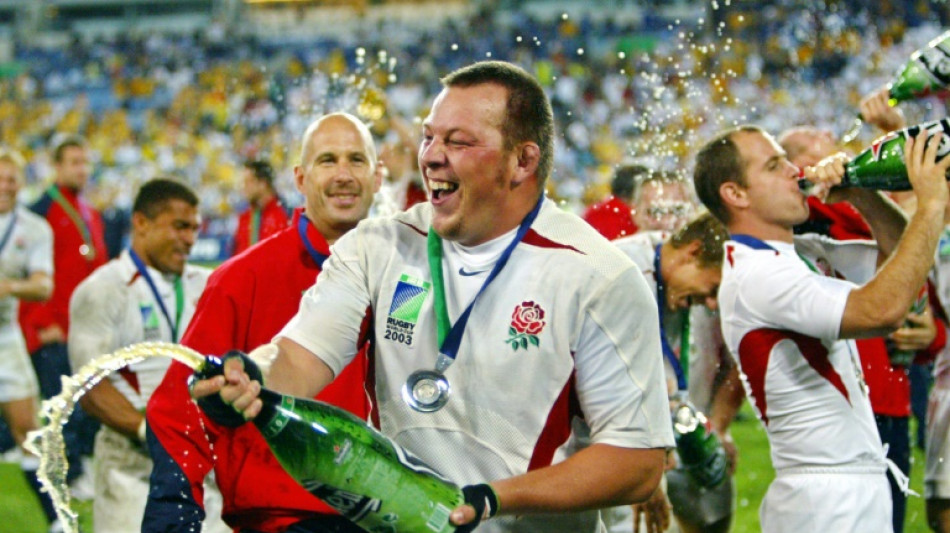
Rugby World Cup winner Thompson says dementia makes him feel 'phoney' / Photo: ODD ANDERSEN - AFP/File

 Dangote to launch $16bn refinery in Kenya

 North Korean leader 'extremely obese': Seoul spy agency
 Yankees and pope-backed White Sox start MLB playoffs with wins

 Malaysia's ex-PM Mahathir in hospital for observation

 'No limits': Marathon world record holder Sawe chasing history

 Countdown begins to biggest-ever Rugby World Cup

 Bangladesh women lose ground after quota reform

 Vietnam admits 'differing opinions' on Hanoi development
 Stocks temper gains as oil pares heavy losses, US data in focus

 New Zealand denies breaching climate commitments to EU

 Albert becomes youngest US scorer in 4-2 win over Chile

 Pirate island's plunging population shows Greece's demographic decline

 With elections ahead, Latvia's Russian-speakers reject Moscow's help

 Brazil football clubs face massive sponsorship blow from betting ban

 ChatGPT maker wants to be the App Store for AI as safety concerns grow

 Women fight fires and sexism in Indonesian Borneo

 Forsling's OT blast lifts Florida over Carolina in NHL opener

 Alpha Growth Management Opens Rep Office in Japan

 NBA close to picking new $12-13bn Vegas team owners: report

 LA28 Olympics torch relay to visit all 50 states

 Spain brush aside Croatia in Nations League, England down Czechs

 Trump hails 'morally binding' AI self-regulation pledge

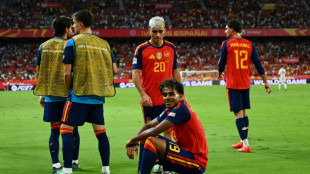 Yamal inspires Spain to Croatia romp on World Cup homecoming

 UN to hold fourth informal poll of secretary-general candidates

 Who are the Emiratis behind crisis-hit Manchester City?

Former England rugby star Steve Thompson says he feels like a "phoney" because he cannot remember being part of the 2003 World Cup-winning team, two years after being diagnosed with early onset dementia.
The ex-hooker, 44, is one of scores of former players who have decided to sue a number of governing bodies for negligence.
Thompson features in a BBC documentary: "Head On: Rugby, Dementia and Me" to be aired on Wednesday -- a day after new research was published suggesting elite players could be at a significantly greater risk of developing neurodegenerative diseases such as motor neurone disease, Parkinson's and dementia.
Glasgow consultant neuropathologist Willie Stewart, who led the research team, has called for urgent action, saying the sport should minimise contact training and reduce its global calendar.
Thompson, diagnosed with early onset dementia and probable CTE (chronic traumatic encephalopathy) in November 2020, has packed away his medals and trophies.
"Around four years ago some of my strongest memories started disappearing, precious private moments and all the career highlights of two decades of rugby. So much so I packed away all my most precious memorabilia because having it around was just too painful," he said in the documentary.
He added: "When people say 'Oh, you got a World Cup medal' and all this I feel like a phoney.
"Because it feels like I haven't done it because I can't remember it and it doesn't feel like me so sometimes when people in public talk about it I get embarrassed by it."
Thompson, who sometimes forgets the names of his children in the film, said he believes he is suffering as a result of multiple head impacts he endured as a player, saying concussion protocols at the time were not safe.
"If you were knocked out and you came back to, you were just told to get on with it," he said.
"If you had a headache, you were just given headache pills. It wasn't known as an injury. It would be like: 'At least you haven't pulled your hamstring, so you can still run.'"
He said rugby authorities, including the Rugby Football Union (RFU), which is the game's governing body in England, could do more.
"There's been no support from the RFU," he said. "Since I started the legal action, they've even stopped sending me the birthday card I got every year."
World Rugby last year issued guidance advising limiting full contact training to just 15 minutes per week and in July extended its minimum concussion stand-down period to 12 days.
But Thompson feels the sport could go further.
"It's a little start, but, to be honest, it needs to be three weeks at least," he says, adding he would still not feel comfortable allowing his children to play full-contact rugby.
B.Torres--AT