US begins clinical trial to test monkeypox vaccine / Photo: SPENCER PLATT - GETTY IMAGES NORTH AMERICA/AFP/File

 'No limits': Marathon world record holder Sawe chasing history

 Countdown begins to biggest-ever Rugby World Cup

 Bangladesh women lose ground after quota reform

 Vietnam admits 'differing opinions' on Hanoi development
 Stocks temper gains as oil pares heavy losses, US data in focus
 New Zealand denies breaching climate commitments to EU

 Albert becomes youngest US scorer in 4-2 win over Chile
 Pirate island's plunging population shows Greece's demographic decline
 With elections ahead, Latvia's Russian-speakers reject Moscow's help

 Brazil football clubs face massive sponsorship blow from betting ban
 ChatGPT maker wants to be the App Store for AI as safety concerns grow

 Women fight fires and sexism in Indonesian Borneo

 Forsling's OT blast lifts Florida over Carolina in NHL opener

 Hurricane Polo sweeps over Mexico's Pacific coast, heads inland

 Grynspan pulls ahead in race to lead UN: diplomat

 Trump touts AI boss pledge to self-regulate

 Oil down, but stocks lower as bond yields rise
 England break down stubborn Czechs to claim first Nations League win
 UN Security Council extends Haiti anti-gang force by 6 months

 Manchester City guilty of Premier League charges: What comes next?
 Man City chief Soriano slams Premier League 'conspiracy theory'

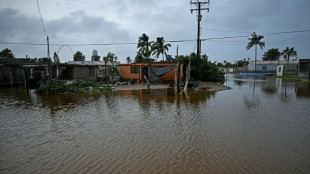 Hurricane Polo sweeps over Mexico's Pacific coast

 Man City must be relegated after guilty verdict says club's former chairman

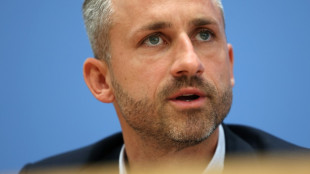 German far-right aims to lead Saxony-Anhalt govt in December

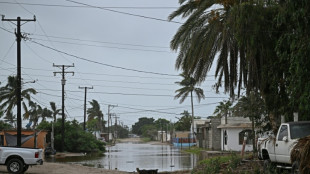 Little damage as Hurricane Polo sweeps over Mexico's Pacific coast

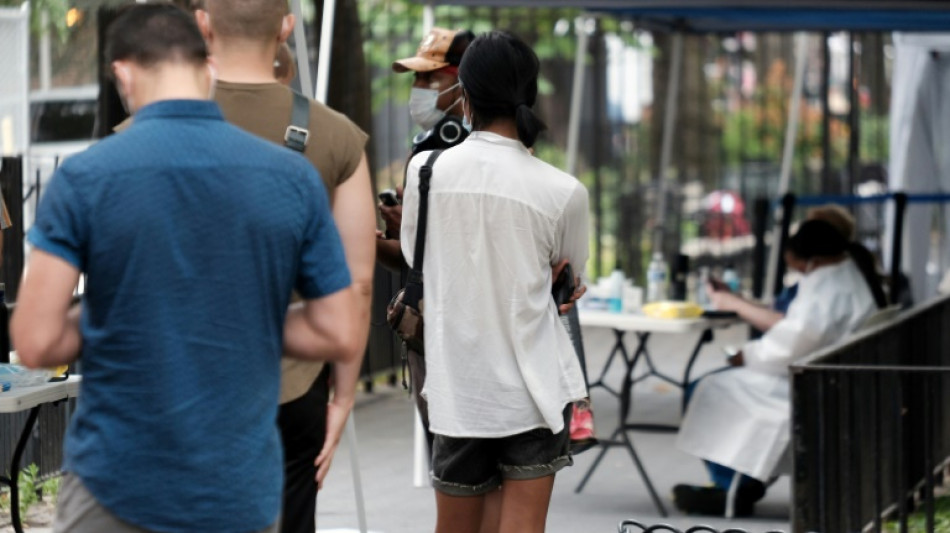
US health authorities announced Thursday they would carry out a clinical trial to test different dosing strategies of the Jynneos monkeypox vaccine, amid uncertainty over its effectiveness.
The trial will enroll 200 adults aged 18-50 across the country, and is sponsored by the National Institute of Allergy and Infectious Diseases.
The Jynneos vaccine, manufactured by Denmark-based Bavarian Nordic, has been approved by the United States for the prevention of smallpox and monkeypox in people aged 18 and older.
But while the highest-risk group, men who have sex with men, are encouraged to get the vaccine, there is no clear picture of how well it works in real world settings.
The new trial isn't designed to produce an efficacy estimate, but rather measure the immune response of different dosing levels and administration methods.
"NIAID's trial of JYNNEOS will provide important information on the immunogenicity, safety, and tolerability of alternative dosing approaches that would expand the current supply of vaccine," said NIAID director Anthony Fauci in a statement.
Among the participants, one group will be injected subcutaneously -- that is, under the skin. The vaccine is based on attenuated virus that is modified so it can't replicate, and is given in two doses 28 days apart.
A second group will receive their shots intradermally, meaning between the layers of the skin. This strategy is meant to expand the availability of vaccines because it uses one-fifth of the standard dose.
A third group will also receive their shots intradermally, but at half the dosing level of the second group.
Scientists will test the peak immune responses and compare the side effects across the groups.
President Joe Biden's administration has bet heavily on the Jynneos vaccine to stem the spread of monkeypox, which has affected more than 20,000 people in the United States since May.
But the question of how well the shot prevents infection versus minimizing disease would require further study to answer.
The current global outbreak is primarily affecting gay and bisexual men.
Historically, the virus has been spread via direct contact with lesions, body fluids and respiratory droplets, and sometimes through indirect contamination via surfaces such as shared bedding.
But in this outbreak, there is preliminary evidence that sexual transmission may also play a role.
The virus causes painful skin lesions and flu-like symptoms.
Most people fully recover, but the disease can cause serious complications, including bacterial infections, brain inflammation and death.
A.Anderson--AT