Why has a Chinese city's lockdown sent aluminium prices surging?

 Amaze Holdings (NYSE: AMZE) Executes Binding LOI to Acquire BullionFX | Alchemy, a Decentralized Gold-Backed Financial Ecosystem for Valued at US$155 Million
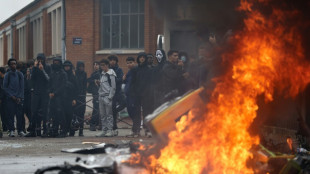 Clashes between French teens, police as school blockades intensify
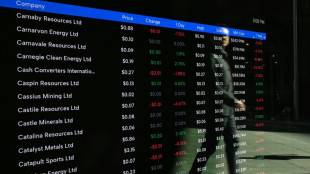
 Stocks move sideways despite oil moving lower
 African leaders to gather in Egypt for business summit
 UK decides against charging foreign visitors for museums

 Dallaglio to sell England World Cup winners' medal

 Brazil come from behind to beat Australia 4-2 in friendly

 Ruthless An retains Asian Games badminton crown as Kunlavut triumphs

 Alonso to stay with F1 team Aston Martin in 2027

 China badminton 'still strong' despite Asian Games slump

 'Exceptional' Turner painting shown in Rome before sale

 European stocks climb as oil dips

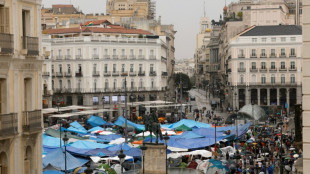 Spain aims to ban evictions until 2030 amid housing protests

 Kunlavut first Thai man to win Asian Games badminton singles gold

 French far right says antisemitism claims part of 'total war' to derail presidency bid

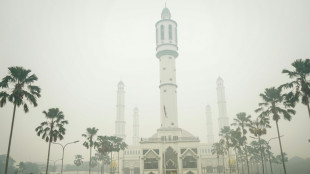 'Gift from God': Rain brings relief from Indonesia toxic haze
 Ex-world snooker champion jailed for 7 years for child sex crimes

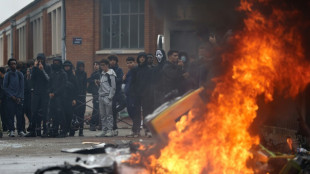 French teens clash with police as school blockades intensify

 FIFA accuses UEFA of 'misinformation campaign' in bid for World Cup papers

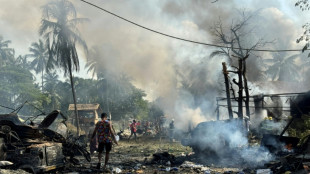 Myanmar airstrike toll hits 50 as families gather dead
 STARTRADER Raises Lloyd's of London Client Fund Insurance to USD 30 Million in Aggregate

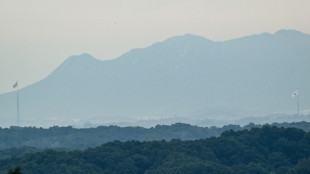 North Korean DMZ landmine blasts 'violation of armistice': Seoul

 Sabalenka 'fresh' for first tournament since losing No.1 spot
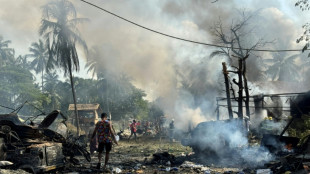 Myanmar airstrike death toll rises to 50: aid workers
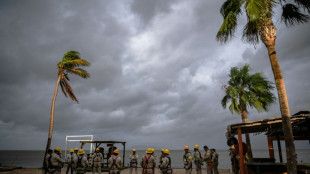
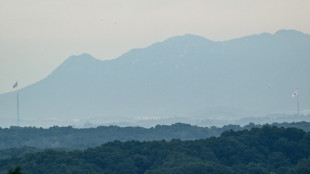 North Korean DMZ landmine blast 'violation of armistice'

The Covid lockdown this week of a relatively unknown Chinese city sent global prices of aluminium rocketing to a 14-year high.
Why did the outbreak in Baise spark fears around the world about the key metal?
- Where is Baise? -
Located near the border with Vietnam, Baise is nicknamed the "aluminium capital of southern China".
Home to around 3.5 million people, Baise is a hub for aluminium mining and production.
It produces about 2.2 million tonnes of the commodity per year -- more than 80 percent of the output in the resource-rich Guangxi region.
Guangxi is China's main alumina-exporting region, shipping out around 500,000 tonnes of the aluminium component per month.
China is the world's biggest producer of aluminium, a crucial component in major industries including automobiles, construction and consumer goods.
- Why was Baise locked down? -
At just under 190 cases, the Baise coronavirus outbreak is tiny compared with caseloads in other parts of the world.
China, however, has a zero Covid strategy, using strict, targeted lockdowns, travel restrictions and mass testing to eliminate infections.
Baise was locked down Monday, leaving most of its residents under home confinement and others unable to leave rural counties and townships under the city's jurisdiction.
The national Covid strategy has helped maintain some economic growth during the pandemic, but its enforcement has caused frequent disruptions at key manufacturing and shipping hubs in recent months.
- How did it impact aluminium? -
Baise's local industry association said Tuesday that while aluminium production was largely at normal levels, the transportation of ingots and raw materials was seriously impacted by travel restrictions during the lockdown.
That in turn sparked fears about supply that cascaded through China and then around the world.
"The sudden outbreak in our city has exacerbated market expectations of hindered logistics flows, as well as expectations of phased supply tightening caused by an output drop," the association said.
A major industrial park in Baise containing several factories has been sealed, affecting the movement of workers, raw materials and aluminium ingots, it added.
On Wednesday, some aluminium smelters in southwest China resumed production, monitor Shanghai Metals Market (SMM) reported.
But some refineries of the component alumina in Guangxi have stopped production because of the outbreak, it said.
Huayin Aluminium, a major smelter in Baise, slashed production capacity by about 1.2 million tonnes owing to transportation blockages, according to Chinese commodity research firm Antaike.
- Was Baise the only driver of the price surge? -
The global aluminium price surge was sparked by the Baise lockdown but other major factors were already at play too, analysts said.
The timing of the lockdown also played a part.
China's domestic aluminium shortage had already been exacerbated by the Lunar New Year holidays, during which most factories nationwide ground to a halt or reduced output.
The break was followed by the Baise lockdown, meaning inventories could not be replenished normally.
Prices of aluminium were already expected to rise after the holidays, which concluded Monday, because of low domestic inventories and solid demand from manufacturers, according to the SMM.
Furthermore, Antaike said Tuesday that alumina industries in three other provinces have also reduced production.
- What about the rest of the world? -
The global aluminium market is already facing a large production deficit this year, with demand outstripping supply as the world economy recovers from the pandemic.
Further, aluminium production is linked to the stability of other supplies.
Analysts said the ongoing Russia-Ukraine crisis had caused widespread fear that Europe's gas supply from major producer Russia will be hit if the situation escalates.
US President Joe Biden made a categorical vow Monday at a meeting with Germany's Chancellor Olaf Scholz that the massive Nord Stream 2 gas pipeline from Russia to Europe will "end" if Moscow invades Ukraine.
"Aluminium production requires significant amounts of energy and gas is the primary fuel source. Fears that Nord Stream 2 could be halted are pushing prices higher," City Index analyst Fiona Cincotta told AFP.
"Secondly, Russia is a key producer of aluminium... Threats of sanction from the West (are) also driving up prices."
P.Hernandez--AT