Hubble-bubble trouble: Hookah ban leaves Malians divided / Photo: ROSLAN RAHMAN - AFP

 'No limits': Marathon world record holder Sawe chasing history
 Countdown begins to biggest-ever Rugby World Cup
 Bangladesh women lose ground after quota reform
 Vietnam admits 'differing opinions' on Hanoi development
 Stocks temper gains as oil pares heavy losses, US data in focus
 New Zealand denies breaching climate commitments to EU
 Albert becomes youngest US scorer in 4-2 win over Chile
 Pirate island's plunging population shows Greece's demographic decline
 With elections ahead, Latvia's Russian-speakers reject Moscow's help
 Brazil football clubs face massive sponsorship blow from betting ban
 ChatGPT maker wants to be the App Store for AI as safety concerns grow
 Women fight fires and sexism in Indonesian Borneo

 Forsling's OT blast lifts Florida over Carolina in NHL opener

 Hurricane Polo sweeps over Mexico's Pacific coast, heads inland
 Grynspan pulls ahead in race to lead UN: diplomat

 Trump touts AI boss pledge to self-regulate
 Oil down, but stocks lower as bond yields rise

 England break down stubborn Czechs to claim first Nations League win
 UN Security Council extends Haiti anti-gang force by 6 months

 Manchester City guilty of Premier League charges: What comes next?
 Man City chief Soriano slams Premier League 'conspiracy theory'
 Hurricane Polo sweeps over Mexico's Pacific coast

 Man City must be relegated after guilty verdict says club's former chairman
 German far-right aims to lead Saxony-Anhalt govt in December
 Little damage as Hurricane Polo sweeps over Mexico's Pacific coast
"Shisha-abana," exclaims Bilal, a grocer in Mali's capital Bamako, in the national language Bambara: "Shisha is finished."
His is a common reaction.
An unexpected ban on hookah smoking in this West African country has stirred surprise as well as division, leaving devotees dismayed but health advocates delighted.
Bars where small groups of smokers -- primarily young men -- hang out to chat and puff on water pipes have flourished in Bamako in recent years.
Mali is an overwhelmingly Muslim country, and interpretations of Islam are generally unfavourable to cigarettes and to shisha.
But it is also a secular nation that tolerates alcohol, even if consumption is limited to certain public places and most shops and restaurants do not serve it.
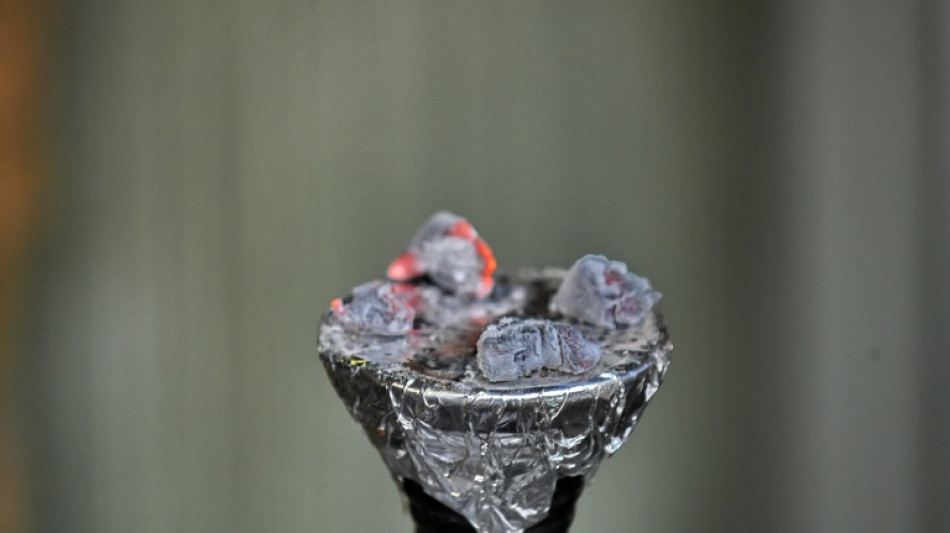
Shishas, or hookahs, typically burn a tobacco flavoured with fruit to provide a sweetened taste. The smoke is inhaled in through a long rubber tube, passing through water to cool it down. "Shisha" is also the term sometimes used for the tobacco product.
The government's sudden decision on August 15 to ban shishas took many by surprise -- the ruling junta, in power since 2020, had not been particularly known for its concerns about tobacco.
The law, co-signed by six ministries, including the ministry of security, health and youth, "prohibits the importation, distribution, sale and use of shishas (water pipes) or any similar device throughout the national territory".
Any shisha smoker will be punished with a prison sentence of one to 10 days and a fine of 300 to 10,000 CFA francs ($0.45 to $15.00).
Shisha bars have six months to close.
The authorities did not provide any reason for the ban.
But in his shop in the centre of Bamako, Abdramane Daff is fuming as he shows off his pile of stock.
"We can't sell all this in six months, it's impossible", he said.
"We beg (the authorities) to look for another solution -- maybe they could limit themselves to banning consumption in the streets and spare shisha sales".
- 'Thank you' -
On the consumer side, there are questions about the authorities' ability to enforce the decree.
"Is it possible to stop smoking shisha for good?" asked one occasional smoker on condition of anonymity.
Measures such as the closure of restaurants during the Covid-19 pandemic had little effect in a country where many businesses are informal and law enforcement resources are limited.
On social networks or in conversations in street hangouts in Bamako, the news was rather well received.
"Thank you for the ban on shisha in Mali, I think we should now ban cigarettes as they are also a drug!" posted Abdoul Karim Maiga on Twitter.
"I think the decree is very important," Ousmane Toure, a representative of the association of tobacco victims, told AFP.
"In terms of mortality and disease, if we took into account shisha and tobacco, we would see that frankly it is better to stop," he said.
Salif Kone, a tobacco specialist, points to a study conducted in schools in Bamako showing that "about 70 percent of young people use shisha".
- Health risk -
A working group of the World Health Organization (WHO) warned in 2017 about the danger of shisha smoking.
The practice is up to 10 times more harmful than cigarettes but is not targeted by the same awareness campaigns as with tobacco, it said.
It is "up to us, the doctors, the parents of these children, to combine our efforts with those of the government to (make them) stop using shisha", Kone said.
Countries such as Saudi Arabia and Lebanon have taxed shisha consumption. Others, including Jordan and Cameroon, have banned it.
In Mali, where free speech has been increasingly threatened since 2020, few critical voices have been raised apart from shisha bar managers.
"Was this the most urgent thing, when our country is in the grip of a multi-pronged crisis?" asked one social scientist on condition of anonymity.
H.Romero--AT