WHO experts back second Covid booster for most at risk / Photo: Aizar RALDES - AFP/File

 'No limits': Marathon world record holder Sawe chasing history

 Countdown begins to biggest-ever Rugby World Cup

 Bangladesh women lose ground after quota reform
 Vietnam admits 'differing opinions' on Hanoi development
 Stocks temper gains as oil pares heavy losses, US data in focus

 New Zealand denies breaching climate commitments to EU

 Albert becomes youngest US scorer in 4-2 win over Chile
 Pirate island's plunging population shows Greece's demographic decline
 With elections ahead, Latvia's Russian-speakers reject Moscow's help
 Brazil football clubs face massive sponsorship blow from betting ban

 ChatGPT maker wants to be the App Store for AI as safety concerns grow

 Women fight fires and sexism in Indonesian Borneo

 Forsling's OT blast lifts Florida over Carolina in NHL opener

 Hurricane Polo sweeps over Mexico's Pacific coast, heads inland
 Grynspan pulls ahead in race to lead UN: diplomat

 Trump touts AI boss pledge to self-regulate

 Oil down, but stocks lower as bond yields rise

 England break down stubborn Czechs to claim first Nations League win
 UN Security Council extends Haiti anti-gang force by 6 months

 Manchester City guilty of Premier League charges: What comes next?
 Man City chief Soriano slams Premier League 'conspiracy theory'

 Hurricane Polo sweeps over Mexico's Pacific coast

 Man City must be relegated after guilty verdict says club's former chairman

 German far-right aims to lead Saxony-Anhalt govt in December
 Little damage as Hurricane Polo sweeps over Mexico's Pacific coast

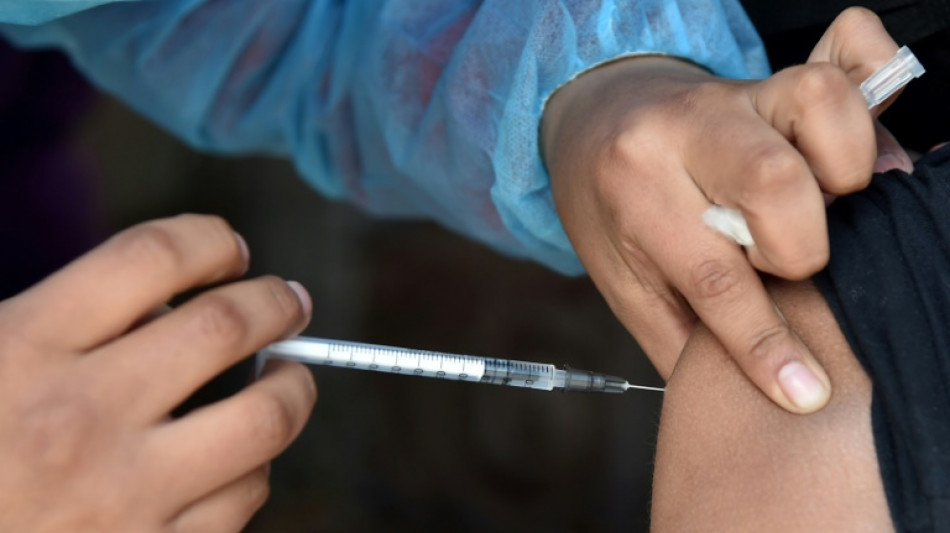
The World Health Organization's vaccine advisers on Thursday recommended that people most at risk from Covid-19 should be offered a second booster dose to increase their immunity.
The Strategic Advisory Group of Experts on Immunisation (SAGE) said following initial vaccination, typically consisting of two doses, and an already recommended first booster dose, specific groups of people should be offered an additional jab.
"We are doing this on the basis obviously of observations in relation to waning immunity and particularly in the context of Omicron," WHO senior health advisor Joachim Hornbach told reporters via video link.
The UN health agency has already recommended that all adults receive a booster shot four to six months after an initial round of vaccination, typically consisting of two jabs.
But SAGE chairman Alejandro Cravioto stressed that Thursday's recommendation for a second booster after another four to six months had passed was only meant for the "populations at the highest risk".
It "does not constitute a general recommendation of vaccinating all adults after the first booster", he told the virtual press briefing.
SAGE said second boosters should be offered to the elderly and all immunocompromised people, pregnant women, as well as those with conditions like diabetes, hypertension and cardiac, lung and kidney disease that put them at higher risk.
Health workers of all ages should also get the additional jab, Cravioto said, insisting on the need to "protect our health systems from the devastation of having its personnel sick and not at work".
Looking forward, the SAGE experts pointed to "significant uncertainties related to the evolution of the virus, the characteristics of future variants, and the trajectory of the epidemic given increasing vaccine- and infection-induced immunity globally".
"It is likely that additional doses may be needed within 4–12 months after the second booster, especially in persons most vulnerable to severe disease and death," they said.
For now, the booster recommendations are for the available vaccines developed to tackle the initial Covid-19 strain.
WHO has said it will evaluate new jabs being developed by vaccine makers like Moderna and Pfizer that are adapted to target new, fast-spreading Omicron variants.
But SAGE stressed that current vaccines appeared to continue providing high protection "against severe disease in the context of the Omicron variant and its sub-lineages".
Second boosters for at-risk populations "should not be delayed in anticipation of future variant-containing vaccines", they said.
F.Wilson--AT