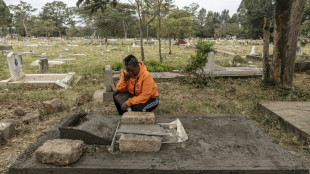
Much-hyped Alzheimer's drugs do not help patients, review finds / Photo: ALAIN JOCARD - AFP/File

 Amaze Holdings (NYSE: AMZE) Executes Binding LOI to Acquire BullionFX | Alchemy, a Decentralized Gold-Backed Financial Ecosystem for Valued at US$155 Million

 Clashes between French teens, police as school blockades intensify

 Stocks move sideways despite oil moving lower

 African leaders to gather in Egypt for business summit

 UK decides against charging foreign visitors for museums

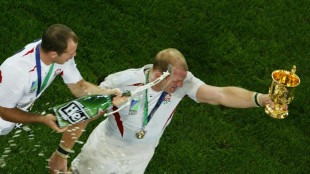 Dallaglio to sell England World Cup winners' medal

 Brazil come from behind to beat Australia 4-2 in friendly

 Ruthless An retains Asian Games badminton crown as Kunlavut triumphs

 Alonso to stay with F1 team Aston Martin in 2027

 China badminton 'still strong' despite Asian Games slump

 'Exceptional' Turner painting shown in Rome before sale

 European stocks climb as oil dips

 Spain aims to ban evictions until 2030 amid housing protests

 Kunlavut first Thai man to win Asian Games badminton singles gold

 French far right says antisemitism claims part of 'total war' to derail presidency bid

 'Gift from God': Rain brings relief from Indonesia toxic haze

 Ex-world snooker champion jailed for 7 years for child sex crimes

 French teens clash with police as school blockades intensify
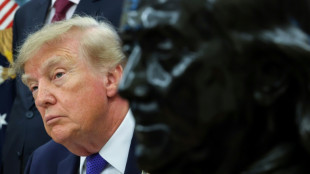
 FIFA accuses UEFA of 'misinformation campaign' in bid for World Cup papers

 Myanmar airstrike toll hits 50 as families gather dead

 STARTRADER Raises Lloyd's of London Client Fund Insurance to USD 30 Million in Aggregate

 North Korean DMZ landmine blasts 'violation of armistice': Seoul

 Sabalenka 'fresh' for first tournament since losing No.1 spot

 Myanmar airstrike death toll rises to 50: aid workers

 North Korean DMZ landmine blast 'violation of armistice'

Drugs once hailed as a breakthrough in the fight against Alzheimer's disease do not meaningfully help patients, a major review found Thursday, however some experts criticised the research.
The review by the Cochrane organisation -- which is considered the gold standard for analysing existing evidence -- looked at drugs that target a plaque called amyloids which builds up in the brains of Alzheimer's patients.
Researchers have long sought a way to eliminate this plaque, believing it could be the cause of the most common form of dementia which affects millions of elderly people every year.
After decades of costly yet unsuccessful research, two anti-amyloid drugs called lecanemab and donanemab were initially hailed as gamechangers that finally offered a way to slow the progress of the debilitating disease.
Both drugs were approved by the United States and European Union over the last few years.
However concerns about their effectiveness, cost and side effects including an increased risk of brain swelling and bleeding have since prompted caution. State-run health services in the UK and France have refused to cover the drugs.
The new Cochrane review combined data from 17 clinical trials that included a total of more than 20,000 people with mild cognitive impairment or early dementia.
The trials, which took place over roughly 18 months, studied seven different anti-amyloid drugs.
Only one of the trials examined donanemab -- sold under the name Kisunla by US pharma giant Eli Lilly -- while one studied lecanemab, sold as Leqembi by Biogen and Eisai.
While early trials suggested these drugs made a statistically significant difference, this did not translate into "something clinically meaningful for patients," lead study author Francesco Nonino of Italy's IRCCS institute told a press conference.
Brain scans showed that the drugs successfully removed amyloids, the researchers emphasised.
This means "the idea that removing amyloids will benefit patients was refuted by our results," said study co-author Edo Richard of Radboud University Medical Centre in the Netherlands.
- 'Not delivering on promise' -
Richard, who has previously expressed scepticism about anti-amyloid drugs, said he hopes efforts targeting other mechanisms that potentially cause Alzheimer's lead to more effective drugs in the future.
British biologist John Hardy, who first developed the amyloid hypothesis in the 1990s, criticised the review for lumping together data about lecanemab and donanemab along with drugs that are known to be ineffective, therefore dragging down the overall average.
"This is a silly paper which should not have been published," Hardy told AFP, disclosing that he has consulted for Eli Lilly, Biogen and Eisai.
In response to such questions, Richard said that while the drugs included in the study may work in different ways, they all have the same target: amyloid beta proteins.
Australian neuroscientist Bryce Vissel, who was not involved in the research, said it "does not prove amyloid has no role in Alzheimer's, and it does not rule out future amyloid-directed therapies that may yet help patients".
"But it does show that the current generation of anti-amyloid drugs is not delivering the promise that has surrounded it."
A.Ruiz--AT