'We're not wombs': Japan women seek rights to sterilisation / Photo: Philip FONG - AFP

 Amaze Holdings (NYSE: AMZE) Executes Binding LOI to Acquire BullionFX | Alchemy, a Decentralized Gold-Backed Financial Ecosystem for Valued at US$155 Million
 Clashes between French teens, police as school blockades intensify

 Stocks move sideways despite oil moving lower

 African leaders to gather in Egypt for business summit

 UK decides against charging foreign visitors for museums

 Dallaglio to sell England World Cup winners' medal

 Brazil come from behind to beat Australia 4-2 in friendly

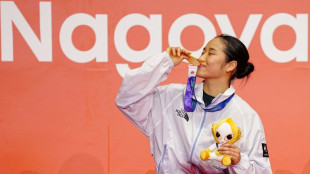
 Ruthless An retains Asian Games badminton crown as Kunlavut triumphs

 Alonso to stay with F1 team Aston Martin in 2027

 China badminton 'still strong' despite Asian Games slump

 'Exceptional' Turner painting shown in Rome before sale

 European stocks climb as oil dips

 Spain aims to ban evictions until 2030 amid housing protests

 Kunlavut first Thai man to win Asian Games badminton singles gold

 French far right says antisemitism claims part of 'total war' to derail presidency bid

 'Gift from God': Rain brings relief from Indonesia toxic haze

 Ex-world snooker champion jailed for 7 years for child sex crimes

 French teens clash with police as school blockades intensify

 FIFA accuses UEFA of 'misinformation campaign' in bid for World Cup papers
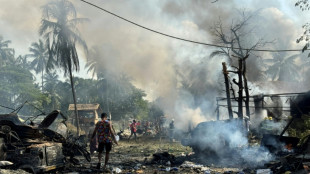 Myanmar airstrike toll hits 50 as families gather dead
 STARTRADER Raises Lloyd's of London Client Fund Insurance to USD 30 Million in Aggregate
 North Korean DMZ landmine blasts 'violation of armistice': Seoul
 Sabalenka 'fresh' for first tournament since losing No.1 spot

 Myanmar airstrike death toll rises to 50: aid workers

 North Korean DMZ landmine blast 'violation of armistice'
When Kazane Kajiya voluntarily sterilised herself in the United States aged 27, she essentially "flipped the middle finger" at Japan's patriarchal society that had long pushed her towards motherhood.
In the rapidly ageing country desperate to boost its falling birth rates, women seeking to make themselves infertile were assumed "not even to exist", Kajiya, who has never wanted children, told AFP.
She and four other women are now challenging the constitutionality of Japan's decades-old "maternity protection" law, one of the world's most restrictive barriers to sterilisation.
A verdict in their landmark lawsuit dubbed "maternity is not my body's purpose" is due next week.
Under the law, a woman must have multiple children with her health at risk, or face life-threatening danger from pregnancy, to qualify for sterilisation. Even then, spousal consent is required.
This bans physicians from operating on healthy, childless women like Kajiya, now 29, who flew to the US to have her fallopian tubes removed in what she described as a minimally invasive procedure.
It was her "ultimate no" to being treated as a "future incubator".
To her, the law signals the government is "dead-set against giving freedom to end reproductive capacity to women who haven't fulfilled their 'duties' to bear multiple children for the sake of the nation".
Growing up, she was told her uterine lining represented the "bed for a baby" and that period pain was preparation for labour.
"I felt like I had been shoved onto a train bound for motherhood," she recalled.
By having the surgery, "I smashed the windows, and hurled myself out of that train.
"We're not wombs, we're humans."
- Japan as an 'outlier' -
A holdover from a wartime era where women were considered resources for population growth, the law effectively "manages all fertile women as potential maternal bodies", Michiko Kameishi, lead lawyer for the case, told AFP.
Its spousal consent requirement suggests "women are not seen as independent beings capable of self-determination".
The lawyer aims to establish women have constitutionally guaranteed rights to bodily freedom, placing sterilisation on par with plastic surgery or tattooing.
Kajiya once wondered if discomfort with being female explained her feelings but dismissed that "because I hate beards and like pretty clothes", she said. She even came to terms with menstruation.
What she truly loathes, she concluded, is her biological capacity to reproduce.
That innate aversion to fertility, the pressure on women to give birth and the desire for safe, effective contraception have united the plaintiffs.
Among modern democracies, Japan is an outlier on sterilisation access.
The lawsuit cites a 2002 study by EngenderHealth, a global NGO focused on sexual and reproductive health, that says more than 70 countries -- including many industrialised economies -- explicitly permitted the procedure as a method of contraception.
Japan was among eight countries that forbade or severely restricted it.
In Japan, condoms -- a male-controlled method -- is the most popular form of birth control.
Just 0.5 percent of women choose sterilisation and 2.7 percent use the contraceptive pill, seen as costly, according to one survey.
Contraceptive injections and implants remain unavailable.
And while men's vasectomies similarly require spousal consent, enforcement tends to be laxer with urology clinics openly touting the procedure, campaigners say.
The government, meanwhile, has defended the current system as protecting women from "future regret".
Given the "irreversible" nature of sterilisation, existing restrictions "help guarantee those considering surgery rights to self-determination over whether they want to have children", the government said in a document filed with Tokyo District Court.
- Myths, guilt -
These restrictions have historically sparked little debate even among feminists who have strenuously opposed Japan's spousal consent requirement for abortions.
That's because few want to speak out in a society where "the myth persists that women are incomplete without motherhood", lawyer Kameishi said.
"Merely being childless makes them feel a bit guilty, so how could they speak openly about their desire to proactively remove their reproductive potential?"
Another plaintiff raising her voice is 26-year-old Rena Sato.
As an aromantic and asexual person, Sato -- a pseudonym she uses in the lawsuit -- categorically rules out marriage and childbirth.
"To me, the act of bringing a life out of my body is strongly linked to heterosexual romance, so this function of fertility has no place in my sexuality," she told AFP.
Her only possibility of pregnancy is therefore through rape, she said.
"If I'm forced to maintain my fertility, it'd be tantamount to the state telling me to accept the risk of sexual violence while alive."
Now married to a partner who respects her choice to be child-free, Kajiya has no regrets about getting sterilised.
But she sometimes wonders whether Japan pushed her to an extreme.
"Had I been born in a country where women have the same rights to bodily autonomy as men, and where no one assumes I will become a mother," she said, "I might've not let incisions be made to my body."
W.Stewart--AT