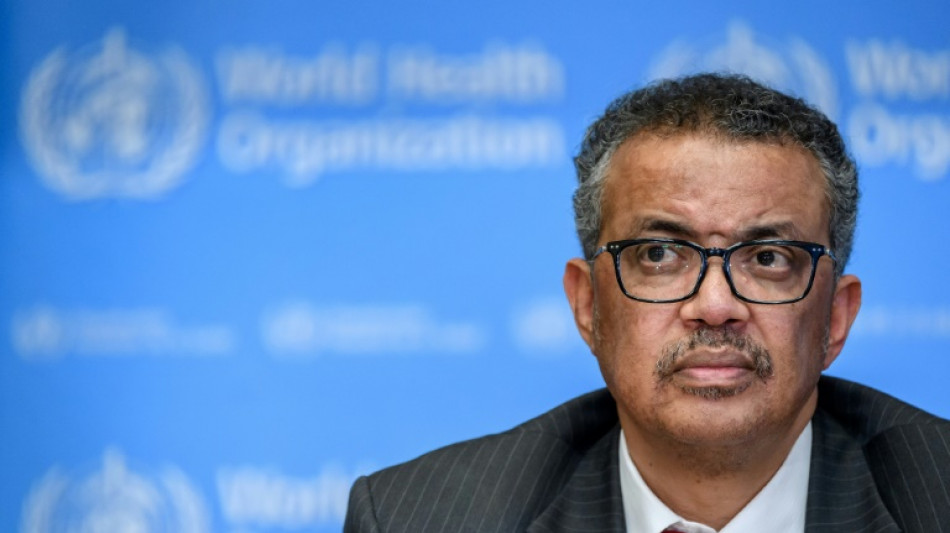
WHO triggers highest alert on monkeypox / Photo: Fabrice COFFRINI - AFP/File

 With elections ahead, Latvia's Russian-speakers reject Moscow's help
 Brazil football clubs face massive sponsorship blow from betting ban
 ChatGPT maker wants to be the App Store for AI as safety concerns grow
 Women fight fires and sexism in Indonesian Borneo

 Forsling's OT blast lifts Florida over Carolina in NHL opener

 Hurricane Polo sweeps over Mexico's Pacific coast, heads inland
 Grynspan pulls ahead in race to lead UN: diplomat

 Trump touts AI boss pledge to self-regulate
 Oil down, but stocks lower as bond yields rise
 England break down stubborn Czechs to claim first Nations League win
 UN Security Council extends Haiti anti-gang force by 6 months

 Manchester City guilty of Premier League charges: What comes next?
 Man City chief Soriano slams Premier League 'conspiracy theory'
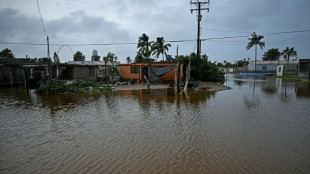 Hurricane Polo sweeps over Mexico's Pacific coast
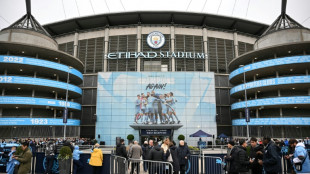 Man City must be relegated after guilty verdict says club's former chairman
 German far-right aims to lead Saxony-Anhalt govt in December
 Little damage as Hurricane Polo sweeps over Mexico's Pacific coast
 Manchester City guilty of breaking financial rules - Premier League

 FIFA boss Infantino blasted as would-be 'emperor' by UEFA's Ceferin
 Stocks move lower despite oil prices dropping

 AI driving up innovation investment: UN

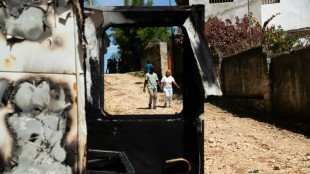 UN Security Council extends Haiti mission by 6 months
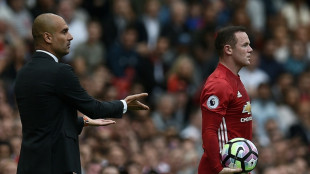 Man Utd do not deserve medals if Man City stripped of titles: Rooney
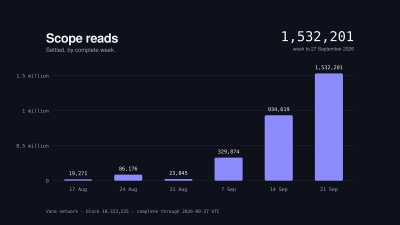 Vana Completes Expanded Staking as Part of the Vega Upgrade, Publishes Expanded VANA Token Economics
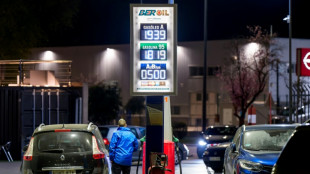 Spain to cap gas price hikes, extend fuel discounts
The World Health Organization on Saturday declared the monkeypox outbreak, which has affected nearly 16,000 people in 72 countries, to be a global health emergency -- the highest alarm it can sound.
"I have decided that the global #monkeypox outbreak represents a public health emergency of international concern," WHO chief Tedros Adhanom Ghebreyesus said at a press conference.
He said a committee of experts who met on Thursday was unable to reach a consensus, so it fell on him to decide whether to trigger the highest alert possible.
"WHO's assessment is that the risk of monkeypox is moderate globally and in all regions, except in the European region where we assess the risk as high," he added.
Monkeypox has affected over 15,800 people in 72 countries, according to a tally by the US Centers for Disease Control and Prevention (CDC) published on July 20.
A surge in monkeypox infections has been reported since early May outside the West and Central African countries where the disease has long been endemic.
On June 23, the WHO convened an emergency committee (EC) of experts to decide if monkeypox constitutes a so-called Public Health Emergency of International Concern (PHEIC) -- the UN health agency's highest alert level.
But a majority advised Tedros that the situation, at that point, had not met the threshold.
The second meeting was called on Thursday with case numbers rising further, where Tedros said he was worried.
"I need your advice in assessing the immediate and mid-term public health implications," Tedros told the meeting, which lasted more than six hours.
A US health expert sounded a grim warning late on Friday.
"Since the last #monkeypox EC just weeks ago, we've seen an exponential rise in cases. It's inevitable that cases will dramatically rise in the coming weeks & months. That's why @DrTedros must sound the global alarm," Lawrence Gostin, the director of the WHO Collaborating Center on National and Global Health Law, said on Twitter.
"A failure to act will have grave consequences for global health."
- Warning against discrimination -
A viral infection resembling smallpox and first detected in humans in 1970, monkeypox is less dangerous and contagious than smallpox, which was eradicated in 1980.
Ninety-five percent of cases have been transmitted through sexual activity, according to a study of 528 people in 16 countries published in the New England Journal of Medicine -- the largest research to date.
Overall, 98 percent of infected people were gay or bisexual men, and around a third were known to have visited sex-on-site venues such as sex parties or saunas within the previous month.
"This transmission pattern represents both an opportunity to implement targeted public health interventions, and a challenge because in some countries, the communities affected face life-threatening discrimination," Tedros said earlier, citing concern that stigma and scapegoating could make the outbreak harder to track.
The European Union's drug watchdog on Friday recommended for approval the use of Imvanex, a smallpox vaccine, to treat monkeypox.
Imvanex, developed by Danish drugmaker Bavarian Nordic, has been approved in the EU since 2013 for the prevention of smallpox.
It was also considered a potential vaccine for monkeypox because of the similarity between the monkeypox virus and the smallpox virus.
The first symptoms of monkeypox are fever, headaches, muscle pain and back pain during the course of five days.
Rashes subsequently appear on the face, the palms of hands and soles of feet, followed by lesions, spots and finally scabs.
H.Gonzales--AT