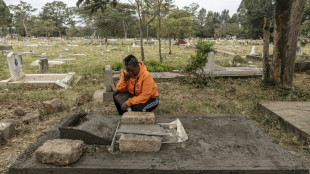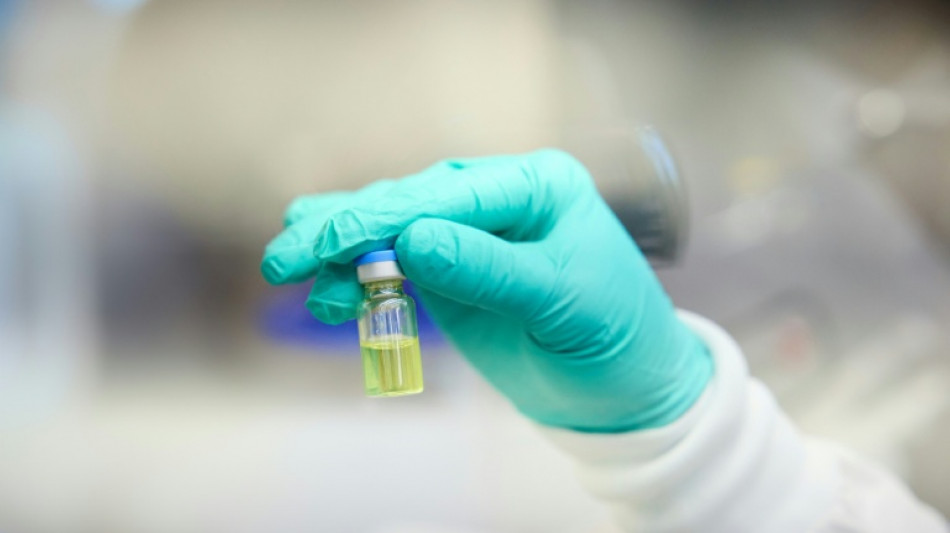
Twice-a-year HIV prevention shots begin in Africa / Photo: - - GILEAD SCIENCES, INC/AFP/File

 Amaze Holdings (NYSE: AMZE) Executes Binding LOI to Acquire BullionFX | Alchemy, a Decentralized Gold-Backed Financial Ecosystem for Valued at US$155 Million
 Clashes between French teens, police as school blockades intensify

 Stocks move sideways despite oil moving lower

 African leaders to gather in Egypt for business summit
 UK decides against charging foreign visitors for museums

 Dallaglio to sell England World Cup winners' medal

 Brazil come from behind to beat Australia 4-2 in friendly
 Ruthless An retains Asian Games badminton crown as Kunlavut triumphs

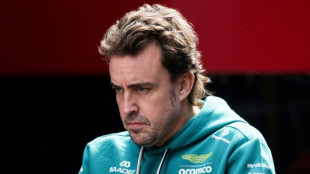 Alonso to stay with F1 team Aston Martin in 2027
 China badminton 'still strong' despite Asian Games slump
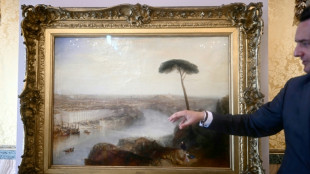 'Exceptional' Turner painting shown in Rome before sale

 European stocks climb as oil dips
 Spain aims to ban evictions until 2030 amid housing protests

 Kunlavut first Thai man to win Asian Games badminton singles gold

 French far right says antisemitism claims part of 'total war' to derail presidency bid
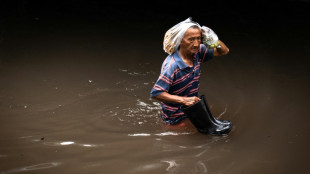
 'Gift from God': Rain brings relief from Indonesia toxic haze
 Ex-world snooker champion jailed for 7 years for child sex crimes
 French teens clash with police as school blockades intensify
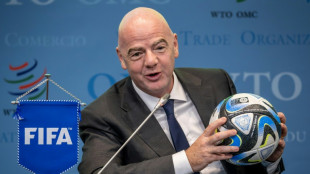 FIFA accuses UEFA of 'misinformation campaign' in bid for World Cup papers

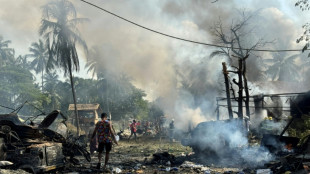 Myanmar airstrike toll hits 50 as families gather dead
 STARTRADER Raises Lloyd's of London Client Fund Insurance to USD 30 Million in Aggregate
 North Korean DMZ landmine blasts 'violation of armistice': Seoul

 Sabalenka 'fresh' for first tournament since losing No.1 spot

 Myanmar airstrike death toll rises to 50: aid workers
 North Korean DMZ landmine blast 'violation of armistice'

South Africa, Eswatini and Zambia on Monday began administering a groundbreaking HIV-prevention injection in the drug's first public rollouts in Africa, which has the world's highest HIV burden.
Lenacapavir, which is taken twice a year, has been shown to reduce the risk of HIV transmission by more than 99.9 percent, making it functionally akin to a powerful vaccine.
In South Africa, where one in five adults lives with HIV, a Wits University research unit oversaw the rollout as part of an initiative funded by the international health agency Unitaid, which works on ensuring equitable access to medical innovations.
"The first individuals have begun using lenacapavir for HIV prevention in South Africa... making it among the first real-world use of the six-monthly injectable in low- and middle-income countries," Unitaid said in a statement.
It did not specify how many people received the first doses of the drug, which cost $28,000 per person a year in the United States.
A broader national rollout is expected next year.
Neighbouring Zambia and Eswatini received 1,000 doses last month as part of a US programme and launched the drug at World AIDS Day ceremonies on Monday.
In Eswatini's Hhukwini constituency, dozens lined up for the shot at a lively public event filled with song and dance.
"Today marks a turning point in our national HIV response," said Prime Minister Russell Dlamini, adding that the injection "gives us fresh hope and a powerful tool to protect our citizens".
In Zambia, hundreds marched two kilometres (one mile) to Chawama township of the capital Lusaka to mark the occasion.
Health Minister Elijah Muchima urged volunteers living with HIV to visit nearby hospitals to get the jab, saying it "brings renewed hope to young people and the vulnerable population".
Under the US programme, manufacturer Gilead Sciences has agreed to provide lenacapavir at no profit to two million people in countries with a high HIV burden over three years.
But Washington -- at odds with Pretoria over several policy issues -- will not provide doses to South Africa despite its participation in clinical trials.
"Obviously, we encourage every country, especially countries like South Africa, that have significant means of their own to fund doses for their own population," Jeremy Lewin, a senior US State Department official, told reporters late last month.
- Saving lives vs profit -
Critics say the US deliveries are far below the actual requirement and that the market price is out of reach for most people.
Eastern and southern Africa account for about 52 percent of the 40.8 million people living with HIV worldwide, according to 2024 UNAIDS data.
In Zambia alone, roughly 1.4 million people are living with HIV, with 30,000 new infections each year, according to the health ministry. Eswatini -- a tiny kingdom of 1.2 million -- has about 220,000 people living with the virus.
UNAIDS executive director Winnie Byanyima criticised the drug's limited availability, saying drugmakers were neglecting Africa's needs.
"If you don't care about those lives, at least you care about the profit! Bring the drug here," she told AFP.
WHO chief Tedros Adhanom Ghebreyesus warned that gains against HIV are "now at risk" after funding cuts and urged countries to rapidly scale up use of lenacapavir.
"Progress against HIV has largely stalled," he told journalists.
Generic versions of lenacapavir are expected to be available from 2027 at around $40 per year in more than 100 countries, through agreements by Unitaid and the Gates Foundation with Indian pharmaceutical companies.
Pre-exposure prophylaxis, or PrEP, has been used for over a decade to prevent HIV but its reliance on a daily pill has limited its impact on global infections.
P.Smith--AT