Across Haiti, fuel shortages and power outages bring life to a halt / Photo: Richard PIERRIN - AFP

 With elections ahead, Latvia's Russian-speakers reject Moscow's help

 Brazil football clubs face massive sponsorship blow from betting ban
 ChatGPT maker wants to be the App Store for AI as safety concerns grow

 Women fight fires and sexism in Indonesian Borneo

 Forsling's OT blast lifts Florida over Carolina in NHL opener

 Hurricane Polo sweeps over Mexico's Pacific coast, heads inland

 Grynspan pulls ahead in race to lead UN: diplomat

 Trump touts AI boss pledge to self-regulate

 Oil down, but stocks lower as bond yields rise

 England break down stubborn Czechs to claim first Nations League win
 UN Security Council extends Haiti anti-gang force by 6 months

 Manchester City guilty of Premier League charges: What comes next?

 Man City chief Soriano slams Premier League 'conspiracy theory'

 Hurricane Polo sweeps over Mexico's Pacific coast

 Man City must be relegated after guilty verdict says club's former chairman

 German far-right aims to lead Saxony-Anhalt govt in December

 Little damage as Hurricane Polo sweeps over Mexico's Pacific coast

 Manchester City guilty of breaking financial rules - Premier League

 FIFA boss Infantino blasted as would-be 'emperor' by UEFA's Ceferin
 Stocks move lower despite oil prices dropping

 AI driving up innovation investment: UN

 UN Security Council extends Haiti mission by 6 months

 Man Utd do not deserve medals if Man City stripped of titles: Rooney

 Vana Completes Expanded Staking as Part of the Vega Upgrade, Publishes Expanded VANA Token Economics
 Spain to cap gas price hikes, extend fuel discounts
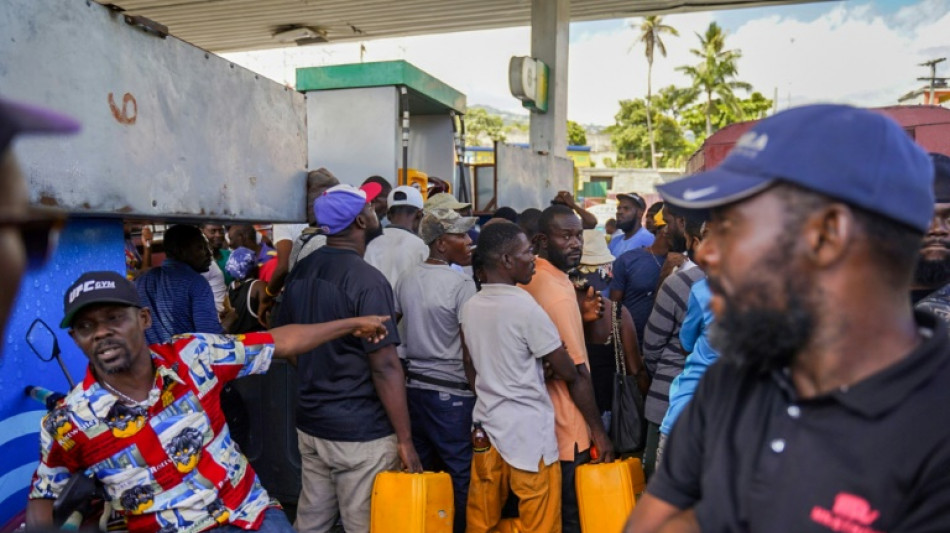
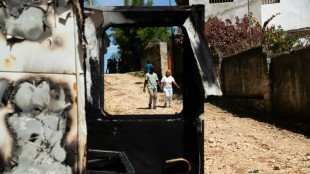
With gang violence racking Haiti's capital, other cities across the island nation face another major issue: a shortage of both fuel and electricity threatens daily life for millions.
In addition to their deadly battles in Port-au-Prince, where at least 234 people have been killed or injured in the Cite Soleil neighborhood since early July, Haitian gangs have also hampered activity at the country's three main oil terminals.
Armed groups regularly block access to the facilities, halting the flow of fuel into the country.
In Jeremie, a coastal town on the southwestern tip of the island, gas stations have been running low on fuel for months.
Residents are forced to turn to the black market, where gasoline and diesel are readily available -- but at prices six times higher than the rate set by the government.
"You can find fuel everywhere, except in the gas stations," says Yvon Janvier, a law professor.
With little legal fuel available, and soaring black-market prices, Jeremie's least well-off residents are forced to take their journeys by foot.
The vast majority of energy in Haiti is produced by diesel-burning plants, so "it's very simple: no fuel, no electricity," says Janvier.
- One paved road -
Jose Davilmar, administrative director of the country's public electricity utility (EDH), says there are "enormous difficulties in transporting fuel to certain provincial towns."
"Most recently, three boats loaded with fuel could not dock because there were retaliations by bandits in Cite Soleil."
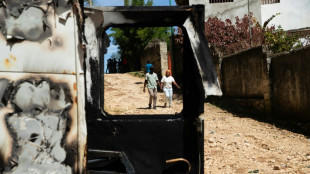
With control of only two short kilometers (1.2 miles) of national highway in Martissant, a poor suburb of Port-au-Prince, gangs have gained power over the flow of goods to half the country.
Armed groups have had total control over the only paved road leading to Haiti's southern regions since June 2021.
- Reduced hospital service -
Without electricity from power plants, entire regions of the country must turn to gas-powered generators to keep the lights on.
For those who cannot afford their own generator, daily life has become a headache.
In Jacmel, on Haiti's southern coast, painter Joseph Stevenson must ask among his neighbors to see who has power each time he needs to charge his phone.
"Sometimes I have to go all the way downtown to get just a few percent of a charge," says the artist.
"Can you imagine that, in the 21st century?"
In Cap-Haitien, Haiti's second-largest city, bars and restaurants equipped with generators have been able to stay open, but have reduced their hours of operation due to the rising price of gas.
The northern city's mayor, Patrick Almonor, warns that the power outages have had major impacts on medical facilities.
"Hospitals are working at a slower pace with reduced services because it has been nearly six months since the EDH has provided electricity in the city," says Almonor.
- Prices doubled -
In Les Cayes, the third-largest city, some health centers are only open a few hours a day, says doctor Kinsky Hippolyte.
The situation is largely due to the lack of electricity, but also problems transporting equipment and medicine out of the capital, 200 kilometers to the north.
Like everywhere in Haiti, the southern peninsula also suffers from sky-high inflation. But while prices have increased by more than 25 percent nationally, the southwest region has seen the prices of some food products double since the beginning of the year.
"Even the prices of local products are rising: for example, farmers are selling their lemons at a higher price to be able to buy rice, which is imported," Hippolyte says.
The doctor, who considers himself lucky compared with the country's poorest, is nevertheless obliged to "limit (his) travels because of the price of gasoline."
Haiti's rising poverty rate, compounded by social instability, is a major concern for the humanitarian community: nearly half of the country's 11 million citizens are already food insecure, including 1.3 million who are on the verge of starvation, according to the World Food Programme.
N.Walker--AT