US overdose deaths shot up for Black, Native people during pandemic / Photo: Agnes BUN - AFP/File

 With elections ahead, Latvia's Russian-speakers reject Moscow's help

 Brazil football clubs face massive sponsorship blow from betting ban

 ChatGPT maker wants to be the App Store for AI as safety concerns grow

 Women fight fires and sexism in Indonesian Borneo

 Forsling's OT blast lifts Florida over Carolina in NHL opener

 Hurricane Polo sweeps over Mexico's Pacific coast, heads inland

 Grynspan pulls ahead in race to lead UN: diplomat

 Trump touts AI boss pledge to self-regulate

 Oil down, but stocks lower as bond yields rise

 England break down stubborn Czechs to claim first Nations League win

 UN Security Council extends Haiti anti-gang force by 6 months

 Manchester City guilty of Premier League charges: What comes next?

 Man City chief Soriano slams Premier League 'conspiracy theory'

 Hurricane Polo sweeps over Mexico's Pacific coast

 Man City must be relegated after guilty verdict says club's former chairman

 German far-right aims to lead Saxony-Anhalt govt in December

 Little damage as Hurricane Polo sweeps over Mexico's Pacific coast

 Manchester City guilty of breaking financial rules - Premier League

 FIFA boss Infantino blasted as would-be 'emperor' by UEFA's Ceferin

 Stocks move lower despite oil prices dropping

 AI driving up innovation investment: UN

 UN Security Council extends Haiti mission by 6 months

 Man Utd do not deserve medals if Man City stripped of titles: Rooney

 Vana Completes Expanded Staking as Part of the Vega Upgrade, Publishes Expanded VANA Token Economics

 Spain to cap gas price hikes, extend fuel discounts

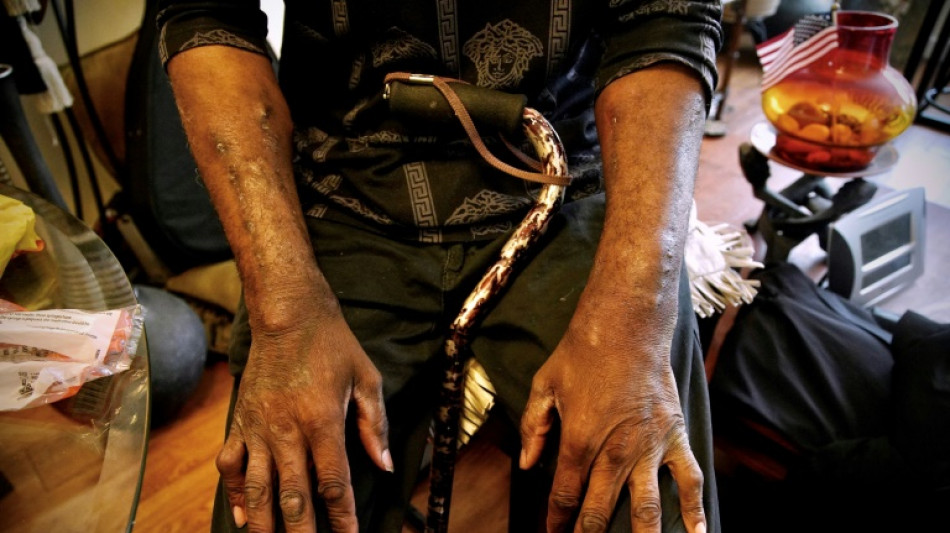
Overdose deaths increased 44 percent for Black people and 39 percent for American Indians in 2020 compared to 2019, as the Covid-19 pandemic disrupted access to care and exacerbated racial inequality, an official report showed Tuesday.
"Racism, a root cause of health disparities, continues to be a serious public health threat that directly affects the well-being of millions of Americans," US Centers for Disease Control and Prevention (CDC) acting principal deputy director Debra Houry said in a briefing.
"The disproportionate increase in overdose death rates among Black and American Indian/Alaskan Native people may partly be due to health inequities, like unequal access to substance use treatment and treatment biases."
Recent increases in deaths were largely driven by illegally manufactured fentanyl and fentanyl analogs (IMFs), according to the report from the CDC.
Before the pandemic, the overdose death rate was similar for Black, Native and white people, at 27, 26 and 25 per 100,000 people in 2019.
But that changed dramatically in 2020, when the respective figures were 39, 36 and 31 per 100,000 people.
Though the increase among white people was not as great as for Black people and American Indians, the new rate is still a historic high.
Among key findings, the overdose death rate among Black males 65 years and older was nearly seven times that of their white counterparts.
Black people 15-24 years old experienced the largest rate increase, 86 percent, compared to changes seen in other groups.
"There was a substantially lower percentage of people in racial and ethnic minority groups showing evidence of ever receiving treatment for substance use, compared to white people," CDC health scientist Mbabazi Kariisa said during the briefing.
In fact, most people who died by overdose had no evidence of getting prior substance use treatment before their death.
Areas with a wider income gap between rich and poor had the highest death rates.
Being impoverished "can lead to lack of stable housing, reliable transportation and health insurance, making it even more difficult for people to access treatment, and other support services," said Kariisa.
In terms of recommendations, Houry said it was vital to raise awareness about the lethality of the illicit drug supply, particularly fentanyl -- and encouraging the public to carry the life-saving treatment Naloxone.
Improving access to treatment and offering structural support, such as transport assistance and child care, can improve care access.
"Combining culturally appropriate traditional practices, spirituality and religion with evidence based substance use disorder treatment also helps raise awareness and reduce stigma," she said.
"While we have made so much progress in treating substance use disorders as chronic conditions, rather than moral failings, there is still so much more work to do, including making sure that all people who need these services can get them," Houry concluded.
A.Williams--AT