
US to remove warnings from menopause hormone therapy / Photo: Andrew Harnik - GETTY IMAGES NORTH AMERICA/AFP

 Stocks move lower despite oil prices dropping

 AI driving up innovation investment: UN

 UN Security Council extends Haiti mission by 6 months

 Man Utd do not deserve medals if Man City stripped of titles: Rooney

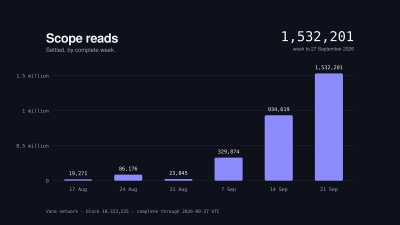 Vana Completes Expanded Staking as Part of the Vega Upgrade, Publishes Expanded VANA Token Economics

 Spain to cap gas price hikes, extend fuel discounts

 'We just need rain': Germany's Rhine river hits new low

 Yemen health system at 'breaking point': WHO

 Ireland undecided on second Israel match: coach

 France's Le Pen defiant after top ally hit by antisemitism claims

 Tom Cruise trades stunts for satire as toxic tycoon 'Digger'

 MEXC Unveils "WE SEE YOU" Brand Visual Refresh, Putting People Behind Every Trade in Focus

 Thai capital cleans up after deadly floods

 NATO, EU allies rally to Estonia after 'sabotage' blamed on Russia

 Families demand justice for Cameroon's 'nightmare' wave of murdered women

 Tebas says Man City should face 'most severe' sanctions if guilty of rule breaches

 Pochettino calls Man City success 'a period of deception'

 Settler attack on West Bank village injures Israeli forces, drawing rare rebuke

 Mystery over UK airbase scare after reports no explosives found

 Spanish govt races to adopt housing law under protest pressure

 Estonia slams Russian 'sabotage' after arson attack on defence company

 Slovenia sees surge in '.si' sites after Trump hypes 'super intelligence'

 'Like a dream' for An as Games organisers 'sorry' for latest mix-up

 Tokyo suffers longest streak of rainy days on record

 Indonesia charges train driver over crash that killed 16 women

The US health regulatory agency on Monday said it would direct manufacturers to remove a bold warning on many hormone therapies used to alleviate menopausal symptoms, saying the risks have been exaggerated.
Hormone Replacement Therapy can be taken to replace estrogen that the body stops producing during menopause -- the natural process that ends female reproductive years -- with the aim of alleviating symptoms that can be physically and mentally debilitating including hot flashes, brain fog, insomnia, night sweats, joint pain and bone loss.
It once was used routinely, but a major 2002 study that was aimed at exploring how the therapies could prevent chronic disease pointed to risks associated with specific HRT formulations.
Since then "black box warnings" -- the strongest warning the US Food and Drug Administration can require on prescription drugs -- have sounded alarm over increased HRT risks including of certain cancers, cardiovascular conditions and probable dementia.
Prescription and use of the therapies over recent decades plummeted.
But the matter remains one of debate, and critics have pointed to flaws with the early-2000s study, whose trials were halted as risks appeared: namely it focused on women who were on average a decade-post menopause and in their 60s, when cardiovascular risks increase regardless.
Today guidance generally indicates that newly menopausal or perimenopausal women -- broadly in their late 40s or 50s -- are potential candidates for treatment.
There also are newer, more localized or lower-dose forms of the therapies available.
"We're challenging outdated thinking and recommitting to evidence-based medicine that empowers rather than restricts," US health chief Robert F. Kennedy Jr said in introducing the measure.
- More nuance -
Many members of the medical community have urged revisiting the label, which they say can scare women for whom benefits may outweigh risks.
Others have voiced concern that changes shouldn't come without a transparent review process that convenes independent experts.
FDA head Marty Makary dismissed that notion in a Monday briefing, saying such committees are "bureaucratic, long, often conflicted and very expensive.
"People have felt demoralized in this field. We've made almost no progress in assessing the evidence for years."
FDA officials have emphasized the new label will provide for more nuanced discussion between patients and doctors in evaluating whether HRT can be right for individuals.
Typically women in a low-risk category have healthy vitals including weight and blood pressure as well as normal-range cholesterol levels, with no history or a lower risk of developing breast cancer. They are also within the first 10 years of beginning menopause.
The president of the American College of Obstetricians and Gynecologists, Steven Fleischman, commended the FDA's move, saying "the updated labels will better allow patients and clinicians to engage in a shared decision-making process."
Fleischman said in a statement the change would not shift the ACOG's guidance on estrogen therapy, but noted it was important to distinguish between systemic estrogen products -- including methods taken orally or via patches -- and low-dose vaginal estrogen.
"Like all medications, systemic estrogen products are not without risk, and their use should be based on an individualized conversation between patients and their clinicians," the health association said.
The FDA said it is not seeking to remove the boxed warning for endometrial cancer for systemic estrogen-alone products.
O.Gutierrez--AT