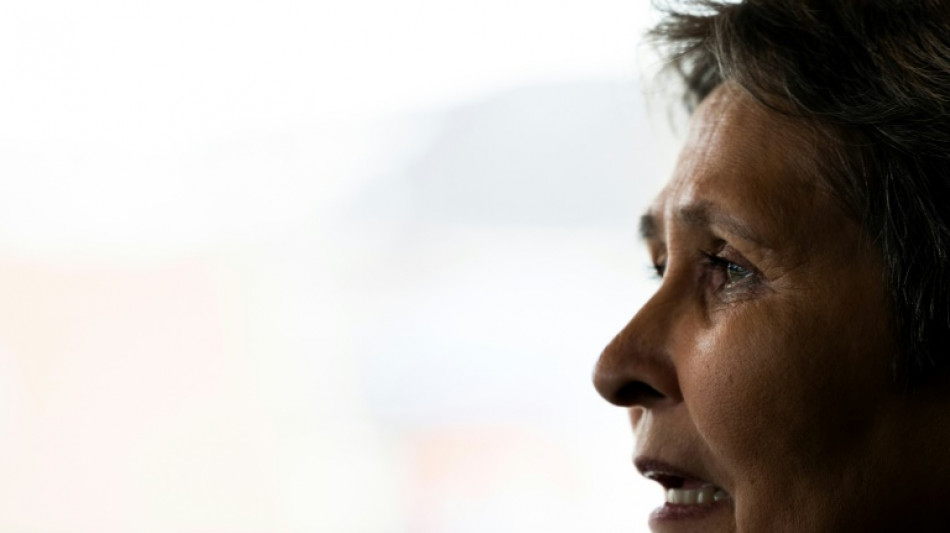
Trauma of Greenland's forced contraception / Photo: Odd ANDERSEN - AFP

 With elections ahead, Latvia's Russian-speakers reject Moscow's help
 Brazil football clubs face massive sponsorship blow from betting ban
 ChatGPT maker wants to be the App Store for AI as safety concerns grow
 Women fight fires and sexism in Indonesian Borneo

 Forsling's OT blast lifts Florida over Carolina in NHL opener

 Hurricane Polo sweeps over Mexico's Pacific coast, heads inland
 Grynspan pulls ahead in race to lead UN: diplomat

 Trump touts AI boss pledge to self-regulate

 Oil down, but stocks lower as bond yields rise
 England break down stubborn Czechs to claim first Nations League win
 UN Security Council extends Haiti anti-gang force by 6 months

 Manchester City guilty of Premier League charges: What comes next?
 Man City chief Soriano slams Premier League 'conspiracy theory'
 Hurricane Polo sweeps over Mexico's Pacific coast
 Man City must be relegated after guilty verdict says club's former chairman

 German far-right aims to lead Saxony-Anhalt govt in December
 Little damage as Hurricane Polo sweeps over Mexico's Pacific coast
 Manchester City guilty of breaking financial rules - Premier League
 FIFA boss Infantino blasted as would-be 'emperor' by UEFA's Ceferin
 Stocks move lower despite oil prices dropping
 AI driving up innovation investment: UN

 UN Security Council extends Haiti mission by 6 months
 Man Utd do not deserve medals if Man City stripped of titles: Rooney

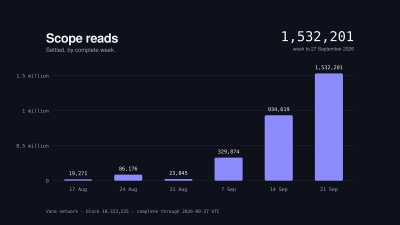 Vana Completes Expanded Staking as Part of the Vega Upgrade, Publishes Expanded VANA Token Economics

 Spain to cap gas price hikes, extend fuel discounts

"I had to spread my legs, and when it was put in it hurt terribly," said Britta Mortensen, who was 15 she when was forced to have a coil, or intrauterine device (IUD), fitted.
Like thousands of young Greenland Inuit, she was the victim of a policy to limit the birth rate in the Arctic territory, which was no longer a colony at the time but still under Danish control.
According to an investigation by Denmark's public broadcaster DR, some 4,500 women were subjected to the procedure.
It was 1974 and Mortensen had just left her family for the first time.
There was no high school in the fishing village of Ilulissat where she lived on the island's western edge, so continuing her studies in Denmark was an opportunity for her.
"I went... to a boarding school and there the headmistress told me: 'You have to get an IUD.' I said no," she recalled, standing in front of the white house where she was born.
The headmistress said: "'Yes, you will get an IUD, even if you say no,'" Mortensen added, the hurt still clear.
Her parents, who were thousands of miles away, were never asked for consent and never informed.
One autumn day, the teenager found herself in front of a doctor ready to have the contraceptive device inserted.
"It was an IUD for women who had already had children, not for young girls the age I was," the now 63-year-old told AFP.
- 'Ashamed' -
After the "violation", Mortensen took refuge in silence, unaware that her fate was shared by other Greenlandic girls in her boarding school in Jutland in western Denmark.
"I was ashamed. I haven't told anyone about it until now."
But Mortensen is now taking part in a debate about what about happened -- albeit timidly and mostly on Facebook, where a group set up by a psychologist who was also a victim, has brought together more than 70 women.
It's a "mutual support group as co-sisters so no one feels alone, especially with the reactivation in the trauma that was repressed for many years," said its creator Naja Lyberth.
It is particularly trying for women who had not been able to have children, she said.
Many women were unaware that they were wearing a contraceptive device, she added, only finding out when Greenlandic gynaecologists started discovering them.
"Typically, it was placed during an abortion, without women being informed about it," Lyberth told AFP.
Historian Soren Rud said the Danish campaign in the late 1960s was part of a lingering colonial mentality that continued even after formal decolonisation in 1953.
This attitude "was marked by ideas of the Greenlander's lack of cultural competences. In contrast to many forms of birth control, IUD did not require any effort from the Greenlandic women in order to be effective," said the associate professor at the University of Copenhagen.
The women's testimonies come at a time when Denmark and Greenland, which became an autonomous territory in 2009, are re-examining their past relationship.
In March, Denmark apologised and paid compensation to six Inuit who were taken from their families in the 1950s to take part in an experiment to build a Danish-speaking elite in the Arctic territory.
Britta Mortensen believes that women who were forced to use contraception also deserve an apology and should also be compensated.
"They should compensate for the harm done to us, the many girls who were forced to wear the IUD," she said.
D.Johnson--AT