AI-powered meet-up apps fight loneliness / Photo: Marco BERTORELLO - AFP/File

 Stocks move lower despite oil prices dropping

 AI driving up innovation investment: UN

 UN Security Council extends Haiti mission by 6 months

 Man Utd do not deserve medals if Man City stripped of titles: Rooney

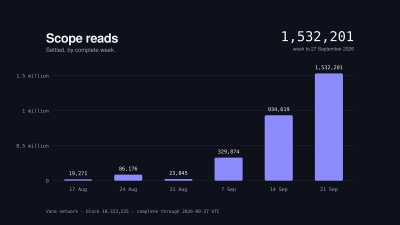 Vana Completes Expanded Staking as Part of the Vega Upgrade, Publishes Expanded VANA Token Economics

 Spain to cap gas price hikes, extend fuel discounts

 'We just need rain': Germany's Rhine river hits new low

 Yemen health system at 'breaking point': WHO

 Ireland undecided on second Israel match: coach

 France's Le Pen defiant after top ally hit by antisemitism claims

 Tom Cruise trades stunts for satire as toxic tycoon 'Digger'

 MEXC Unveils "WE SEE YOU" Brand Visual Refresh, Putting People Behind Every Trade in Focus

 Thai capital cleans up after deadly floods

 NATO, EU allies rally to Estonia after 'sabotage' blamed on Russia

 Families demand justice for Cameroon's 'nightmare' wave of murdered women

 Tebas says Man City should face 'most severe' sanctions if guilty of rule breaches

 Pochettino calls Man City success 'a period of deception'

 Settler attack on West Bank village injures Israeli forces, drawing rare rebuke

 Mystery over UK airbase scare after reports no explosives found

 Spanish govt races to adopt housing law under protest pressure

 Estonia slams Russian 'sabotage' after arson attack on defence company

 Slovenia sees surge in '.si' sites after Trump hypes 'super intelligence'

 'Like a dream' for An as Games organisers 'sorry' for latest mix-up

 Tokyo suffers longest streak of rainy days on record

 Indonesia charges train driver over crash that killed 16 women

On a summer evening in San Francisco, JT Mason went to dinner with five complete strangers, confident he would have a good time thanks to careful guest selection by a new type of app for meeting people.
The platform, called 222, promises something different than your typical dating app.
"I'm not getting the image that they want people to see. I'm getting the actual human being," said the 25-year-old paramedic.
Before the evening, Mason completed a lengthy questionnaire covering his values, interests, drug tolerance, character traits, and other personal criteria.
After dinner, he joined other app users at a private art deco bar, all hoping to meet potential friends or perhaps find something more.
Once connections are made, everyone has the opportunity to tell the app which people they'd like to see again -- or not -- and explain why.
According to 222, the app's artificial intelligence becomes particularly effective at matching users after they participate in several events, from dinners to yoga sessions to improv classes.
"As far as AI getting to the point of understanding human chemistry, I think they're pretty far off," Mason observed, but said he thinks it can serve as "the first step in getting us to the table to try to create that connection."
Predicting compatibility between strangers using AI has become the obsession of Keyan Kazemian and his co-founders at 222, which now operates in several major cities from London to Los Angeles.
The 26-year-old entrepreneur hopes to "help people not only form initial connections and get to the next interaction, but help people who already know each other form long, lasting relationships."
After working at Match Group -- the parent company of Tinder and Hinge -- he concluded that traditional dating apps "only seek one thing: are you going to swipe right on the next person?"
Most new technologies are "actually placing people not with other humans, but with virtual entities," he added, referring to social media and AI assistants.
- '15 cigarettes a day' -
The growing difficulties individuals face in forming meaningful connections have alarmed health professionals.
In 2017, then US surgeon general Vivek Murthy described a "loneliness epidemic."
In a 2023 report, he warned that "the mortality impact of being socially disconnected is similar to that caused by smoking up to 15 cigarettes a day, and even greater than that associated with obesity and physical inactivity."
He cited increased risks of cardiovascular disease, dementia and depression.
The causes, according to various studies, include the gradual disappearance of traditional socializing institutions, addictive digital platforms and, more recently, the pandemic and remote work.
- 'Emotionally challenging' -
When Isabella Epstein moved to New York in 2021 to work at an investment bank, she "tried everything" to build connections.
Fresh out of a small university in rural Vermont and accustomed to close-knit communities, she experimented with apps and joined clubs -- all in vain.
"It was an emotionally challenging period for me," Epstein recalled.
"I ended up approaching strangers on the street, at coffee shops. I would say to a woman, 'I love your outfit,' or stop someone and ask, 'What are you reading?' People were very positively receptive."
Over time, the young woman accumulated hundreds of contacts.
She began organizing impromptu events -- inviting some to happy hours, others to pickleball games -- and gradually created her own circle of friends.
Passionate about solving this widespread problem, she quit her job and launched "Kndrd."
The app targets New York women under 40, allowing its roughly 10,000 users to suggest activities and find partners for them.
Other services similar to 222 and Kndrd have emerged in recent years, including Timeleft, Plots and Realroots.
"The positive side of these apps is that their business model doesn't rely on time spent online," noted Felix-Olivier Ngangue, an investor at Convivialite Ventures.
"It's in their interest for people to meet in real life."
A.Clark--AT