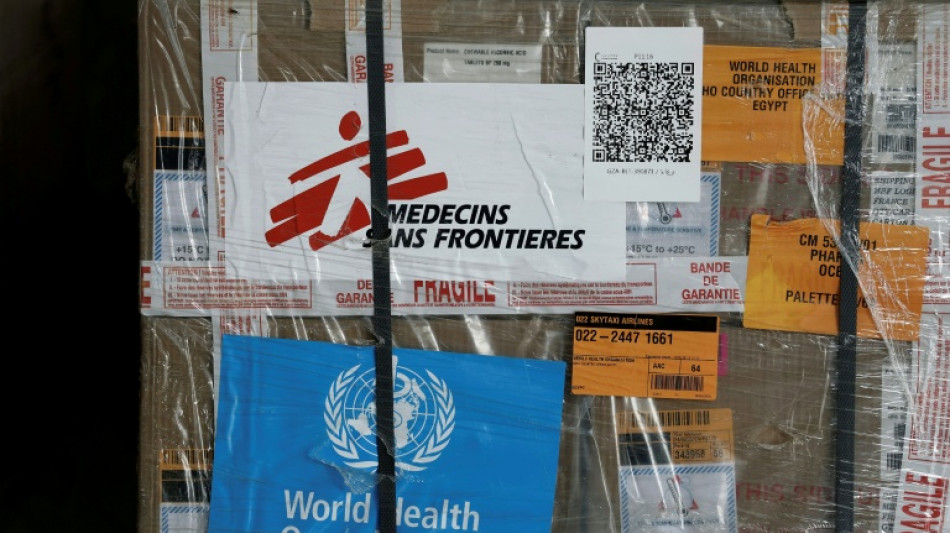
US aid cuts strain response to health crises worldwide: WHO / Photo: Benoit Tessier - POOL/AFP

 NBA close to picking new $12-13bn Vegas team owners: report
 LA28 Olympics torch relay to visit all 50 states
 Spain brush aside Croatia in Nations League, England down Czechs
 Trump hails 'morally binding' AI self-regulation pledge
 Yamal inspires Spain to Croatia romp on World Cup homecoming

 UN to hold fourth informal poll of secretary-general candidates
 Who are the Emiratis behind crisis-hit Manchester City?

 Singer Angelique Kidjo urges Africans to 'create together'

 Alleged Rihanna mansion shooter mentally fit for trial, says judge
 Mystery over UK airbase scare as police find petrol not explosives

 OpenAI unveils low-cost AI model, a day after shelving Astra upgrade
 Premier League confirms Man City guilty of serious financial breaches
 Brazil's Lula turns to Bad Bunny tune to criticise Trump ahead of polls
 Nigerian dancer eyes world record after seven-day marathon
 Swiss regulator concludes Julius Baer bank probe

 Brazil's patron saint pulled into latest election scrap

 Football overload leaves players near 'breaking point', warns Tebas
 Paris Eiffel Tower says chief to step down after uproar over removing women staff

 Amaze Holdings (NYSE: AMZE) Executes Binding LOI to Acquire BullionFX | Alchemy, a Decentralized Gold-Backed Financial Ecosystem for Valued at US$155 Million
 Clashes between French teens, police as school blockades intensify

 Stocks move sideways despite oil moving lower

 African leaders to gather in Egypt for business summit
 UK decides against charging foreign visitors for museums

 Dallaglio to sell England World Cup winners' medal

 Brazil come from behind to beat Australia 4-2 in friendly

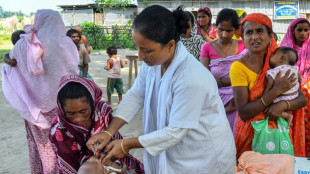
The United States slashing foreign aid risks piling pressure on already acute humanitarian crises across the globe, a World Health Organization official said Sunday, also warning against withdrawing from the UN agency.
Since taking office in January, President Donald Trump has effectively frozen foreign aid funding, moved to dismantle the US Agency for International Development (USAID) and other programmes, and announced plans to leave the WHO.
Washington, which had long been the WHO's biggest donor, did not pay its 2024 dues, and it remains unclear if the United States will meet its membership obligations for 2025
The agency, already facing a gaping deficit this year, has proposed shrinking its budget by a fifth, likely reducing its reach and workforce, according to an earlier AFP report citing an internal email.
"The WHO with its partners have a significant role in sustaining healthcare systems, rehabilitation of healthcare systems, emergency medical team training and dispatching, pre-placement of trauma kits," Hanan Balkhy, the WHO's regional director for the Eastern Mediterranean, told AFP.
"Many of these programmes have now stopped or are not going to be able to continue," she said.
The funding cuts will likely hinder the ability to continue delivering robust aid to communities in desperate need of care.
Balkhy cited the ongoing conflicts in Gaza, Sudan, and Yemen as areas where healthcare institutions and aid programmes were already under pressure before the funding shakeups.
In the Gaza Strip, where more than a year and a half of fighting has seen large swaths of the Palestinian territory reduced to rubble and few hospitals remain functioning, the public health situation is dire.
"The emergency medical team support, procurement of the medications and the rehabilitation of the health care facilities, all of that has been immediately impacted by the freeze of the US support," said Balkhy.
In Sudan, the WHO is facing mounting issues amid a bloody civil war that has displaced millions, with several areas hit by at least three different disease outbreaks -- malaria, dengue and cholera, according to Balkhy.
"We work significantly to identify emerging and re-emerging pathogens to keep the Sudanese safe, but also to keep the rest of the world safe. So it will impact our ability to continue to do surveillance, detection of diseases," she added.
A US departure from the WHO will also undercut long established channels of communication with leading research facilities, universities and public health institutions that are based in the United States.
That in turn would likely prevent the easy sharing of information and research, which is pivotal to heading off global public health crises like an emerging pandemic, said Balkhy.
"These bacteria and viruses, number one, know no borders. Number two, they are ambivalent to what's happening in the human political landscape."
A.Anderson--AT