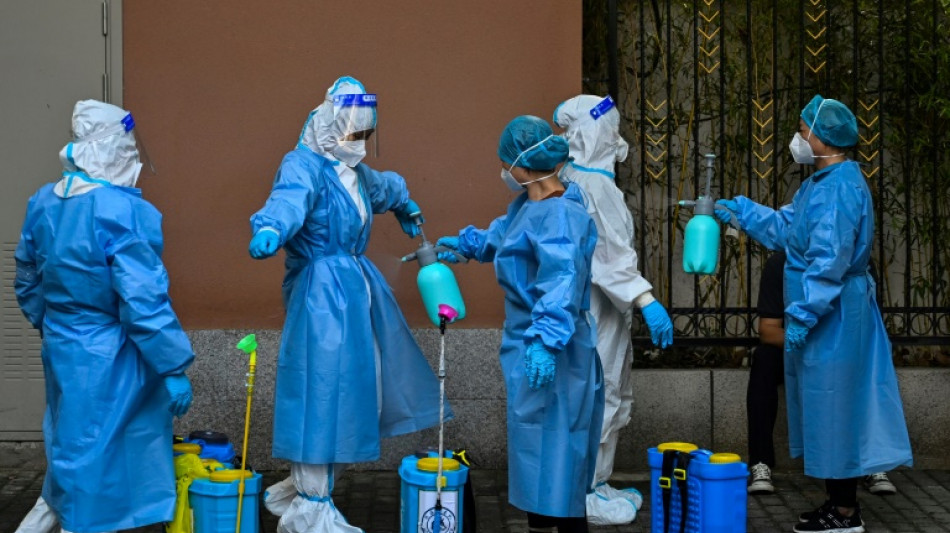
Pandemic treaty talks fight late hurdles / Photo: HECTOR RETAMAL - AFP/File

 NBA close to picking new $12-13bn Vegas team owners: report
 LA28 Olympics torch relay to visit all 50 states
 Spain brush aside Croatia in Nations League, England down Czechs
 Trump hails 'morally binding' AI self-regulation pledge
 Yamal inspires Spain to Croatia romp on World Cup homecoming
 UN to hold fourth informal poll of secretary-general candidates
 Who are the Emiratis behind crisis-hit Manchester City?
 Singer Angelique Kidjo urges Africans to 'create together'
 Alleged Rihanna mansion shooter mentally fit for trial, says judge
 Mystery over UK airbase scare as police find petrol not explosives
 OpenAI unveils low-cost AI model, a day after shelving Astra upgrade
 Premier League confirms Man City guilty of serious financial breaches
 Brazil's Lula turns to Bad Bunny tune to criticise Trump ahead of polls
 Nigerian dancer eyes world record after seven-day marathon
 Swiss regulator concludes Julius Baer bank probe
 Brazil's patron saint pulled into latest election scrap

 Football overload leaves players near 'breaking point', warns Tebas
 Paris Eiffel Tower says chief to step down after uproar over removing women staff
 Amaze Holdings (NYSE: AMZE) Executes Binding LOI to Acquire BullionFX | Alchemy, a Decentralized Gold-Backed Financial Ecosystem for Valued at US$155 Million
 Clashes between French teens, police as school blockades intensify
 Stocks move sideways despite oil moving lower

 African leaders to gather in Egypt for business summit
 UK decides against charging foreign visitors for museums

 Dallaglio to sell England World Cup winners' medal
 Brazil come from behind to beat Australia 4-2 in friendly
The head of the World Health Organization made a new plea for action Tuesday as talks on a landmark agreement on tackling future pandemics struggled to overcome late obstacles.
Negotiations, which have been going on four years, advanced slower than expected amid disagreements over the transfer of drugs and expertise to combat any new pandemic.
Five years after Covid-19 killed millions of people and devastated economies, experts have highlighted new health threats ranging from H5N1 bird flu to measles, mpox and Ebola, and WHO chief Tedros Adhanom Ghebreyesus told reporters at the talks "we need this now".
While taking measures to coordinate pandemic prevention, preparedness and response could be costly, Tedros said that "the cost of inaction is much bigger".
With new threats like H5N1 bird flu and ebola being highlighted by experts, Tedros said "virus is the worst enemy. (It) could be worse than a war."
While cuts to US foreign aid spending and threatened tariffs on pharmaceuticals casting a new shadow over the talks, negotiators have stumbled over Article 11, which deals with technology transfer for pandemic health products -- particularly for developing countries, sources told AFP.
During the Covid-19 pandemic, poorer countries accused rich nations of hoarding vaccines and tests.
Countries that have large pharmaceutical industries have strenuously opposed the idea of mandatory tech transfers, insisting they be voluntary.
- 'Huge reverse' -
Countries reached "an accord in principle" early Saturday and then took a three-day break to seek final approval from capitals.
It had appeared the tech transfer obstacle could be overcome by adding that any transfer needed to be "mutually agreed".
But sources told AFP that major pharma countries had demanded that this phrase be added to other parts of the text.
That would be "a huge reverse from Saturday's text", lamented James Packard Love, head of the NGO Knowledge Ecology International, on the Bluesky social network.
Amidst the intense talks in corridors and closed rooms in the WHO headquarters, Tedros joined the negotiations late Tuesday and told reporters he thought the current draft was "good", "balanced" and that a deal would bring "more equity".
The United States, which has thrown the global health system into crisis by slashing foreign aid spending, has not taken part in the negotiations. President Donald Trump ordered a withdrawal from the United Nations' health agency after taking office in January.
The US absence, and Trump's threat to slap steep tariffs on pharmaceutical products, still hangs over the talks, making manufacturers and governments more jittery.
But NGOs insist it is time to close the deal.
"Although the agreement went through several compromises, it includes many positive elements," Doctors Without Borders (MSF) said Tuesday.
Michelle Childs, Director of Policy Advocacy at the Drugs for Neglected Diseases initiative (DNDi), voiced hope countries would cross the finish line.
"It would be a first in the history of international agreements," she said, in its recognition that when countries fund research and development of vaccines and other medical products, you "need to attach conditions to that funding that ensure public benefit".
If an agreement is sealed, the text will be put for final approval at the WHO's annual assembly next month.
D.Johnson--AT