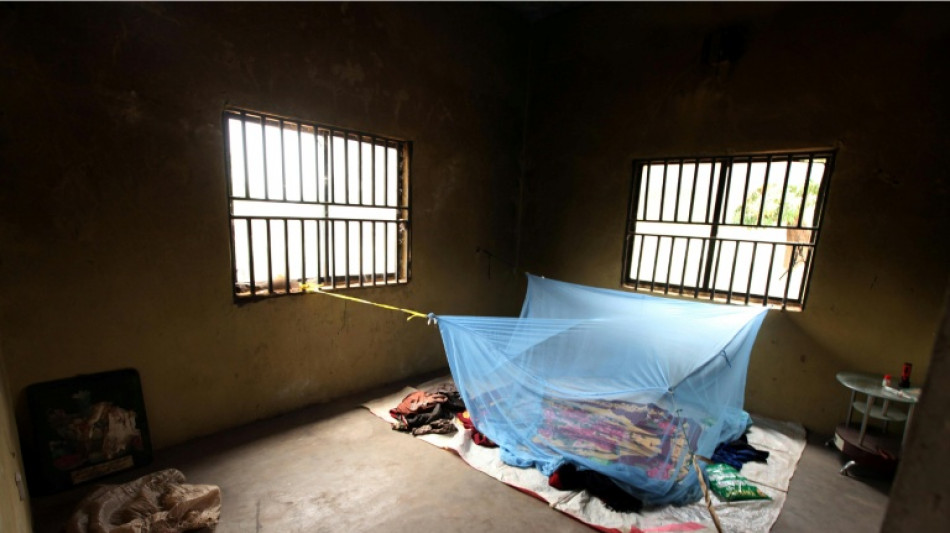
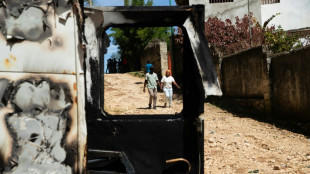
USAID cuts rip through African health care systems / Photo: EMMANUEL AREWA - AFP/File

 NBA close to picking new $12-13bn Vegas team owners: report

 LA28 Olympics torch relay to visit all 50 states
 Spain brush aside Croatia in Nations League, England down Czechs
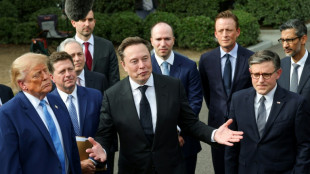 Trump hails 'morally binding' AI self-regulation pledge
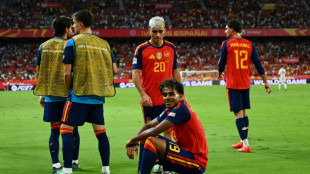 Yamal inspires Spain to Croatia romp on World Cup homecoming

 UN to hold fourth informal poll of secretary-general candidates
 Who are the Emiratis behind crisis-hit Manchester City?
 Singer Angelique Kidjo urges Africans to 'create together'

 Alleged Rihanna mansion shooter mentally fit for trial, says judge
 Mystery over UK airbase scare as police find petrol not explosives

 OpenAI unveils low-cost AI model, a day after shelving Astra upgrade
 Premier League confirms Man City guilty of serious financial breaches
 Brazil's Lula turns to Bad Bunny tune to criticise Trump ahead of polls
 Nigerian dancer eyes world record after seven-day marathon
 Swiss regulator concludes Julius Baer bank probe

 Brazil's patron saint pulled into latest election scrap

 Football overload leaves players near 'breaking point', warns Tebas
 Paris Eiffel Tower says chief to step down after uproar over removing women staff
 Amaze Holdings (NYSE: AMZE) Executes Binding LOI to Acquire BullionFX | Alchemy, a Decentralized Gold-Backed Financial Ecosystem for Valued at US$155 Million
 Clashes between French teens, police as school blockades intensify

 Stocks move sideways despite oil moving lower

 African leaders to gather in Egypt for business summit
 UK decides against charging foreign visitors for museums

 Dallaglio to sell England World Cup winners' medal
 Brazil come from behind to beat Australia 4-2 in friendly

As clouds gather and humidity rises across west Africa, whose annual rains bring an uptick of deadly, malaria-carrying mosquitoes, Musa Adamu Ibrahim, a nurse, is sitting at home, unemployed.
In Nigeria -- home to 30 percent of the world's annual 600,000 malaria deaths -- clinics that once served 300 people a day in the conflict-hit Borno state have abruptly shut down, Ibrahim and other laid-off workers told AFP, following the withdrawal of American funding by President Donald Trump.
"The clinics have been closed and (there are) no more free drugs or mosquito nets," said Ibrahim.
The sudden dismantling of USAID -- the country's main foreign development arm -- is unravelling health care systems across Africa that were built from a complicated web of national health ministries, the private sector, nonprofits and foreign aid.
As the effects of the cuts compound, the resulting damage -- and deaths -- are unlikely to end anytime soon: malaria cases will peak around the end of the rainy season, while threatened American cuts to global vaccine funding would likely be felt later in the year.
In the meantime, the ripple effects continue to spread: alongside laid-off workers, malnutrition clinics have shuttered doors in Nigeria.
Rattled supply chains mean drugs are at risk of being stuck in warehouses in Mali. Children are walking miles to reach care in South Sudan for cholera care and dying along the way, and refugee camps in Kenya are facing medicine shortages.
"People with resources will be able to go and get drugs... but the poorest of the poor, out in remote areas of Nigeria and other parts of sub-Saharan Africa, they're the ones who will be cut off," said Lawrence Barat, a former senior technical advisor for the US President's Malaria Initiative (PMI).
"They're the ones whose children will die."
- Malaria forecasts upended -
During malaria's seasonal peak, Ibrahim once saw clinics he worked at treat 300 patients a week. Fatima Kunduli, another laid-off aid worker in Borno, said her clinic was seeing 60 children per day for malnutrition and malaria care before it shut down.
As downpours progressively cascade across west Africa -- Nigeria's have just started, while Senegal's rains won't arrive until May -- countries that have made in some cases significant progress in stamping out malaria in recent decades will now be doing so without a major financial backer.
Forecasts developed by ministries of health across the continent to plan for the rainy season have deep holes blown in them, said Saschveen Singh, an infectious disease specialist with Doctors Without Borders in France.
The complex mix of funding sources in each nation -- from local governments to internationalnonprofits -- means US programmes worked differently in every country.
In Mali, seasonal malaria chemoprevention drugs given to young children won't have an issue coming into the country -- but American funds were crucial for coordinating their distribution, Singh told AFP.
Meanwhile, in the Democratic Republic of Congo, the USAID-supported PMI was the primary malaria drug and test provider to government health facilities in nine provinces.
"Suddenly, they'll just not have drugs, and it's going to be very difficult for other actors to step in," said Singh, adding her co-workers are "scrambling" to map out where gaps may arise.
- Cholera treatment scaled back -
In South Sudan, USAID-funded clinics have closed amid a cholera outbreak. Children are walking hours to the next closest treatment centre, with at least five dying along the way in the country's eastern Jonglei state, British charity Save the Children reported earlier this month.
In neighbouring Kenya's Kakuma refugee camp, which hosts more than 300,000 people, protests broke out in March when it was announced rations would be lowered, and doctors are running out of medicine.
"All the clinics around, you can get paracetamol. But all other drugs, no," one camp elder, who asked to remain anonymous, told AFP during a recent visit.
At Kinkole General Hospital, in Kinshasa, doctors were recently treating 23 mpox patients isolated in tents free of charge thanks to American support. But workers have no idea if that funding will continue, despite an outbreak that has infected 16,000 and killed 1,600.
"We're thinking a disaster is coming," said Yvonne Walo, an epidemiologist at the centre.
- Potential vaccine funding gap -
The hits to health care systems are set to keep coming.
Washington is reportedly considering pulling back its funding to Gavi, the organisation that procures vaccinations for the world's poorest countries.
Cuts would be almost guaranteed, with Gavi chief executive Sania Nishtar telling AFP that "this is too big a hole to be filled."
If confirmed, John Johnson, a vaccination and epidemic response advisor with Doctors Without Borders, expects programmes to start coming under strain later this year.
In Borno, whose governor recently warned of a resurgence of the Boko Haram jihadist group, Kunduli, the laid-off aid worker, said even with US funding the work was "overwhelming."
Now, "I could only imagine."
O.Brown--AT