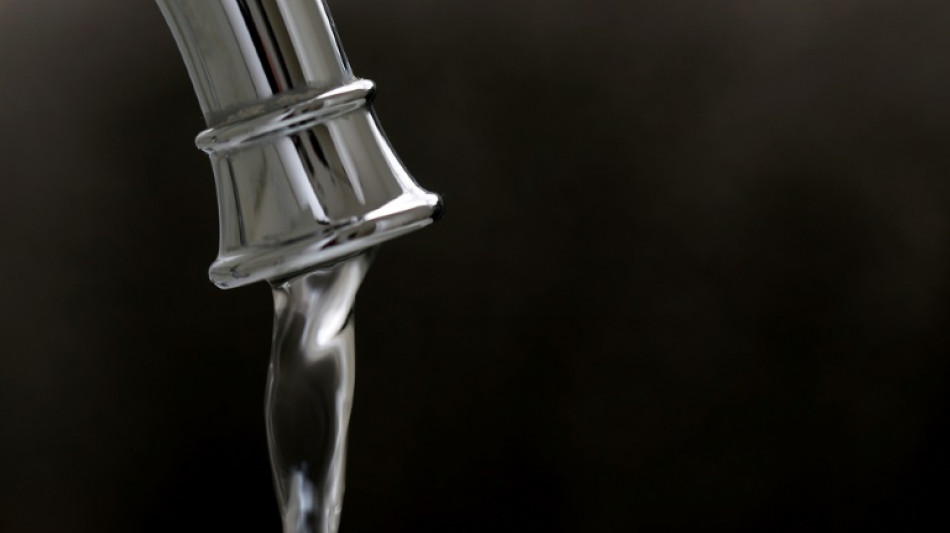
Utah becomes first US state to ban fluoride in drinking water / Photo: JUSTIN SULLIVAN - GETTY IMAGES NORTH AMERICA/AFP/File

 NBA close to picking new $12-13bn Vegas team owners: report

 LA28 Olympics torch relay to visit all 50 states

 Spain brush aside Croatia in Nations League, England down Czechs

 Trump hails 'morally binding' AI self-regulation pledge

 Yamal inspires Spain to Croatia romp on World Cup homecoming

 UN to hold fourth informal poll of secretary-general candidates

 Who are the Emiratis behind crisis-hit Manchester City?

 Singer Angelique Kidjo urges Africans to 'create together'

 Alleged Rihanna mansion shooter mentally fit for trial, says judge
 Mystery over UK airbase scare as police find petrol not explosives

 OpenAI unveils low-cost AI model, a day after shelving Astra upgrade
 Premier League confirms Man City guilty of serious financial breaches
 Brazil's Lula turns to Bad Bunny tune to criticise Trump ahead of polls
 Nigerian dancer eyes world record after seven-day marathon

 Swiss regulator concludes Julius Baer bank probe

 Brazil's patron saint pulled into latest election scrap

 Football overload leaves players near 'breaking point', warns Tebas

 Paris Eiffel Tower says chief to step down after uproar over removing women staff

 Amaze Holdings (NYSE: AMZE) Executes Binding LOI to Acquire BullionFX | Alchemy, a Decentralized Gold-Backed Financial Ecosystem for Valued at US$155 Million

 Clashes between French teens, police as school blockades intensify

 Stocks move sideways despite oil moving lower
 African leaders to gather in Egypt for business summit

 UK decides against charging foreign visitors for museums

 Dallaglio to sell England World Cup winners' medal

 Brazil come from behind to beat Australia 4-2 in friendly

The western US state of Utah has become the first to prohibit fluoridation of its public drinking water, part of a growing movement reexamining the decades-old public health practice.
New US Health Secretary Robert F. Kennedy Jr. has long been a vocal critic of fluoridated water, which currently reaches an estimated 200 million Americans -- about two-thirds of the population.
Utah's ban, signed into law by Governor Spencer Cox on Thursday, is set to take effect on May 7. Legislatures in other Republican-led states including North Dakota, Tennessee, and Montana, are considering similar measures.
Opposition is not limited to red states. Liberal-leaning cities such as Portland, Oregon, and the City and County of Honolulu, Hawaii, have also banned fluoridation.
Fluoride was first introduced to US water systems in 1945, dramatically reducing childhood cavities and adult tooth loss. The Centers for Disease Control and Prevention hails it as one of the top public health achievements of the 20th century.
But controversy has grown around its potential neurotoxic effects. Last year, the Department of Health and Human Services under former president Joe Biden concluded with "moderate confidence" that higher levels of fluoride are linked to lower IQ scores.
This January, a paper in the prestigious journal JAMA Pediatrics, authored by the same government scientists, found a "statistically significant association" between fluoride exposure and reduced IQ. However, it left open key questions about what dosage levels may be harmful.
The World Health Organization's safety threshold stands at 1.5 milligrams per liter -- about double the US guideline of 0.7 mg/L -- and the study said there was insufficient data to determine whether that limit should be revised.
Ending fluoridation is generally opposed by the dental and public health communities. Critics of the recent study argue it failed to adequately control for confounding variables and environmental factors.
Fluoride occurs naturally in varying concentrations and strengthens teeth in several ways: by restoring minerals lost to acid, reducing acid production by cavity-causing bacteria, and making it harder for those bacteria to adhere to enamel.
Proponents argue fluoridation reduces socioeconomic disparities in dental care.
But with fluoride toothpastes widely available since the 1960s, some research suggests diminishing returns.
A recent Canadian study found that ending fluoridation increased dental caries, while an Irish study reported a decline in severe caries in both fluoridated and non-fluoridated areas.
Fluoridation policies also vary widely by country, with many, including Germany and France eschewing the practice altogether.
F.Wilson--AT