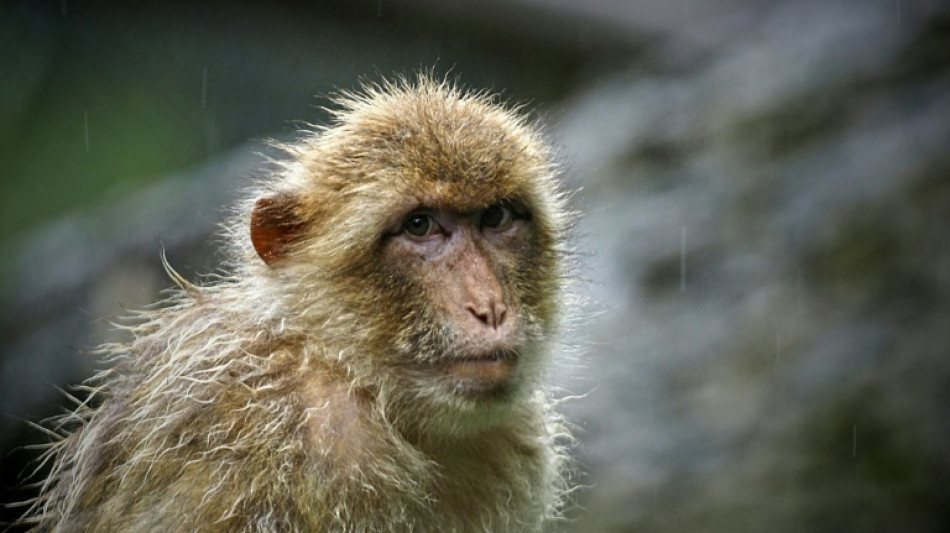
Ebola-infected monkeys cured with a pill, raising hopes for humans: study / Photo: GUILLAUME SOUVANT - AFP/File

 NBA close to picking new $12-13bn Vegas team owners: report

 LA28 Olympics torch relay to visit all 50 states

 Spain brush aside Croatia in Nations League, England down Czechs

 Trump hails 'morally binding' AI self-regulation pledge

 Yamal inspires Spain to Croatia romp on World Cup homecoming

 UN to hold fourth informal poll of secretary-general candidates
 Who are the Emiratis behind crisis-hit Manchester City?

 Singer Angelique Kidjo urges Africans to 'create together'

 Alleged Rihanna mansion shooter mentally fit for trial, says judge
 Mystery over UK airbase scare as police find petrol not explosives

 OpenAI unveils low-cost AI model, a day after shelving Astra upgrade

 Premier League confirms Man City guilty of serious financial breaches
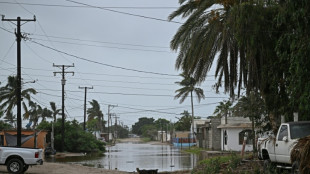
 Brazil's Lula turns to Bad Bunny tune to criticise Trump ahead of polls

 Nigerian dancer eyes world record after seven-day marathon

 Swiss regulator concludes Julius Baer bank probe

 Brazil's patron saint pulled into latest election scrap

 Football overload leaves players near 'breaking point', warns Tebas
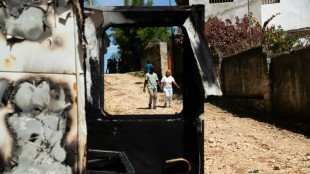
 Paris Eiffel Tower says chief to step down after uproar over removing women staff

 Amaze Holdings (NYSE: AMZE) Executes Binding LOI to Acquire BullionFX | Alchemy, a Decentralized Gold-Backed Financial Ecosystem for Valued at US$155 Million
 Clashes between French teens, police as school blockades intensify

 Stocks move sideways despite oil moving lower

 African leaders to gather in Egypt for business summit
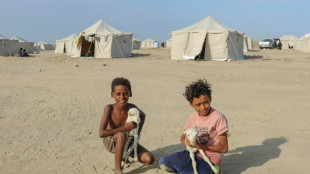
 UK decides against charging foreign visitors for museums

 Dallaglio to sell England World Cup winners' medal

 Brazil come from behind to beat Australia 4-2 in friendly

Monkeys infected with Ebola can be cured with a pill, according to a new study out Friday that could pave the way for more practical, affordable treatments in humans.
First identified in 1976 and thought to have crossed over from bats, Ebola is a deadly viral disease spread through direct contact with bodily fluids, causing severe bleeding and organ failure.
Because outbreaks primarily affect sub-Saharan Africa, pharmaceutical companies have lacked financial incentives to develop treatments, and the sporadic nature of outbreaks has made clinical trials difficult.
A vaccine was only widely approved in 2019, and while two intravenous antibody treatments improve outcomes, they require costly cold storage and are difficult to administer in some of the world's poorest regions.
"We're really trying to come up with something that was more practical, easier to use, that could be used to help prevent, control, and contain outbreaks," Thomas Geisbert, a virologist at The University of Texas Medical Branch at Galveston, who led the new study published in Science Advances, told AFP.
For their experiment, Geisbert and colleagues tested the antiviral Obeldesivir, the oral form of intravenous Remdesivir, originally developed for Covid-19.
Obeldesivir is a "polymerase inhibitor," meaning it blocks an enzyme crucial for viral replication.
The team infected rhesus and cynomolgus macaques with a high dose of the Makona variant of the Ebola virus.
A day after exposure, ten monkeys then received an Obeldesivir pill daily for ten days, while three control monkeys received no treatment and died.
Obeldesivir protected 80 percent of the cynomolgus macaques and 100 percent of the rhesus macaques, which are biologically closer to humans.
The drug not only cleared the virus from the treated monkeys' blood but also triggered an immune response, helping them develop antibodies while avoiding organ damage.
Geisbert explained that while the number of monkeys was relatively small, the study was statistically powerful because they were exposed to an extraordinarily high dose of the virus -- roughly 30,000 times the lethal dose for humans. This reduced the need for additional control monkeys, limiting unnecessary animal deaths.
The researcher, who has worked on Ebola since the 1980s and is credited with discovering the Reston strain, said one of the most exciting aspects of Obeldesivir is its "broad-spectrum" protection, compared to the approved antibody treatments that only work against the Zaire species of Ebola.
"That's a huge advantage," Geisbert said.
Pharmaceutical maker Gilead is currently advancing Obeldesivir to Phase 2 clinical trials for Marburg virus, a close relative of Ebola.
Geisbert also emphasized the importance of funding from the US National Institutes of Health, amid reports that dozens of grants have been canceled under President Donald Trump's administration.
"All these drugs and vaccines that were developed against Ebola and a lot of these exotic viruses and pathogens -- 90 percent of the money comes from the US government," he said, adding, "I think the general public would agree we need treatments for Ebola."
M.White--AT