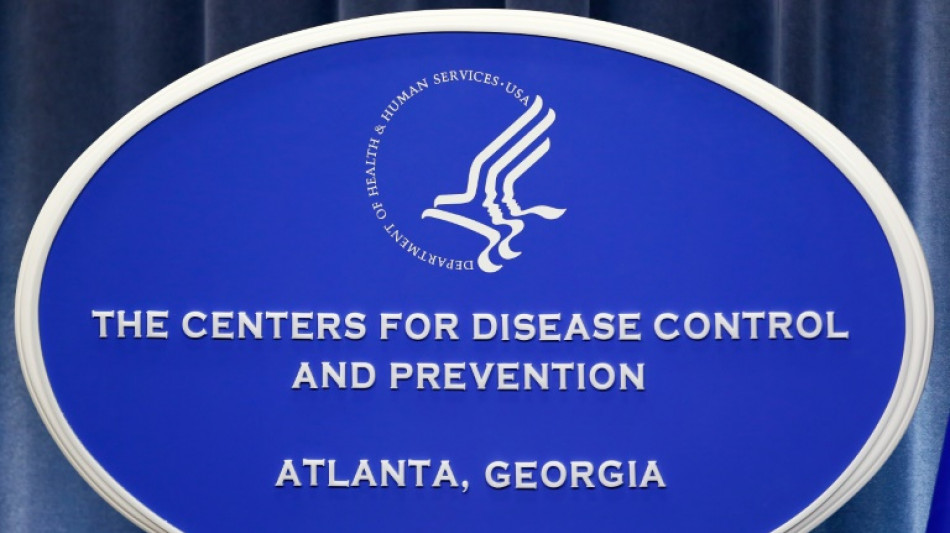
Trump admin fires CDC 'disease detectives' as bird flu fears rise: sources / Photo: Kevin C. Cox - GETTY IMAGES NORTH AMERICA/AFP/File

 With elections ahead, Latvia's Russian-speakers reject Moscow's help
 Brazil football clubs face massive sponsorship blow from betting ban
 ChatGPT maker wants to be the App Store for AI as safety concerns grow

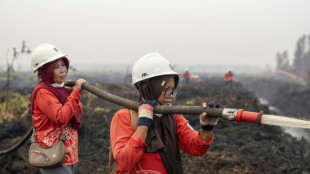 Women fight fires and sexism in Indonesian Borneo

 Forsling's OT blast lifts Florida over Carolina in NHL opener

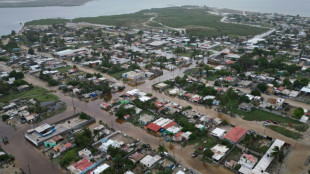 Hurricane Polo sweeps over Mexico's Pacific coast, heads inland

 Grynspan pulls ahead in race to lead UN: diplomat

 Trump touts AI boss pledge to self-regulate
 Oil down, but stocks lower as bond yields rise

 England break down stubborn Czechs to claim first Nations League win
 UN Security Council extends Haiti anti-gang force by 6 months

 Manchester City guilty of Premier League charges: What comes next?

 Man City chief Soriano slams Premier League 'conspiracy theory'

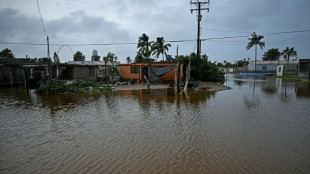 Hurricane Polo sweeps over Mexico's Pacific coast

 Man City must be relegated after guilty verdict says club's former chairman

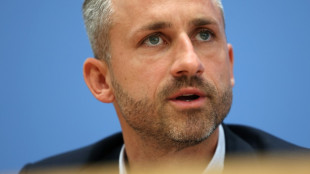 German far-right aims to lead Saxony-Anhalt govt in December

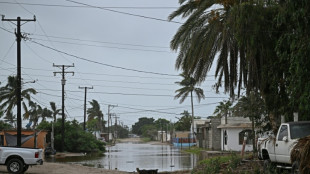 Little damage as Hurricane Polo sweeps over Mexico's Pacific coast

 Manchester City guilty of breaking financial rules - Premier League

 FIFA boss Infantino blasted as would-be 'emperor' by UEFA's Ceferin

 Stocks move lower despite oil prices dropping

 AI driving up innovation investment: UN

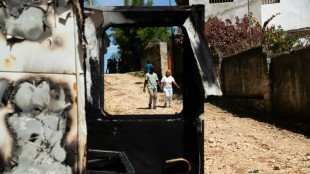 UN Security Council extends Haiti mission by 6 months

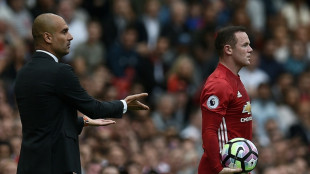 Man Utd do not deserve medals if Man City stripped of titles: Rooney

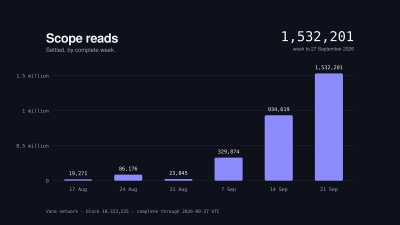 Vana Completes Expanded Staking as Part of the Vega Upgrade, Publishes Expanded VANA Token Economics

 Spain to cap gas price hikes, extend fuel discounts

Nearly half of an elite US epidemiology program known as the "disease detectives" were dismissed by the Trump administration on Friday, according to sources familiar with the matter, dealing a blow to public health efforts as fears rise over bird flu.
The sackings come as Elon Musk's Department of Government Efficiency pushes to downsize the federal government and as newly-confirmed Health Secretary Robert F. Kennedy Jr vows to overhaul the nation's health agencies.
"I'm so angry," a senior epidemiologist in the Centers for Disease Control and Prevention who supervised some of those affected by the cuts told AFP.
"We're on the verge of potentially another pandemic and we're firing the people who have probably more expertise than anyone else in the country collectively."
The cuts, first reported by CBS News, are part of broader efforts to remove employees still in their probationary periods, who can be dismissed more easily.
Established in 1951, the Epidemic Intelligence Service is a two-year post-doctoral training program whose officers have been on the frontline of investigating outbreaks from the first Ebola cases in Africa in the 1970s to the earliest case reports of Covid-19 in the United States.
"Without those officers we would not have eliminated smallpox from the globe," the official said. "We had people fanning across countries, wading through mud and navigating rivers on boats to eliminate smallpox."
- 'Directly impact health security' -
Known colloquially as the "disease detectives," the researchers are hired annually through a competitive process that each year whittles down hundreds of applicants -- including doctors, nurses, scientists and more -- to a class of a few dozen.
While some are stationed at CDC headquarters in Atlanta, others are posted around the country.
Several former CDC directors began their careers as EIS officers, highlighting the program's role as a pipeline for leadership in public health.
There are approximately 140 officers across two classes. On Friday, the class of 2024 was informed they would receive termination emails that afternoon, while the class of 2023 was informed that their status was still under review.
Around 30 officers from both classes were hired through a different mechanism under the US Public Health Service, meaning they remain unaffected for now.
In total, nearly 1,300 CDC employees -- roughly 10 percent of the agency's workforce -- were dismissed, according to CBS News.
"The Epidemic Intelligence Service is one of the most storied and prestigious programs of the CDC," infectious disease physician Amesh Adalja, a senior scholar at Johns Hopkins University told AFP.
"Any attempts to end this program will directly impact the national and health security of the US."
Health Secretary RFK Jr. has made no secret of his disdain for infectious disease research, suggesting recently that it should be paused entirely for eight years while the focus shifts to addressing chronic conditions.
Beyond his well-known anti-vaccine stances, Kennedy has also expressed skepticism about widely accepted infectious disease science, questioning whether germs cause disease and whether HIV causes AIDS.
P.Hernandez--AT