Activists hail Sierra Leone child marriage ban, urge action on FGM / Photo: Yasuyoshi CHIBA - AFP

 Dangote to launch $16bn refinery in Kenya

 North Korean leader 'extremely obese': Seoul spy agency

 Yankees and pope-backed White Sox start MLB playoffs with wins

 Malaysia's ex-PM Mahathir in hospital for observation

 'No limits': Marathon world record holder Sawe chasing history

 Countdown begins to biggest-ever Rugby World Cup

 Bangladesh women lose ground after quota reform
 Vietnam admits 'differing opinions' on Hanoi development
 Stocks temper gains as oil pares heavy losses, US data in focus
 New Zealand denies breaching climate commitments to EU

 Albert becomes youngest US scorer in 4-2 win over Chile

 Pirate island's plunging population shows Greece's demographic decline
 With elections ahead, Latvia's Russian-speakers reject Moscow's help
 Brazil football clubs face massive sponsorship blow from betting ban
 ChatGPT maker wants to be the App Store for AI as safety concerns grow
 Women fight fires and sexism in Indonesian Borneo

 Forsling's OT blast lifts Florida over Carolina in NHL opener

 Alpha Growth Management Opens Rep Office in Japan

 NBA close to picking new $12-13bn Vegas team owners: report
 LA28 Olympics torch relay to visit all 50 states
 Spain brush aside Croatia in Nations League, England down Czechs

 Trump hails 'morally binding' AI self-regulation pledge
 Yamal inspires Spain to Croatia romp on World Cup homecoming

 UN to hold fourth informal poll of secretary-general candidates
 Who are the Emiratis behind crisis-hit Manchester City?

Sierra Leone this week adopted a landmark law banning child marriage -- a move heralded by rights groups and foreign partners but leaving some activists demanding more action to end pervasive female genital mutilation (FGM) in the country.
Hundreds of thousands of girls are married before turning 18 in the West African nation, where a persistently patriarchal society puts women at risk of multiple forms of gender-based violence.
Sierra Leone has some of the highest rates of child marriage, teenage pregnancy and maternal mortality in the world.
In a major step forward, the Prohibition of Child Marriage Act criminalises marrying girls below 18 with jail terms of at least 15 years or a fine of more than $2,000.
It also bans men from living with underage girls and sets out a compensation package for those who are married or fall pregnant before turning 18.
But the law -- championed by Sierra Leone's First Lady Fatima Maada Bio -- remains silent on the harmful practice of FGM, which many see as deeply intertwined with the marrying of young girls.
"We're saying (the law) is good work, but... you cannot be blinded to the fact that there is a practice that still perpetuates child marriage," said Josephine Kamara, 31, advocacy director at women and girls' activism organisation Purposeful.
"If you refuse to solve it, and if you're silenced about it, then any action to end child marriage might just be lip service," she told AFP in a phone interview.
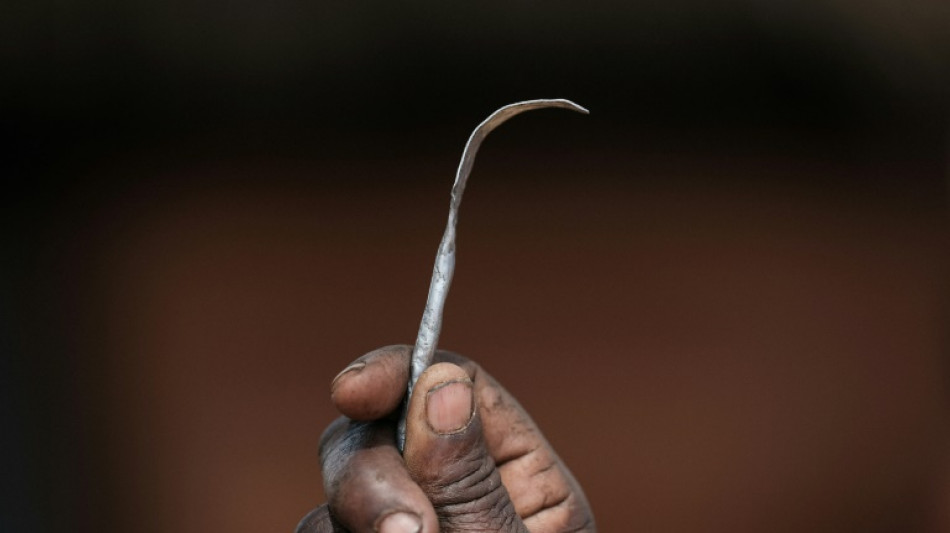
FGM involves the partial or total removal of the female external genitalia or other injury to the female genital organs, and can lead to serious health problems including infections, bleeding, infertility and complications in childbirth.
In Sierra Leone, 83 percent of women aged between 15 and 49 have undergone the practice, according to a 2019 Demographic Health Survey.
"The cutting of the clitoris symbolises that girls have now gone through a rite of passage from girlhood to womanhood," Kamara said.
"That rite of passage says even if you're seven years old, if you've gone through that process, you're now seen as a woman".
- 'Marketplace for marriage' -
While activists largely praised the child marriage ban, the lack of impetus behind ending FGM left some worried about mixed messaging from the government.
"It's very confusing," said Alimatu Dimonekene, 54, an FGM survivor and campaigner, who explained the two practices often went hand in hand.
"The reason in Sierra Leone girls are cut so early is because (the families) want them to get married," she told AFP.
"Sometimes the families say, 'Oh we found her a suitor or the suitor is paying for us to do the FGM'.
"Usually... that child is married off the next day to whoever, because it's the same traditional leaders."
Kamara also expressed concern about the implementation of the child marriage ban, particularly in rural areas, if communities were still able to carry out FGM.
"It's really conflicting information we're sending," she said.
"We're saying no more marriage, but then we're leaving the institution that is a marketplace for marriage."
Bans on both FGM and child marriage had already been included in a sweeping Child Rights Act, but the legislation has been stalled in parliament.
The activists AFP spoke to said they felt the child marriage issue had been cherry picked from the bill by legislators to avoid addressing FGM.
"We know why they're refusing to talk about it, (FGM) marks itself in culture: 'this is our culture, this is our practice'," said Kamara.
"But ain't nothing cultural about cutting clitorises, it's a human rights violation," she added.
The fear of criticising such a pervasive practice is what silences many legislators, said Rugiatu Turay, 50, the founder of anti-FGM organisation Amazonian Initiative Movement.
Turay herself underwent FGM at the age of 11, suffered severe bleeding and lost a cousin to the practice.
"Ending child marriage alone will not stop, will not reduce the practice of FGM," she said.
"(Legislators) need to look at a holistic approach at ending the suffering of children, not separating one issue from the other."
O.Ortiz--AT