In north Donbas, denial and fatalism face Russian onslaught / Photo: Yasuyoshi CHIBA - AFP

 Alleged Rihanna mansion shooter mentally fit for trial, says judge
 Mystery over UK airbase scare as police find petrol not explosives

 OpenAI unveils low-cost AI model, a day after shelving Astra upgrade

 Premier League confirms Man City guilty of serious financial breaches
 Brazil's Lula turns to Bad Bunny tune to criticise Trump ahead of polls

 Nigerian dancer eyes world record after seven-day marathon

 Swiss regulator concludes Julius Baer bank probe

 Brazil's patron saint pulled into latest election scrap

 Football overload leaves players near 'breaking point', warns Tebas
 Paris Eiffel Tower says chief to step down after uproar over removing women staff

 Amaze Holdings (NYSE: AMZE) Executes Binding LOI to Acquire BullionFX | Alchemy, a Decentralized Gold-Backed Financial Ecosystem for Valued at US$155 Million

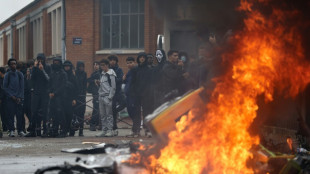 Clashes between French teens, police as school blockades intensify

 Stocks move sideways despite oil moving lower

 African leaders to gather in Egypt for business summit
 UK decides against charging foreign visitors for museums

 Dallaglio to sell England World Cup winners' medal

 Brazil come from behind to beat Australia 4-2 in friendly

 Ruthless An retains Asian Games badminton crown as Kunlavut triumphs

 Alonso to stay with F1 team Aston Martin in 2027

 China badminton 'still strong' despite Asian Games slump

 'Exceptional' Turner painting shown in Rome before sale

 European stocks climb as oil dips

 Spain aims to ban evictions until 2030 amid housing protests

 Kunlavut first Thai man to win Asian Games badminton singles gold

 French far right says antisemitism claims part of 'total war' to derail presidency bid
After two months of sustained Russian artillery fire, the hamlet of Lysychansk, located just 14 kilometres (nine miles) from Russian ground forces, has turned into a ghost town.
Most residents have left: shops are closed, windows sealed with wooden planks and doors barricaded.
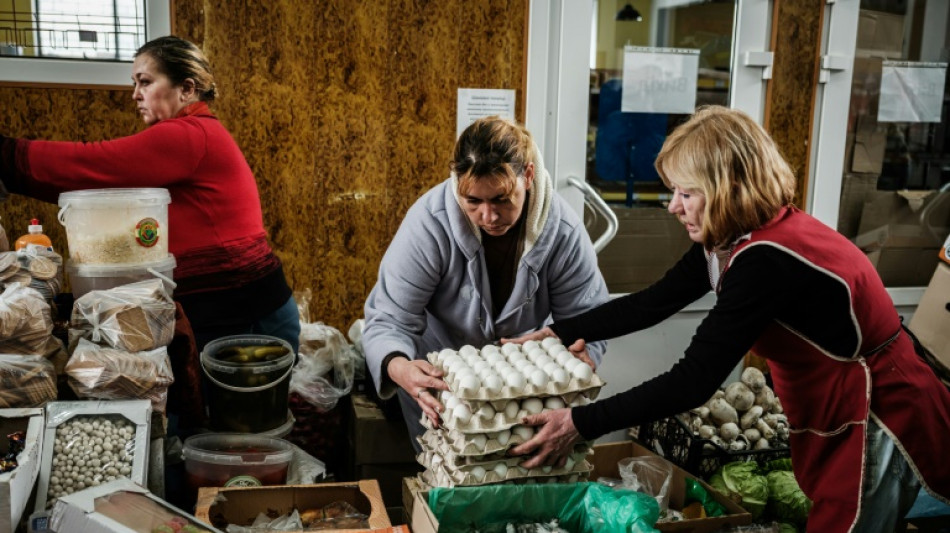
Only a small sheltered market in the centre of town is still operating, providing food and other supplies. The town's other market was bombed.
"Those who stayed come out of their cellars in the morning and rush here to see if there is anything left, quickly do some shopping and return [to] their shelters," explains Tatyana Ivanenko, standing behind a bread counter.
The 45-year-old merchant says she leaves the market "as soon as I have sold the last one", adding that she is determined to feed her town until the end.
On Friday, the rain appeared to have delayed the now traditional morning exchange of artillery fire between Russian and Ukrainian troops, as about a hundred people gathered under the market's glass ceiling.
The size of the crowd makes everyone nervous.
"Everyone, this is going to end badly," says an elderly woman in line for vegetables, fearing a targeted strike by Russian forces similar to a deadly train station rocket attack in the nearby town of Kramatorsk on April 8 that killed at least 52 people.
- Nowhere to go -
In Severodonetsk, 10 kilometers (six miles) from Russian positions, the city's volunteers and medical personnel are holding the fort in a local hospital that is littered with broken windows and where some floors are plunged into darkness.
Shelling resumed recently, and the city is likely to soon be surrounded by advancing Russian troops.
"We will stay here until the last patient," says Roman Vodianik, the hospital's chief, whose office is decorated with Orthodox Christian icons.
While the operating room on the hospital's seventh floor is still functional, it is reserved for life-threatening emergencies. The main mission of the hospital, in what are likely its final days, is to host those who have nowhere else to go.
One of those taking refuge here is Yuliana Alekseena, 81, who came from a nearby town that is now occupied by Russian forces.
"My house was bombed and burned down," said the elderly woman, whose hand was wrapped in a bandage.
- 'Last chance' -
The last civilians remaining in Severodonetsk gather in the basement of the Ostchem nitrogen plant, hoping to wait out a feared Russian offensive.
The huge concrete bunker from the Soviet era holds 167 people, including families with children who crowd together day and night in unsanitary conditions amid the roar of the plant's machines.
"We are fed, we have soup and borscht, a big barrel for 160 people," says Zinaida Dymovskykh, 66, sitting on a cot.
Despite the bombardment, Ukrainian Red Cross ambulances have come here to try to evacuate the civilians.
"The situation is getting worse, our priority is to evacuate the disabled and the elderly who want to leave but can't, this is probably their last chance," says volunteer Oleksandr Chernysh.
A dying 92-year-old woman is carried out from the bunker on a stretcher.
"She will not make it to the hospital alive," laments one of the paramedics.
W.Moreno--AT