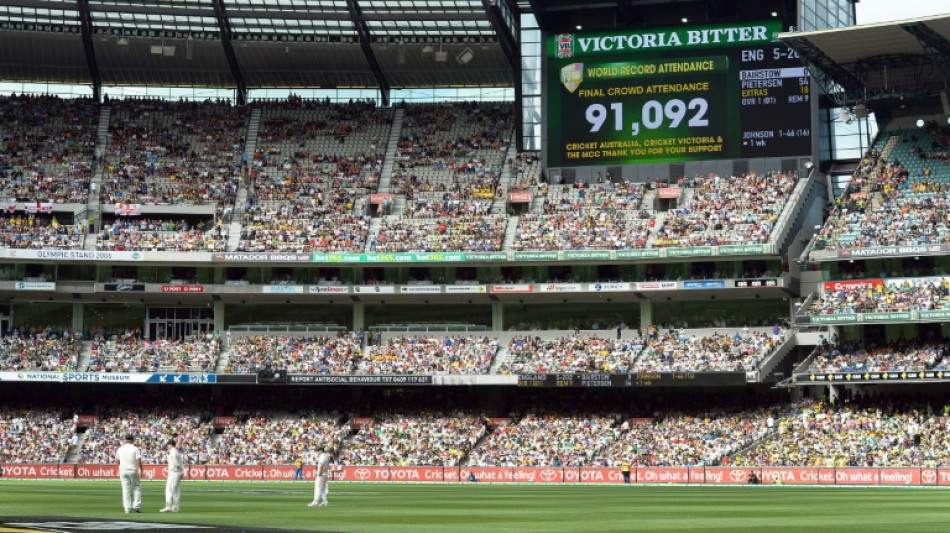
Australia primed for 'unparalleled' decade of major sporting events / Photo: WILLIAM WEST - AFP

 Stocks move lower despite oil prices dropping

 AI driving up innovation investment: UN

 UN Security Council extends Haiti mission by 6 months
 Man Utd do not deserve medals if Man City stripped of titles: Rooney

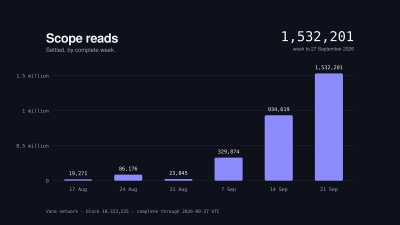 Vana Completes Expanded Staking as Part of the Vega Upgrade, Publishes Expanded VANA Token Economics

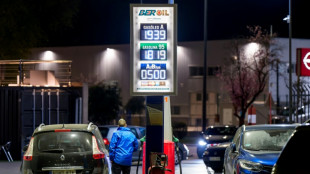 Spain to cap gas price hikes, extend fuel discounts

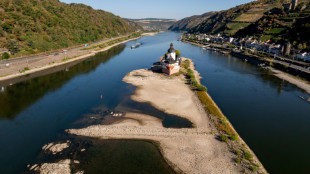 'We just need rain': Germany's Rhine river hits new low
 Yemen health system at 'breaking point': WHO
 Ireland undecided on second Israel match: coach
 France's Le Pen defiant after top ally hit by antisemitism claims

 Tom Cruise trades stunts for satire as toxic tycoon 'Digger'
 MEXC Unveils "WE SEE YOU" Brand Visual Refresh, Putting People Behind Every Trade in Focus
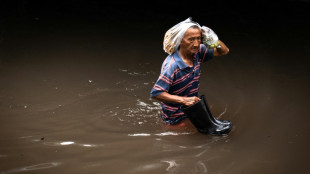 Thai capital cleans up after deadly floods
 NATO, EU allies rally to Estonia after 'sabotage' blamed on Russia

 Families demand justice for Cameroon's 'nightmare' wave of murdered women

 Tebas says Man City should face 'most severe' sanctions if guilty of rule breaches

 Pochettino calls Man City success 'a period of deception'
 Settler attack on West Bank village injures Israeli forces, drawing rare rebuke

 Mystery over UK airbase scare after reports no explosives found
 Spanish govt races to adopt housing law under protest pressure

 Estonia slams Russian 'sabotage' after arson attack on defence company

 Slovenia sees surge in '.si' sites after Trump hypes 'super intelligence'
 'Like a dream' for An as Games organisers 'sorry' for latest mix-up
 Tokyo suffers longest streak of rainy days on record

 Indonesia charges train driver over crash that killed 16 women
Australia will over the next decade host a bumper schedule of major international sporting events as part of a long-term plan to boost tourism, health and the economy while also enhancing its global image.
The country's welcoming climate, sports-loving people, stable political environment and quality infrastructure have long made it an attractive destination.
But the sheer volume of big sporting events heading to Australia is unprecedented for the nation of 26 million people.
Australian Olympic Committee chief Matt Carroll calls it the green and gold -- the nation's sporting colours -- "runway" culminating in the Brisbane Olympics in 2032.
"More than 30 major global sporting events are coming to Australia across the next 10 years," he said.
In addition to the annual Australian Open tennis and Formula One, the country will host cricket's men's Twenty20 World Cup, Women's Basketball World Cup and the UCI road cycling world championships this year.
It will then jointly hold football's Women's World Cup with New Zealand in 2023, a British and Irish Lions rugby tour in 2025, Commonwealth Games in 2026, Netball World Cup in 2027 and Presidents Cup golf a year later.
An expected announcement next month that it will also stage back-to-back men's and women's Rugby World Cups in 2027 and 2029 will further cement Australia's status as a sporting powerhouse.
"Sport brings health, educational and wellbeing benefits to the community and can play a pivotal role in getting Australians active, reducing obesity and other health-related problems including mental illness," said Carroll.
- 'Feel-good factors' -
Bidding for big events is part of Sport 2030, a government roadmap established in 2018 that recognises the broader economic and social implications of sport, which is already deeply embedded in Australia's culture and identity.
But hosting a huge competition such as the Olympics comes with a financial price tag.
"The return on investment is a complex issue," Popi Sotiriadou, an associate professor of sport management at Queensland's Griffith University, told AFP.
"There are things that we can't measure -- you can't put a money value on national pride. There are so many of what we call 'public goods' that do not necessarily translate to dollars.
"There are legacies in terms of feel-good factors, people feel that connectedness with each other.
"And with any big sporting events we have that trickle-down effect, that inspirational effect of elite athletes' success, the promotion of community, the boost to tourism, we have trade benefits, employment benefits, infrastructure benefits, better public facilities."
Sports Minister Richard Colbeck called the coming blitz of events "unparalleled in our history" as Australia seeks to "grow our reputation as the pre-eminent sporting host nation in the world".
According to government data, 14 million Australians participate in sport every year, millions attend live games and the sector generates about three percent of gross domestic product.
It is big business, delivering Aus$83 billion (US$61 billion) of combined economic, health and educational benefits annually, with a return on investment of Aus$7 for every dollar spent, Sport 2030 says.
- Experienced host -
Australia has long been praised for its ability to host big-ticket showpieces, stemming from the 2000 Sydney Olympics, which were widely seen as setting a benchmark.
Then-International Olympic Committee president Juan Antonio Samaranch famously declared them "the best ever" -- and not only from an operations perspective but everything from venue design and construction to management and marketing.
More than 20 years later, those skills have been honed even further.
Rugby Australia chief executive Andy Marinos, who is involved in the Rugby World Cup bid, said it made a big difference having strong government and public support.
"That's one of the benefits of operating in a country like Australia," he told SportsPro magazine. "Because there's such familiarity with having to host and engage on major events.
"The states and certainly the federal government are quite well versed in it so they understand that once you put a very compelling economic impact assessment in front of them, the decision-making process is relatively straightforward."
H.Gonzales--AT