Military rank affects medical care, offering societal insights: study / Photo: JOHN MOORE - GETTY IMAGES NORTH AMERICA/AFP/File

 South Korea score late to reach Asian Games football final

 Tom Kim defies jet-lag, Kho cards ace as Asian Games golf begins

 Thai teen rocker Nene aims to tour, write music... and return to school

 Ivory Coast clamps down on harmful illegal gold rush
 Nagoya mayor says sorry for Asian Games 'inconveniences'
 G20 trade officials meet under shadow of tariffs, overcapacity

 India's fat dog vote goes viral
 Asian Games crowds in spotlight as 998 see hosts in 50,000 stadium

 The eight stadiums for the 2027 Rugby World Cup

 Thieves swipe drugs under nose of Fiji police, swap with flour
 South Korea demands North apologise for DMZ mine blasts

 In Nepal's flood zone, teachers mourn students who never returned

 US Supreme Court lifts limits on third-country deportations

 Antonelli eager to 're-establish order' as F1 returns to Malaysia

 Paw-fect candidate: Australia finds new koala rescue dog

 One third of world population exposed to harmful air pollution: monitor

 North Korea denies South's claim it was apparently behind DMZ mine blasts

 West Bank's violent settlers part of a new generation fuelled by ideology

 US-led coalition ends mission in Iraq
 Pope-backed White Sox join Braves with MLB playoff wins

 Psychology Software Tools Builds on Early Bioz Success to Expand Access to Publication-Backed Product Evidence

 Alpha Growth Management Opens Rep Office in Japan

 NBA close to picking new $12-13bn Vegas team owners: report

 LA28 Olympics torch relay to visit all 50 states

 Spain brush aside Croatia in Nations League, England down Czechs
Human relationships are inherently shaped by power dynamics, yet quantifying their impact has remained a scientific challenge.
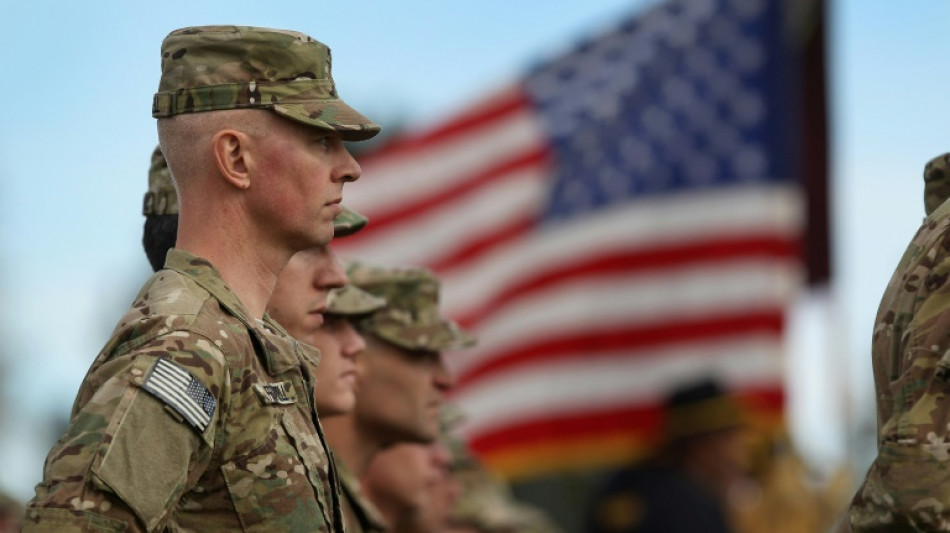
Now, a large new study published Thursday in the journal Science reveals that military doctors give more attention to higher-ranked patients, providing concrete evidence about the privileges that come with elevated status, frequently at the expense of the less powerful.
"One of the things we are trying to show is that this is not a military-specific analysis," said co-author Manasvini Singh of Carnegie Mellon University, arguing the findings are just as relevant to civilian life as they are to the rigid chain-of-command structures of the armed forces.
For their research, Singh and co-author Stephen Schwab of the University of Texas at San Antonio examined 1.5 million doctor-patient encounters in the US military health service's records.
Rather than exploring how doctors might respond differently to, say, generals versus privates, they chose a more nuanced approach: comparing how soldiers of equal rank, for example two majors, were treated in emergency departments (EDs) by physicians who either outranked them or were outranked by them.
The "high-power" patients who outranked their doctors received 3.6 percent more effort and resources, as measured by tests, diagnosis and treatment codes, time spent with the physician, and opioids prescribed. High-power patients also had better outcomes, with a 15 percent lower likelihood of hospital admission in the following 30 days.
Further analysis revealed an unwitting spillover effect: low-power patients often received less attention from doctors who had just seen a high-powered patient, possibly due to the extended effort invested in the prior visit.
To ensure their results were generalizable to the population at large, the researchers considered demographic factors like age, race, and sex, which impact outcomes in wider society.
"We found if a patient walks into an ED and is assigned to a white physician who is higher rank than them, the patient is better off being white than black," said Singh.
A Black patient that outranks their white physician receives more effort than if they were lower ranked than their doctor, but still less effort than equivalent white patients. Black physicians on the other hand put in very high effort for high-ranking Black patients.
While the military's ranking system differs from civilian life, Singh argues that other factors, like increased camaraderie and kinship, could mitigate this effect.
The paper's findings even generalize beyond medicine, helping explain why Black students do better under Black teachers or why landlords are more likely to evict vulnerable tenants even when the cash value of missed payments is constant, she said.
In a related commentary, Laura Nimmon of the University of British Columbia said the research raised important questions about whether medical education sufficiently addresses status, authority, and class bias.
"Efforts remain necessary to better understand facets of power, including the failures of education and health care systems to address the myth that physicians are perfectly altruistic and not corrupted by power," she said.
N.Mitchell--AT