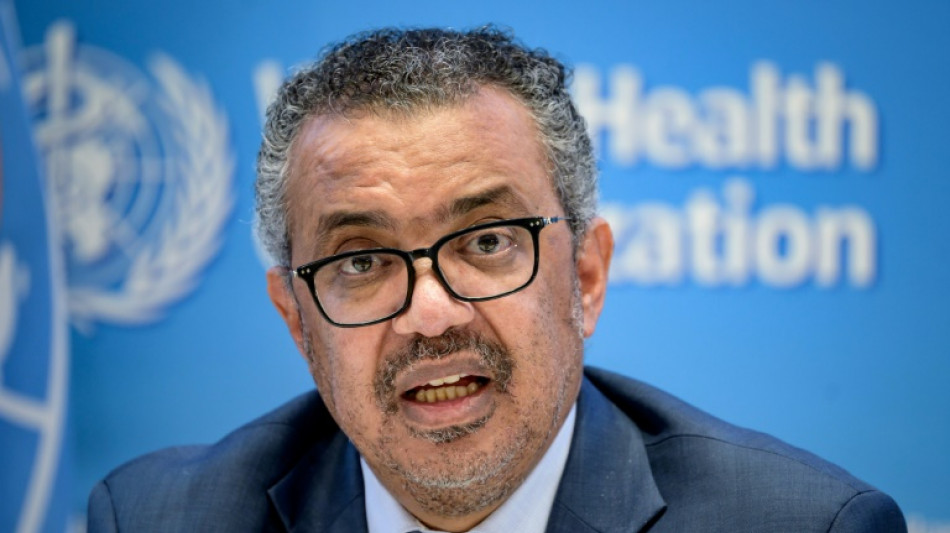
World treats crises affecting black, white lives unequally: WHO chief / Photo: Fabrice COFFRINI - AFP/File

 Stocks move lower despite oil prices dropping
 AI driving up innovation investment: UN

 UN Security Council extends Haiti mission by 6 months
 Man Utd do not deserve medals if Man City stripped of titles: Rooney

 Vana Completes Expanded Staking as Part of the Vega Upgrade, Publishes Expanded VANA Token Economics
 Spain to cap gas price hikes, extend fuel discounts
 'We just need rain': Germany's Rhine river hits new low
 Yemen health system at 'breaking point': WHO

 Ireland undecided on second Israel match: coach

 France's Le Pen defiant after top ally hit by antisemitism claims

 Tom Cruise trades stunts for satire as toxic tycoon 'Digger'

 MEXC Unveils "WE SEE YOU" Brand Visual Refresh, Putting People Behind Every Trade in Focus
 Thai capital cleans up after deadly floods

 NATO, EU allies rally to Estonia after 'sabotage' blamed on Russia

 Families demand justice for Cameroon's 'nightmare' wave of murdered women
 Tebas says Man City should face 'most severe' sanctions if guilty of rule breaches
 Pochettino calls Man City success 'a period of deception'

 Settler attack on West Bank village injures Israeli forces, drawing rare rebuke
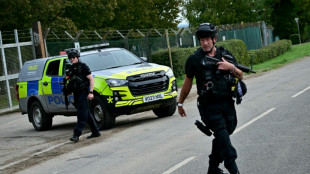 Mystery over UK airbase scare after reports no explosives found
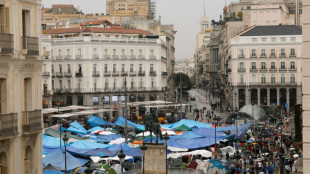 Spanish govt races to adopt housing law under protest pressure

 Estonia slams Russian 'sabotage' after arson attack on defence company
 Slovenia sees surge in '.si' sites after Trump hypes 'super intelligence'
 'Like a dream' for An as Games organisers 'sorry' for latest mix-up
 Tokyo suffers longest streak of rainy days on record

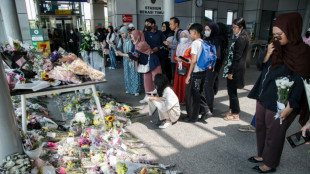 Indonesia charges train driver over crash that killed 16 women
The WHO chief said Wednesday that the world was treating humanitarian crises affecting black and white lives unequally, with only a "fraction" of the attention on Ukraine given elsewhere.
World Health Organization's director-general Tedros Adhanom Ghebreyesus said the emergencies happening in other parts of the world were not being taken as seriously and hoped the international community "comes back to its senses".
"I don't know if the world really gives equal attention to black and white lives," Tedros told a news conference.
"The whole attention to Ukraine is very important of course, because it impacts the whole world.
"But even a fraction of it is not being given to Tigray, Yemen, Afghanistan and Syria and the rest. A fraction.
"I need to be blunt and honest that the world is not treating the human race the same way. Some are more equal than others. And when I say this, it pains me. Because I see it. Very difficult to accept but it's happening."
- Tigray siege -
Tedros, who is himself from Tigray, said the United Nations had determined that 100 trucks per day of life-saving humanitarian supplies needed to be going into the besieged northern region of Ethiopia.
The country's former health and foreign minister said that since a truce was declared, at least 2,000 trucks should have gone in, but only 20 have done so thus far.
Tedros said he was worried that the 20 trucks going in could be just a "diplomatic manoeuvre" on the part of the government in Addis Ababa.
"In effect, the siege by the Ethiopian and Eritrean forces continues," he said.
"To avert the humanitarian calamity and hundreds of thousands more people from dying, we need unfettered humanitarian access from those reinforcing the siege."
But Tedros said global attention was simply not being placed on such humanitarian crises.
"I hope the world comes back to its senses and treats all human life equally," he said.
"What is happening in Ethiopia is a tragic situation. People are being burned alive... because of their ethnicity.... Without any crime.
"So we need to balance. We need to take every life seriously because every life is precious."
- World crises -
The UN says hundreds of thousands of people are at risk of starvation in Tigray, where people have for months also faced fuel shortages and a lack of basic services such as electricity, telecommunications, internet and banking.
Across northern Ethiopia, the 17-month conflict has driven more than two million people from their homes, according to the UN, and left more than nine million people in need of food aid.
Thursday marks 50 days since Russia invaded Ukraine. More than a quarter of the Ukrainian population has been forced from their homes.
Moscow -- already accused by the West of widespread atrocities against civilians -- appears to be readying a massive offensive across Ukraine's eastern Donbas region.
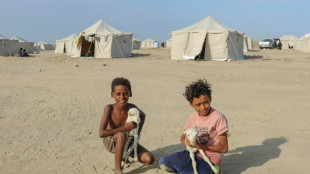
The UN calls Yemen the world's worst humanitarian crisis.
The UN is also seeking its biggest-ever single-country appeal for funds for Afghanistan, which is on the brink of economic collapse, with more than 24 million people needing humanitarian assistance to survive.
Civil war erupted in Syria in 2011 after the violent repression of protests demanding regime change.
Around half a million people have been killed and millions have been displaced in the conflict, which has battered the country's economy.
O.Gutierrez--AT