What we know about how 'forever chemicals' affect health / Photo: JUSTIN SULLIVAN - GETTY IMAGES NORTH AMERICA/AFP/File

 South Korea score late to reach Asian Games football final

 Tom Kim defies jet-lag, Kho cards ace as Asian Games golf begins

 Thai teen rocker Nene aims to tour, write music... and return to school

 Ivory Coast clamps down on harmful illegal gold rush

 Nagoya mayor says sorry for Asian Games 'inconveniences'

 G20 trade officials meet under shadow of tariffs, overcapacity

 India's fat dog vote goes viral

 Asian Games crowds in spotlight as 998 see hosts in 50,000 stadium

 The eight stadiums for the 2027 Rugby World Cup

 Thieves swipe drugs under nose of Fiji police, swap with flour

 South Korea demands North apologise for DMZ mine blasts

 In Nepal's flood zone, teachers mourn students who never returned

 US Supreme Court lifts limits on third-country deportations

 Antonelli eager to 're-establish order' as F1 returns to Malaysia

 Paw-fect candidate: Australia finds new koala rescue dog

 One third of world population exposed to harmful air pollution: monitor

 North Korea denies South's claim it was apparently behind DMZ mine blasts

 West Bank's violent settlers part of a new generation fuelled by ideology

 US-led coalition ends mission in Iraq

 Pope-backed White Sox join Braves with MLB playoff wins

 Psychology Software Tools Builds on Early Bioz Success to Expand Access to Publication-Backed Product Evidence

 Alpha Growth Management Opens Rep Office in Japan

 NBA close to picking new $12-13bn Vegas team owners: report

 LA28 Olympics torch relay to visit all 50 states

 Spain brush aside Croatia in Nations League, England down Czechs

Invisible, omnipresent "forever chemicals" have been linked to a wide range of serious effects on human health, prompting growing calls for them to be banned.
While there is firm evidence that at least one of the more than 4,000 human-made chemicals called PFAS causes cancer, researchers are still attempting to fully understand their broader impact on health.
Here is what we know so far.
- What are PFAS? -
Per- and polyfluoroalkyl substances (PFAS) are synthetic chemicals that were first developed in the 1940s to withstand intense heat and repel water and grease.
They have since been used in a vast range of household and industrial products including food packaging, make-up, stain-proof fabric, non-stick pots and pans and foam used to fight fires.
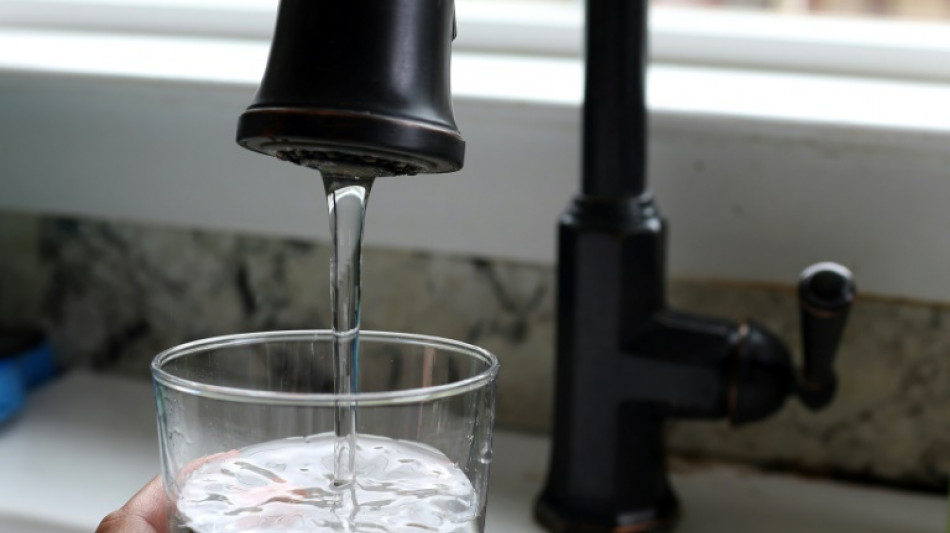
Because PFAS take an extremely long time to break down -- earning them the nickname "forever chemicals" -- over the years they have seeped into the soil and groundwater, getting into our food chain and drinking water in the process.
These chemicals have now been detected virtually everywhere on Earth, from the top of Mount Everest to inside human blood and brains.
- Two biggest culprits -
The two most researched PFAS compounds have already been banned or restricted in many countries, though they remain detectable throughout the environment.
Perfluorooctanoic acid (PFOA), which was once used to make the non-stick cookware coating Teflon, was in December classified as "carcinogenic to humans" by the International Agency for Research on Cancer (IARC).
The World Health Organization agency said there is "sufficient evidence" that PFOA gave animals cancer during experiments, as well as "limited evidence" of renal cell and testicular cancer in humans.
Perfluorooctane sulfonic acid (PFOS) -- once the key ingredient in the Scotchgard fabric protector -- was meanwhile ruled "possibly carcinogenic to humans".
There was limited proof of cancer in animals but "inadequate evidence regarding cancer in humans", the IARC said.
- Other linked diseases -
More broadly, observational studies have suggested that exposure to PFAS chemicals is associated with an increased rate of cancer, obesity, thyroid, liver and kidney disease, higher cholesterol, low birth weight, infertility and even a lower response to vaccines.
But such observational research cannot prove that the chemicals directly cause these health problems.
And the level of risk can vary greatly depending on the level of PFAS people are exposed to -- almost everyone on Earth is believed to have at least a little PFAS in their bodies.
According to the IARC, most at risk for serious PFAS exposure are people who directly work with the chemicals while making products.
- Question of exposure -
Exactly what level of PFAS exposure is hazardous to health has been a matter of debate.
Previously, guidelines in numerous countries ruled that having less than 100 nanogrammes of PFAS per litre of tap water was enough to protect health.
But the United States has proposed lowering the limit to four nanogrammes of PFOA and PFOS per litre -- and the EU is considering following suit.
Last year, a media investigation found PFAS levels over 100 nanogrammes per litre at 2,100 sites across Europe and the UK.
The level soared over 10,000 nanogrammes at 300 of the sites, according to the investigation carried out by 16 newsrooms.
- 'Chemical whack-a-mole' -
Further complicating the ability of research to comprehend the health effects of PFAS is that new compounds are still being developed.
As manufacturers phase out compounds identified as potentially hazardous, they sometimes simply replace it with another member of the PFAS family that has been studied less, researchers have warned.
Harvard environmental researcher Elsie Sunderland has called this process "chemical whack-a-mole".
- Calls for action -
Environmentalists and health experts across the world have been increasingly sounding the alarm about forever chemicals.
On Thursday, French MP Nicolas Thierry will introduce a bill that -- if passed -- would ban non-essential PFAS in France from 2025.
The European Union is also considering a Europe-wide ban on PFAS from as early as 2026.
- What can you do? -
For people at home, it is nearly impossible to avoid consuming miniscule amounts of PFAS.
But experts recommend reducing contact with non-stick cookware and grease-proof food packaging such as fast food wrappers.
Drinking filtered or bottled water and storing leftovers in glass -- not plastic -- containers could also help.
R.Garcia--AT