Performing medical miracles in impoverished Venezuela

 Amaze Holdings (NYSE: AMZE) Executes Binding LOI to Acquire BullionFX | Alchemy, a Decentralized Gold-Backed Financial Ecosystem for Valued at US$155 Million
 Clashes between French teens, police as school blockades intensify

 Stocks move sideways despite oil moving lower
 African leaders to gather in Egypt for business summit
 UK decides against charging foreign visitors for museums

 Dallaglio to sell England World Cup winners' medal

 Brazil come from behind to beat Australia 4-2 in friendly

 Ruthless An retains Asian Games badminton crown as Kunlavut triumphs

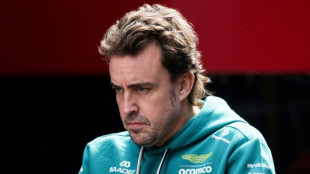 Alonso to stay with F1 team Aston Martin in 2027
 China badminton 'still strong' despite Asian Games slump
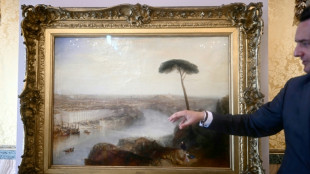 'Exceptional' Turner painting shown in Rome before sale
 European stocks climb as oil dips

 Spain aims to ban evictions until 2030 amid housing protests

 Kunlavut first Thai man to win Asian Games badminton singles gold
 French far right says antisemitism claims part of 'total war' to derail presidency bid
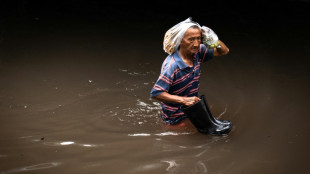
 'Gift from God': Rain brings relief from Indonesia toxic haze
 Ex-world snooker champion jailed for 7 years for child sex crimes
 French teens clash with police as school blockades intensify
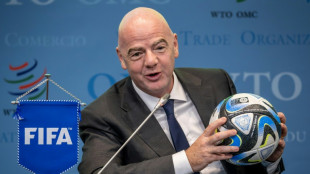 FIFA accuses UEFA of 'misinformation campaign' in bid for World Cup papers

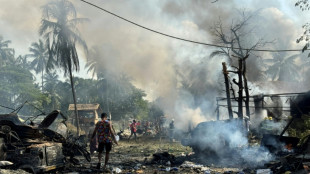 Myanmar airstrike toll hits 50 as families gather dead

 STARTRADER Raises Lloyd's of London Client Fund Insurance to USD 30 Million in Aggregate
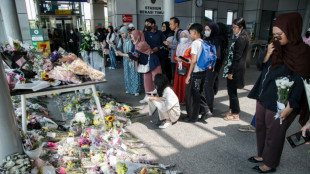
 North Korean DMZ landmine blasts 'violation of armistice': Seoul

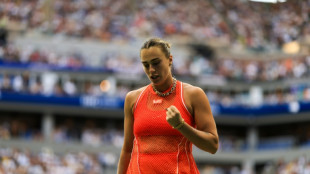 Sabalenka 'fresh' for first tournament since losing No.1 spot

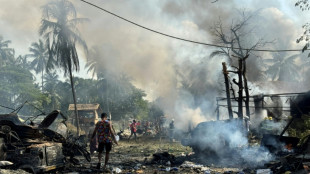 Myanmar airstrike death toll rises to 50: aid workers
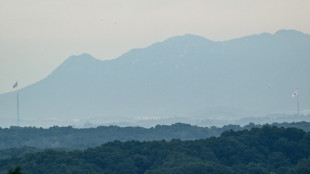 North Korean DMZ landmine blast 'violation of armistice'

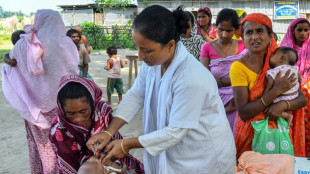
Venezuelan indigenous teenager Lidiana Requena lies on an old, dirty hammock under an awning, her sunken eyes gazing at her newborn baby in the arms of the village nurse.
Unable to reach a rural medical center miles away from the Amazonian village of Chaviripa in Venezuela's southwestern Bolivar state in time, she gave birth on the ground.
The 270 Chaviripa villagers -- including 180 members of the Enepa ethnicity -- live in extreme poverty, marked by a severe lack of medical facilities.
Nurse Carmen Olivo, 40, is used to making do with limited resources and has delivered dozens of babies.
"I barely have a pair of gloves. I don't even have a pair of scissors, I cut the (umbilical) cord with a knife," she said.
"Both the mother and baby could get infected. These aren't the conditions to give birth... There's nothing hygienic, there's no clean water, there's nothing," she added.
"These people are far from everything. They don't even have the resources to leave."
- 'Not a hospital' -
When Requena's contractions began at dawn, Olivo had sent word for a car to take her the nine miles (15 kilometers) to a Maniapure Foundation center that provides health services to rural communities.
But with no telephone or radio in Chaviripa, Olivo had to send a messenger to ask for the car -- which didn't arrive until after the birth.
At the La Milagrosa donation-funded center, Requena was examined by Natalia Vivas, a 24-year-old medical intern studying at the Central University in Caracas.
Speaking to her patient in a mixture of Spanish and the Enepa language, Vivas stitched up the tears caused by the birth.
"It is important to communicate, to tell them it is going to hurt a bit. The women often don't speak Spanish," she said.
Renowned cardiologist Dr. Tomas Sanabria co-founded the foundation with a Swiss-Venezuelan couple 25 years ago.
He said La Milagrosa now "attends to the largest number of patients in the area, but it is not a hospital."
The 74-year-old started coming to the region to camp in the 1960s as student.
"From the first visits we realized the Enepa and Creoles had many needs. They asked us for consultations."
In 1995, he secured funding from an NGO to install a doctor in the area.
"A salary for a rural doctor, a car to move around, a radio. That's all I asked for," he said.
"From the start we understood the importance of being able to communicate: telemedicine."
From only a radio to internet today, Sanabria said medical workers can resolve 90 to 95 percent of issues without a face-to-face visit.
"It is healthcare for everyone at minimal cost."
Once a year the foundation arranges for a group of around 30 specialists to visit the area.
They treat up to 1,800 patients in a matter of days.
- Symbolic contribution -
Every day, 50 to 100 patients visit the center. Some walk hours to get there.
Cristobal Quilelli cycled three hours with his wife and four-year-old daughter -- who was suffering from a fever and cough -- perched on his bicycle.
Occasionally a bus full of people arrives after an hours-long journey.
Domingo Antonio, 69, and Felix Gutierrez, 73, traveled the day before and slept at the center overnight to consult a doctor the next morning.
One had kidney, heart and prostate problems, the other was suffering from joint pains.
At the center's pharmacy, Alvaro Leal gave them free medicines.
"We ask for a symbolic contribution for each consultancy but we don't turn anyone away," said Leal.
France, one of the center's main benefactors, donates 600,000 euros ($674,000) a year to help protect "indigenous populations."
"We have to protect their languages, their customs and... their health," said French ambassador Romain Nadal.
Around 32 percent of patients at the La Milagrosa center are indigenous, said Sanabria.
Over time, the foundation has extended its reach beyond the center, providing medicines, medical supplies, training and internet access to rural pharmacies.
"Here, I cried, I suffered," said Marlene Campos, a nurse in La Urbana, a village on the shores of the Orinoco river.
Thanks to the foundation she can now treat many patients she used to send to a hospital several hours drive away.
"When I arrived, I wanted to leave. Now I feel useful, I've asked to stay another year."
G.P.Martin--AT