Is this the end of the zero-Covid strategy?

 Stocks move lower despite oil prices dropping

 AI driving up innovation investment: UN

 UN Security Council extends Haiti mission by 6 months

 Man Utd do not deserve medals if Man City stripped of titles: Rooney

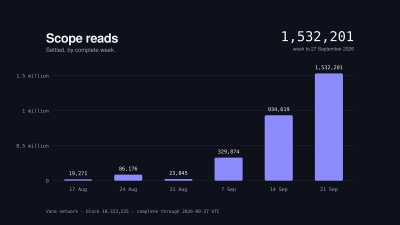 Vana Completes Expanded Staking as Part of the Vega Upgrade, Publishes Expanded VANA Token Economics

 Spain to cap gas price hikes, extend fuel discounts

 'We just need rain': Germany's Rhine river hits new low

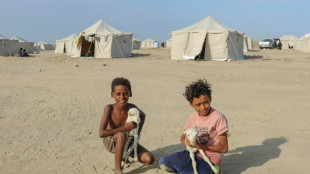 Yemen health system at 'breaking point': WHO

 Ireland undecided on second Israel match: coach

 France's Le Pen defiant after top ally hit by antisemitism claims

 Tom Cruise trades stunts for satire as toxic tycoon 'Digger'

 MEXC Unveils "WE SEE YOU" Brand Visual Refresh, Putting People Behind Every Trade in Focus

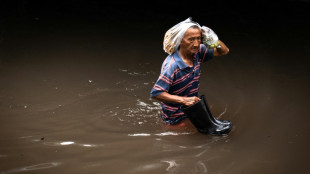 Thai capital cleans up after deadly floods

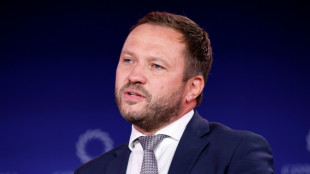 NATO, EU allies rally to Estonia after 'sabotage' blamed on Russia

 Families demand justice for Cameroon's 'nightmare' wave of murdered women

 Tebas says Man City should face 'most severe' sanctions if guilty of rule breaches

 Pochettino calls Man City success 'a period of deception'

 Settler attack on West Bank village injures Israeli forces, drawing rare rebuke

 Mystery over UK airbase scare after reports no explosives found
 Spanish govt races to adopt housing law under protest pressure

 Estonia slams Russian 'sabotage' after arson attack on defence company

 Slovenia sees surge in '.si' sites after Trump hypes 'super intelligence'
 'Like a dream' for An as Games organisers 'sorry' for latest mix-up
 Tokyo suffers longest streak of rainy days on record

 Indonesia charges train driver over crash that killed 16 women

Jenny Leung, who lost her job as a waitress last month due to Hong Kong's zero-Covid strategy, has one question: "What was it all for?"
Her frustration was in response to Hong Kong indicating it could transition towards living with the virus, though the city's leaders have since said it will stick with zero-Covid.
Leung, 29, called it a "half-hearted attempt" after more than two years of "a zero-Covid mindset that really hurt all of us".
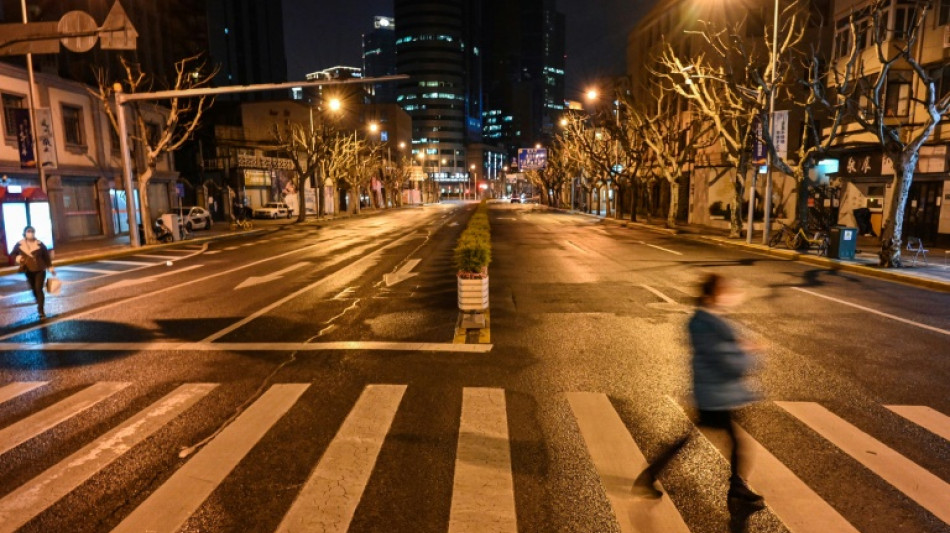
China finds itself increasingly isolated in pursuing the strategy, which uses harsh localised lockdowns to snuff out even a small number of infections, after other early adopters such as Australia and New Zealand abandoned it last year.
A new daily record number of Covid cases in China on Wednesday of more than 20,000 piled further pressure on Beijing's zero-Covid strategy as millions remain locked down in financial centre Shanghai.
Although Hong Kong now insists it will stick with its zero-Covid policy despite easing some restrictions, experts suggest that the strategy's days could be numbered.
Such policies saved lives by fending off worse outbreaks in the early stages of the pandemic, but the availability of vaccines -- and the emergence of the more contagious but less severe Omicron variant -- have since changed the equation.
"The extent you need to go to block transmission is so high and the added gain you have for health becomes much, much smaller," Sharon Lewin, director of the Peter Doherty Institute for Infection and Immunity at the University of Melbourne, told AFP.
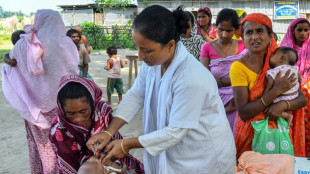
But the risk-benefit ratio may be different for China and Hong Kong, where vaccination rates have been falling behind, particularly among the vulnerable elderly.
China revealed last month that only around half of its population over 80 years old had been fully vaccinated.
- Vaccination struggles -
And since Omicron arrived in December, the vast majority of Hong Kong's around 8,000 deaths have been elderly, unvaccinated people.
Andrew Lee, professor of public health at the University of Sheffield, warned that if vaccination coverage is "inadequate, as was the case in Hong Kong, loosening (China's) zero-Covid policy could lead to a lot of deaths".
He said another problem was that China uses the homegrown Sinovac and Sinopharm vaccines, "both of which are not nearly as efficacious as the Pfizer, Moderna vaccines used in the West".
Ben Cowling, professor of epidemiology at the University of Hong Kong, said his research had shown that vaccine hesitancy increased in Hong Kong among over 65s last year.
One of the most common reasons for hesitancy was "doubt over the benefits of vaccination, particularly in the context of a zero-Covid strategy," he told AFP.
This was a problem faced by other countries that pursued the strategy: how do you convince a population to get vaccinated against a disease when there are zero cases nearby?
Lewin said Australia's vaccination campaign only really "took off" once the Delta variant arrived in June 2021. "You have to have some Covid for vaccination uptake to be really high."
Australia only lifted its strict measures late last year when around 80 percent of the population had received two vaccine doses.
That kind of carrot -- the end of zero-Covid measures if vaccination targets are met -- has not been offered by China or Hong Kong.
Anant Deboor, a Hong Konger who works in strategic marketing, spent time in Portugal last year and marvelled at how the country communicated about moving towards living with the virus.
- What about next time? -
"We have had a bureaucratic, rules-obsessed leadership with a lack of foresight and amateurish communication loaded with threats and prosecution," he told AFP.
Another disadvantage for zero-Covid strategies is a lack of natural immunity, which is gained by people recovering from the virus.
Lewin pointed to South Africa, where only 35 percent of the population is vaccinated -- but she said prior infections could be as high as 80 percent.
However, that level of natural immunity comes with a price: South Africa has recorded more than 100,000 deaths compared to 13,600 in China despite having a fraction of its population.
Looking forward to the next potential pandemic, Cowling said we would likely "revisit the possibility of attempting temporary containment of a new pathogen" until vaccines become available.
Lewin said that locking down quickly would be critical in such a situation, but that relied on "the free exchange of information" from the country where the new threat emerges.
It is also vital that countries significantly invest in public health systems, something that has still not happened in many hard-hit countries like the United States, she said.
Lee simply warned not to get too complacent -- a new, more severe Covid variant is still "a very real possibility".
L.Adams--AT