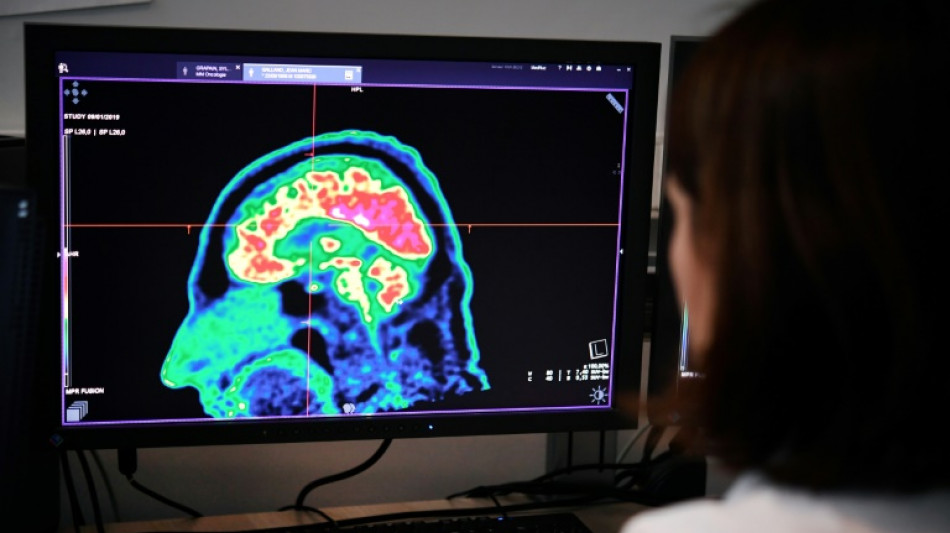
First child cured of rare brain tumour 'offers real hope' / Photo: Fred TANNEAU - AFP/File

 Energy costs spark inflation surges in France, Italy
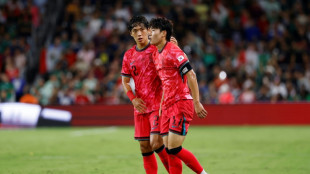
 South Korea break China hearts to reach Asian Games football final
 Eala storms into Asian Games semi-finals to thrill adoring fans

 Turkey freezes ex-minister's assets as fund crisis grows

 What we know about the North Korean POW dispute
 Most equities rise after oil price plunge, US data in focus
 Polar oceans transformed as warming melts ice habitats: research

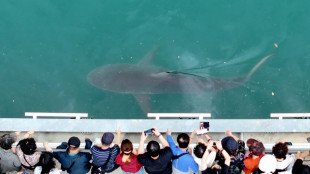 Lost shark becomes viral star in South Korea
 Dangote to launch $16bn refinery in Kenya
 North Korean leader 'extremely obese': Seoul spy agency
 Yankees and pope-backed White Sox start MLB playoffs with wins

 Malaysia's ex-PM Mahathir in hospital for observation

 'No limits': Marathon world record holder Sawe chasing history

 Countdown begins to biggest-ever Rugby World Cup

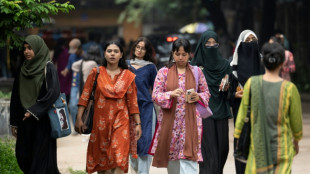 Bangladesh women lose ground after quota reform

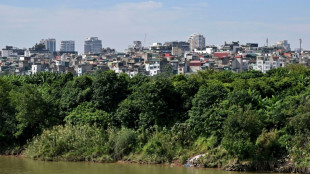 Vietnam admits 'differing opinions' on Hanoi development
 Stocks temper gains as oil pares heavy losses, US data in focus
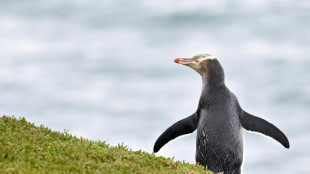 New Zealand denies breaching climate commitments to EU
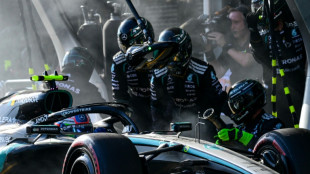
 Albert becomes youngest US scorer in 4-2 win over Chile
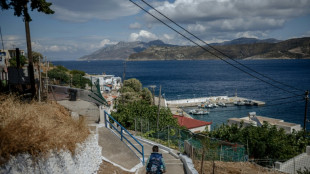 Pirate island's plunging population shows Greece's demographic decline

 With elections ahead, Latvia's Russian-speakers reject Moscow's help

 Brazil football clubs face massive sponsorship blow from betting ban
 ChatGPT maker wants to be the App Store for AI as safety concerns grow

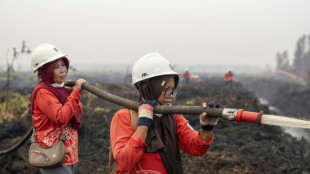 Women fight fires and sexism in Indonesian Borneo

 Forsling's OT blast lifts Florida over Carolina in NHL opener

When Lucas was diagnosed with a rare type of brain tumour at the age of six, there was no doubting the prognosis.
French doctor Jacques Grill gets emotional when he remembers having to tell Lucas's parents that their son was going to die,
However, seven years later, Lucas is now 13 years old and there is no trace of the tumour left.
The Belgian boy is the first child in the world to have been cured of brainstem glioma, a particularly brutal cancer, according to the researchers who treated him.
"Lucas beat all the odds" to survive, said Grill, head of the brain tumour programme at the Gustave Roussy cancer centre in Paris.
The tumour, which has the full name diffuse intrinsic pontine glioma (DIPG), is diagnosed every year in around 300 children in the United States, and up to 100 in France.
Ahead of International Childhood Cancer Day on Thursday, the medical community has praised advances that mean 85 percent of children now survive more than five years after being diagnosed with cancer.
But the outlook for children with the DIPG tumour remains grim -- most do not live a year beyond diagnosis. A recent study found that only 10 percent were alive two years on.
Radiotherapy can sometimes slow the rapid march of the aggressive tumour, but no drug has been shown to be effective against it.
- 'No other case like him' -
Lucas and his family travelled from Belgium to France so that he could become one of the first patients to join the BIOMEDE trial which tests potential new drugs for DIPG.
From the start, Lucas responded strongly to the cancer drug everolimus, which he was randomly assigned.
"Over a series of MRI scans, I watched as the tumour completely disappeared," Grill told AFP.
But the doctor did not dare stop the treatment regimen -- at least until a year and a half ago, when Lucas revealed he was no longer taking the drugs anyways.
"I don't know of any other case like him in the world," Grill said.
Exactly why Lucas so fully recovered, and how his case could help other children like him in the future, remains to be seen.
Seven other children in the trial survived years after being diagnosed, but only Lucas's tumour completely vanished.
The reason these children responded to the drugs, while others did not, was likely due to the "biological particularities" of their individual tumours, Grill said.
"Lucas's tumour had an extremely rare mutation which we believe made its cells far more sensitive to the drug," he added.
- Reproducing Lucas -
The researchers are studying the genetic abnormalities of patients' tumours as well as creating tumour "organoids," which are masses of cells produced in the lab.
"Lucas's case offers real hope," said Marie-Anne Debily, a researcher supervising the lab work.
"We will try to reproduce in vitro the differences that we have identified in his cells," she told AFP.
The team want to reproduce his genetic differences in the organoids to see if the tumour can then be killed off as effectively as it was in Lucas.
If that works, the "next step will be to find a drug that has the same effect on tumour cells as these cellular changes," Debily said.
While the researchers are excited about this new lead, they warned that any possible treatment is still a long way off.
"On average, it takes 10-15 years from the first lead to become a drug -- it's a long and drawn-out process," Grill said.
David Ziegler, a paediatric oncologist at Sydney Children's Hospital in Australia, said that the landscape for DIPG has dramatically changed over the last decade.
Breakthroughs in the lab, increased funding and trials such as BIOMEDE make "me convinced that we will soon find that we are able to cure some patients," Ziegler told AFP.
A.Clark--AT