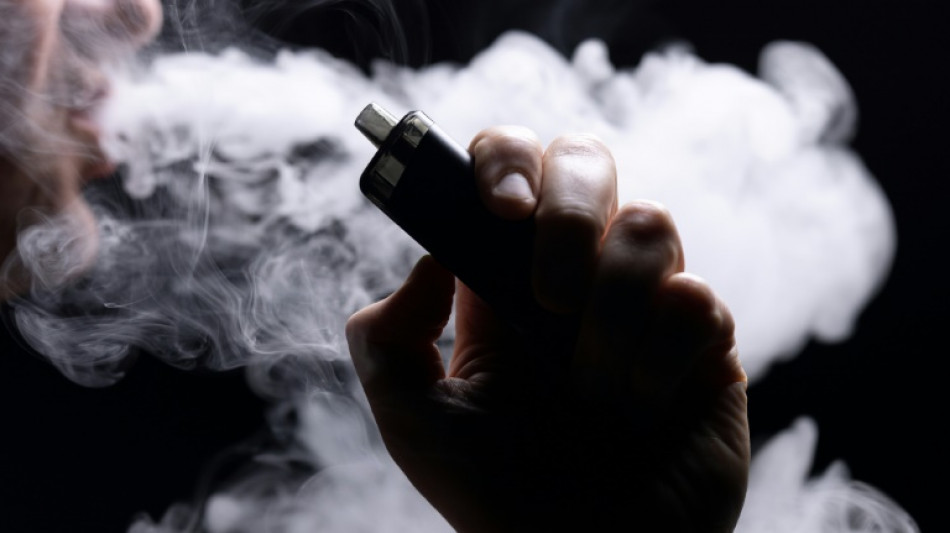
Vaping: lighting up, stubbing out / Photo: JOEL SAGET - AFP

 In Manchester, people say City scandal is 'shame for football'
 Stocks lacklustre as inflation data weighs on sentiment

 Israel-bound plane rerouted, pilots wounded in reported fight

 Truth commission on Sweden's Sami people seeks redress

 Energy costs spark inflation surges in France, Italy

 South Korea break China hearts to reach Asian Games football final

 Eala storms into Asian Games semi-finals to thrill adoring fans
 Turkey freezes ex-minister's assets as fund crisis grows

 What we know about the North Korean POW dispute

 Most equities rise after oil price plunge, US data in focus

 Polar oceans transformed as warming melts ice habitats: research

 Lost shark becomes viral star in South Korea

 Dangote to launch $16bn refinery in Kenya

 North Korean leader 'extremely obese': Seoul spy agency

 Yankees and pope-backed White Sox start MLB playoffs with wins

 Malaysia's ex-PM Mahathir in hospital for observation

 'No limits': Marathon world record holder Sawe chasing history

 Countdown begins to biggest-ever Rugby World Cup

 Bangladesh women lose ground after quota reform

 Vietnam admits 'differing opinions' on Hanoi development

 Stocks temper gains as oil pares heavy losses, US data in focus

 New Zealand denies breaching climate commitments to EU

 Albert becomes youngest US scorer in 4-2 win over Chile
 Pirate island's plunging population shows Greece's demographic decline
 With elections ahead, Latvia's Russian-speakers reject Moscow's help

Two decades after they first appeared, e-cigarettes have been widely credited with helping people quit smoking.
But concerns are growing over the risk of teens becoming hooked on nicotine through candy-coloured disposable vapes, with flavours such as chocolate and bubblegum.
AFP looks back at the highs and lows of the vaping vogue:
- Born in China -
In 2003, Chinese pharmacist Hon Lik, a heavy smoker hoping to kick the habit, develops the first electronic alternative to cigarettes.
A year later, the firm he works for brings out the first e-cigarettes, called Ruyan ("like smoke").
The birth of vaping comes in the year that Ireland bans smoking in workplaces, including pubs and restaurants, sparking a global clampdown on smoking indoors.
E-cigarettes arrive on the EU market in 2006 and a year later in the United States.
- Early doubts -
Many doctors welcome the devices, which are tar-free, as a potential life-saver in the fight against cancer, heart disease, strokes and other diseases caused by the toxins in traditional cigarettes.
But the UN health agency, the World Health Organization, is sceptical about their benefits.
"As far as WHO is aware, no rigorous, peer-reviewed studies have been conducted showing that the electronic cigarette is a safe and effective nicotine replacement therapy," it says in 2008.
From the mid-2010s on, there are growing reports of the dangers of teens inhaling vapour containing nicotine, which can harm the developing adolescent brain.
More than 30 countries, including Argentina, Brazil, Egypt, Ethiopia, India, Iran, Iraq, Mexico, North Korea and Singapore ban the sale of e-cigarettes.
- Enters the dictionary –
In 2014, "vape" is designated word of the year by the Oxford University Press and enters the dictionary.
The habit takes off in the US, Europe and parts of Asia.
The number of users shoots up from around seven million in 2011, according to Euromonitor market research group, to 82 million a decade later, according to the US NGO Global State of Tobacco Harm Reduction.
- Deadly lung illness -
In 2019-2020, the US is at the centre of a health crisis tied to vaping, with at least 68 people dying and over 2,800 others falling sick with an acute lung illness linked to vaping products containing cannabis.
In February 2020, the US Food and Drug Administration bans the sale of many flavoured e-cigarettes, with the exception of tobacco and menthol flavours.
US e-cigarette giant Juul is hit with a string of lawsuits accusing it of glamourising vaping among young people with flavours such as creme brulee and of lying about how addictive it is.
In 2022, the company agrees to pay $462 million (425 million euros) to settle cases across the US, leaving it nearly bankrupt.
- Growing bans -
In 2023, Western countries go to war against teen vaping.
New Zealand in August bans e-cigarettes that do not have a removable or replaceable battery -- a way of targeting disposable vapes -- and bars manufacturers from using enticing flavour names.
On November 28, Australia announces it will ban imports of disposable vapes from January 1, 2024.
Late on Monday, French MPs back a proposal to ban single-use electronic cigarettes, amid warnings they could act as a gateway to smoking. The legislation still needs backing from France's upper house Senate and clearance from the EU Commission.
Britain, Germany and Ireland are considering similar moves.
R.Chavez--AT