Scar tissue: Treating war's marks on Ukrainians / Photo: Roman PILIPEY - AFP

 Europe's surging inflation spreads gloom in stock markets
 Truth commission demands compensation for Sweden's Sami people
 Japan win marathon penalty shootout to set up South Korea gold-medal clash

 Djokovic grinds out opening-round win at China Open

 Northern Ireland police probe blockade of disputed parade
 UK PM Burnham reopens divisive debate on rejoining EU
 Man City future in doubt after guilty verdict
 'Do something,' begs Iranian woman after death sentence over protests
 China extends 52-year unbeaten record as Games organisers say sorry
 In Manchester, people say City scandal is 'shame for football'
 Stocks lacklustre as inflation data weighs on sentiment
 Israel-bound plane rerouted, pilots wounded in reported fight
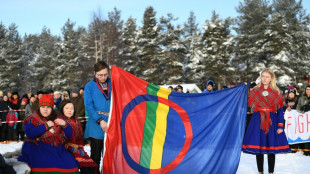 Truth commission on Sweden's Sami people seeks redress
 Energy costs spark inflation surges in France, Italy
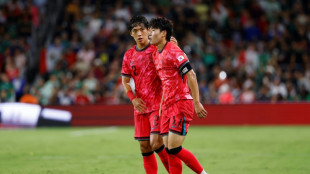 South Korea break China hearts to reach Asian Games football final
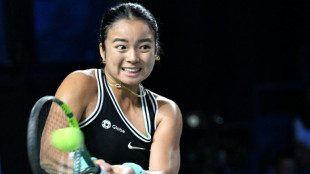 Eala storms into Asian Games semi-finals to thrill adoring fans

 Turkey freezes ex-minister's assets as fund crisis grows

 What we know about the North Korean POW dispute
 Most equities rise after oil price plunge, US data in focus
 Polar oceans transformed as warming melts ice habitats: research
 Lost shark becomes viral star in South Korea
 Dangote to launch $16bn refinery in Kenya
 North Korean leader 'extremely obese': Seoul spy agency
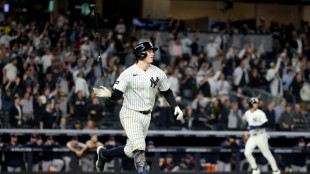 Yankees and pope-backed White Sox start MLB playoffs with wins
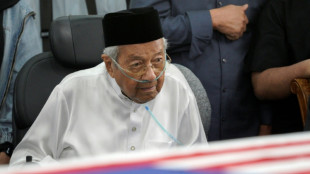 Malaysia's ex-PM Mahathir in hospital for observation
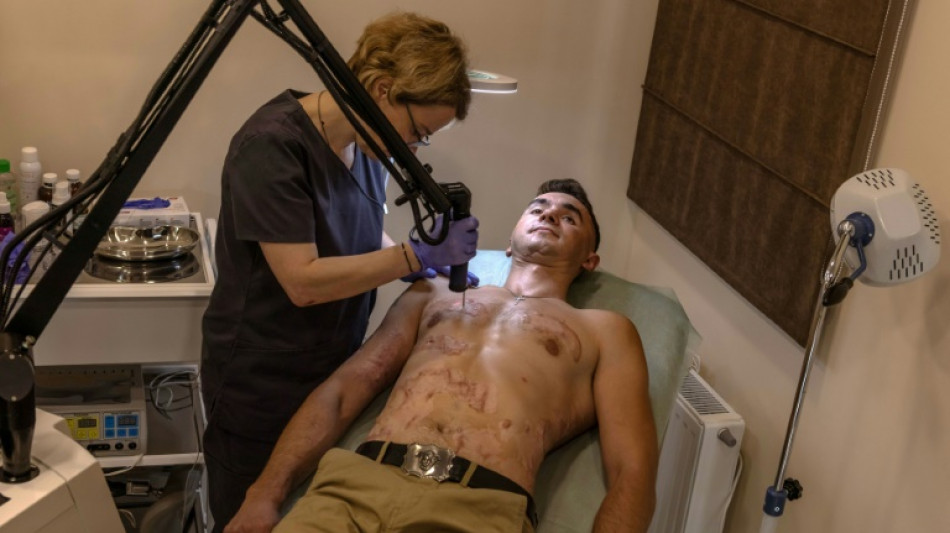
A laser beam moved slowly over Sergiy Pryshchepa's chest and stomach, treating numerous scars from burns he suffered when his car ran over an anti-tank mine close to Kyiv.
The 34-year-old comes regularly to this private clinic in the Ukrainian capital for a programme offering free treatment for civilians and military personnel with severe burns and scarring received in the war.
Soon after Russia invaded Ukraine in February 2022, Pryshchepa left Kyiv with his wife and 10-year-old son and went to a village 100 kilometers (60 miles) to the north.
But the area came under attack and on March 14, the family decided to flee again. On the way, their car was blown up by an anti-tank mine.
"The explosion was on my wife's side, and she took the blow on herself. Our son was in the back, he was covered by the seat and was not wounded," but he "suffers from psychological trauma", said the commercial director of a company that makes lifts.
"The first thing I asked at the hospital was 'How did I not lose my head?'," he said, showing a picture of his car, which was completely charred and torn apart.
Sixteen months later, he had skin grafts from his legs and several operations on his jaw and one hand.
Now he attends the Shupeniuk clinic in Kyiv, which is one of 19 across the country offering the free treatment.
"Before giving laser treatment, we use certain medications that soften the rough scar tissue... First injections, then laser resurfacing, and thanks to this (scars) become less thick, lighter, less rough", said Kateryna Bezvershenko, the dermatologist treating Pryshchepa.
"Half of our patients are civilians, and not only from the Kyiv region... There is a man who has just been hit by a drone in his apartment. His mother died. He survived but he is badly burned," she added.
- 'Hands were burning' -
The dermatologist was also treating 35-year-old Feliks Rasko, a volunteer who joined the military at the start of the conflict.
His hands were seriously burnt in October in the eastern war zone, when the building where he slept was struck by Russians.
He said he realised his hands were "burning".
"I woke up from a strong blow and everything around was burning, the walls were on fire," he recounted.
He has also had operations and skin grafts from a leg.
After the latest laser session on his scars, streams of blood run down his fingers.
"If you compare this to the treatments I had at the beginning... it's now like a mosquito bite," he said. His hands, however, "constantly itch".
- 'Lucky to be treated' -
"I have been very lucky, starting from the moment when those missiles flew at us and lucky that I am treated like this. Not everyone is treated like this," he said.
"Even for the ointments they give me, I don't pay anything. Everything is free and it really helps me," he added, expressing gratitude as a single laser treatment session usually costs hundreds of dollars.
The project was conceived at the start of the Russian invasion and launched last summer.
It is financed by private donations in partnership with the Ukrainian health ministry and has treated around 150 people.
Bezvershenko has already treated around a dozen war victims since joining the project, saying she is helping them "with great joy".
"It's very important to me because I am a medical doctor and I do not take part in military operations. I have felt a great need to help our military and people who have been affected by the war," she said.
"I don't get anything out of this except inner satisfaction and the joy of being able to help people because I see such stories."
J.Gomez--AT