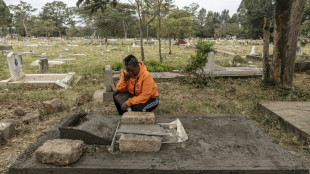
China should eventually 'co-exist' with Covid: top scientist

 Amaze Holdings (NYSE: AMZE) Executes Binding LOI to Acquire BullionFX | Alchemy, a Decentralized Gold-Backed Financial Ecosystem for Valued at US$155 Million
 Clashes between French teens, police as school blockades intensify

 Stocks move sideways despite oil moving lower

 African leaders to gather in Egypt for business summit

 UK decides against charging foreign visitors for museums

 Dallaglio to sell England World Cup winners' medal

 Brazil come from behind to beat Australia 4-2 in friendly

 Ruthless An retains Asian Games badminton crown as Kunlavut triumphs

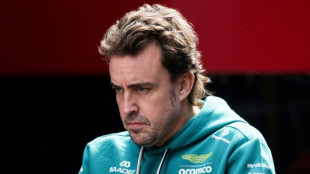 Alonso to stay with F1 team Aston Martin in 2027

 China badminton 'still strong' despite Asian Games slump

 'Exceptional' Turner painting shown in Rome before sale

 European stocks climb as oil dips

 Spain aims to ban evictions until 2030 amid housing protests

 Kunlavut first Thai man to win Asian Games badminton singles gold

 French far right says antisemitism claims part of 'total war' to derail presidency bid

 'Gift from God': Rain brings relief from Indonesia toxic haze

 Ex-world snooker champion jailed for 7 years for child sex crimes

 French teens clash with police as school blockades intensify

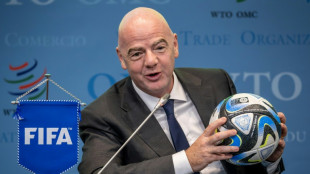 FIFA accuses UEFA of 'misinformation campaign' in bid for World Cup papers

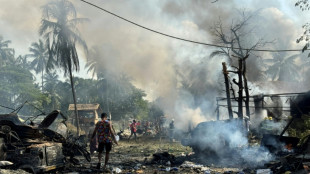 Myanmar airstrike toll hits 50 as families gather dead
 STARTRADER Raises Lloyd's of London Client Fund Insurance to USD 30 Million in Aggregate
 North Korean DMZ landmine blasts 'violation of armistice': Seoul

 Sabalenka 'fresh' for first tournament since losing No.1 spot

 Myanmar airstrike death toll rises to 50: aid workers

 North Korean DMZ landmine blast 'violation of armistice'

China should aim to co-exist with the virus and could move away from its zero-Covid strategy "in the near future," a top Chinese scientist said in a possible sign that the country's leadership is rethinking its strict approach.
The country where the coronavirus was first detected in 2019 is now one of the last places still clinging to a zero-tolerance approach, responding to small outbreaks with snap lockdowns and cutting off most international travel.
But fatigue over disruptions to everyday life as well as semi-autonomous Hong Kong's struggle to contain a mass Omicron outbreak have raised questions about the sustainability of Beijing's approach.
China's strategy against Covid-19 cannot "remain unchanged forever" and "it is the long-term goal of humanity to co-exist with the virus" at tolerable death and illness rates, Zeng Guang wrote on social media platform Weibo on Monday.
Zeng is the former chief scientist of China's Center for Disease Control and Prevention and one of the experts behind the country's initial Covid response.
Zeng said that while China's approach had prevented the early chaos of widespread infection experienced by many Western countries, its low infection rate was now a "soft spot" as far fewer people had built up natural immunity.
He said Western countries were now showing "commendable courage" in exploring how to live with the virus and that China should "observe and learn" even though there was still "no need to open the country's doors at the peak of the global pandemic".
"In the near future, at the right time, the roadmap for Chinese-style co-existence with the virus should be presented," Zeng said.
His comments are unusual for an official in China's government, which has touted its low infection rates to the Chinese public as a sign of the superiority of its approach.
Experts who previously questioned "zero Covid" have faced a backlash, including prominent scientist Zhang Wenhong who was attacked by online trolls and probed for plagiarism after a similar Weibo post in July.
Zeng's post did not appear to make as much of a splash online, attracting only a few thousand responses on a platform where trending topics normally engage millions of users.
His comments come after authorities said in February that they would crack down on "excessive" Covid-19 measures by local governments, including arbitrary quarantines and business shutdowns.
The problems associated with a zero-Covid approach have been laid bare in Hong Kong, which is in the midst of its worst outbreak yet and has seen panic buying following mixed messaging from the government over whether it would impose strict mainland-style measures.
Authorities plan to test all 7.4 million residents this month and isolate all infections either at home or in a series of camps that are still being constructed with mainland help.
But experts from the University of Hong Kong published new modelling data on Tuesday which estimated the current number of infections at 1.7 million and suggested delaying mass testing to avoid overwhelming the financial hub's ability to isolate and care for those infected.
Th.Gonzalez--AT