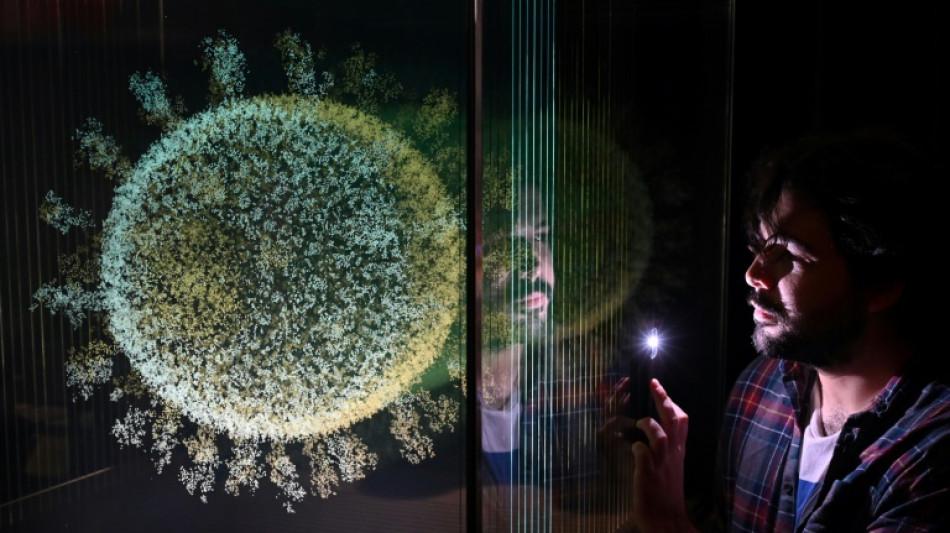
Crabs and tea cups: UK show lifts the lid on Covid vaccine race / Photo: JUSTIN TALLIS - AFP

 Dangote to launch $16bn refinery in Kenya
 North Korean leader 'extremely obese': Seoul spy agency

 Yankees and pope-backed White Sox start MLB playoffs with wins
 Malaysia's ex-PM Mahathir in hospital for observation

 'No limits': Marathon world record holder Sawe chasing history
 Countdown begins to biggest-ever Rugby World Cup

 Bangladesh women lose ground after quota reform

 Vietnam admits 'differing opinions' on Hanoi development
 Stocks temper gains as oil pares heavy losses, US data in focus

 New Zealand denies breaching climate commitments to EU
 Albert becomes youngest US scorer in 4-2 win over Chile
 Pirate island's plunging population shows Greece's demographic decline
 With elections ahead, Latvia's Russian-speakers reject Moscow's help

 Brazil football clubs face massive sponsorship blow from betting ban
 ChatGPT maker wants to be the App Store for AI as safety concerns grow

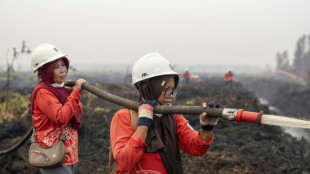 Women fight fires and sexism in Indonesian Borneo

 Forsling's OT blast lifts Florida over Carolina in NHL opener
 Alpha Growth Management Opens Rep Office in Japan
 NBA close to picking new $12-13bn Vegas team owners: report

 LA28 Olympics torch relay to visit all 50 states
 Spain brush aside Croatia in Nations League, England down Czechs
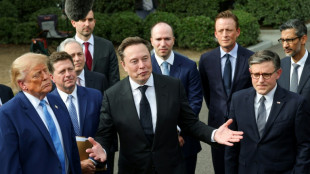 Trump hails 'morally binding' AI self-regulation pledge
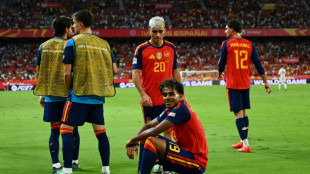 Yamal inspires Spain to Croatia romp on World Cup homecoming

 UN to hold fourth informal poll of secretary-general candidates
 Who are the Emiratis behind crisis-hit Manchester City?

From a scientist's laptop to the syringe used to inject the UK's first Covid vaccine dose, an exhibition that opened Wednesday in London recounts the quest to produce a coronavirus jab through objects.
The "Injecting Hope" show at the Science Museum "explores the worldwide effort to develop vaccines at pandemic speed", looking at key moments in their design, trial, manufacture and rollout, says deputy director Julia Knights.
Items on display include artworks, notes taken by UK vaccine chief Kate Bingham during early meetings to decide the country's strategy, and the syringe used to administer its first dose.
Machines used to manufacture the vaccine are also on show along with personal artefacts of those at the heart of the battle to beat the virus.
They include the laptop and mug that Teresa Lambe, co-developer of the Oxford University/AstraZeneca vaccine, relied upon during a weekend of intense work to calculate what its chemical composition should be.
"Once they had an understanding of the genetic make-up of this new virus, she essentially sat at home, on her laptop, in her pyjamas, drinking lots of cups of tea, designing a vaccine," explained exhibition curator Stewart Emmens.
"We have a laptop, we have a mug and we have a T-shirt on display here. It's nice, in amongst all the science, to really drive it home that there are people behind this, just normal people doing their jobs."
The museum began collecting objects related to Covid in February 2020 as "objects associated with epidemics and pandemics are largely missing from historic collections", said Emmens.
- 'Crucial' crabs -
The first section features news footage of lockdowns and images of deserted capital cities, empty shelves, at-home schoolchildren and food delivery apps, taking visitors back to the pre-vaccine world.
After exploring the development and testing of the products, visitors then get a glimpse into the unprecedented plans to administer the vaccine to Britain's 67 million citizens.
Along with Bingham's scribbled notes are maps integral to the UK's successful rollout.
"When we collected these, they were just plastered on the walls of NHS headquarters," explained Emmens.
"Most people would think... vaccinating countries would be a very much a digital project, very much a big data, number-crunching exercise.
"But here we have these physical maps, which were used quite early to work out where best to place vaccine centres."
He also hopes that the show will reassure those nervous about taking the vaccine due to its speedy arrival on the market.
"Nothing focuses the mind like a global pandemic," said Emmens.
"The vaccines were following the same processes of approval, and trialing and testing as would normally be the case," he said.
"But very cleverly, things were streamlined, overlapped in a way that gave the same results as you would get normally, without cutting corners."
Sitting incongruously among the gleaming machines are also a collection of crabs.
"We do have some examples of horseshoe crabs within the exhibition, which many visitors will be very surprised by," said Emmens.
The blood from the horseshoe crabs is highly sensitive to bacterial contamination, and is used to make sure the vaccine and the vials that carry it are clean, he explained.
"So they've played a... crucial if unlikely role in the vaccine story."
E.Rodriguez--AT