
New Sandra Day O'Connor Institute Report: When Students Self-Censor in Civics Class, 91% are Worried About Classmates

 Qatar Chamber and Maltese envoy consider business forum
 Spanish PM denies being blackmailed by Morocco

 Doha Islamic finance forum names AlRayan firms as co-lead partners

 Leeds thrash Newcastle to go third in the Premier League

 Zelensky says Ukraine ready for 'de-escalatory steps'

 In-form Malen fires Roma to Serie A summit, Inter on their heels
 Lebanese agency reports Israeli shelling and gunfire in south
 Expert proposes phased digital reform for Arab business schools
 Trump rejects 'hoax' warnings that AI could destroy humanity

 Houthis say Saudi Arabia hits Yemen with 54 strikes after attack on bases

 Why the far right is losing ground in Sweden
 Ex-Ireland fly-half O'Gara extends deal as La Rochelle coach

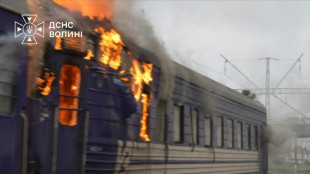 Russian attacks on Ukraine railways escalating every week: rail CEO to AFP
 France, Iraq deepen energy, defence ties during Zaidi visit
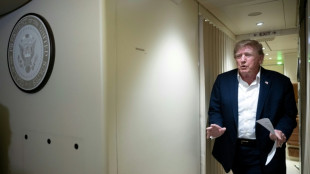 Trump says Ukraine, Russia agree not to hit energy targets

 Nigeria's Dangote refinery launches continent's biggest IPO

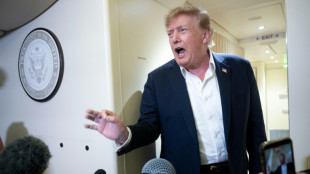 Trump blasts 'sick conspiracy' against AI as warnings mount

 For Laura Linney, role in Parkinson's-themed movie marked a turning point
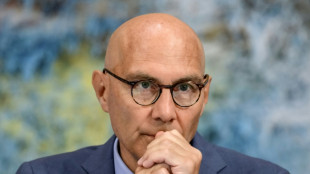
 Doctors face life sentence over Greek pop star's death

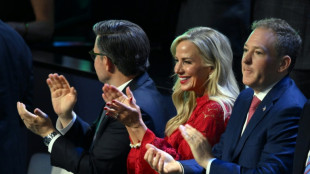 Trump moves to axe power plant climate rules

 Slow the AI race? Investors weigh the potential cost

 Philippine Muslim enclave votes for parliament after deadly shooting

 Germany seeks guarantees from Italy's UniCredit over Commerzbank takeover

 Liverpool will have to accept 'ups and downs', says Iraola

 Inaugural Ultimate a hit with the athletes, says Coe

Fellow students were named as a concern more than twice as often as teachers
PHOENIX, AZ / ACCESS Newswire / September 14, 2026 / When students decide to self-censor in civics class, they are most worried about the reactions of classmates, according to a new public policy research brief from the Sandra Day O'Connor Institute.
Among surveyed recent high school graduates who said they had self-censored in civics class, 91 percent cited classmates as a concern. Forty-one percent cited the teacher.
That finding is at the center of Why Are Students Self-Censoring in Civics Class?, which examines when students choose not to speak and how schools can make productive disagreement easier to practice.
The brief draws on a summer 2026 national survey of recent high school graduates. Fifty-eight percent said they had held back from sharing a political or civic opinion in class because they were concerned about how others might react.
The findings include:
- Classmates were by far the most commonly cited concern. Among respondents who had self-censored, 91 percent cited their fellow classmates, compared with 41 percent who cited the teacher. Twenty-six percent worried about being discussed or posted about on social media, 21 percent about impacting their grade, and 12 percent about parents or other adults hearing about their views.
- Students stayed silent even when they generally felt comfortable speaking. Seventy-three percent of respondents described themselves as generally comfortable sharing their honest views, yet 51 percent of those students had still self-censored at least once.
- Teachers set the tone. Fifty-three percent said they had sometimes or often seen a teacher avoid, cut short or shut down discussion of a political or current-events issue. Students who had held back from speaking were also less likely to describe their classroom as a safe place to disagree.
- Students wanted more opportunities for serious discussion, not fewer. Respondents asked for more discussion and debate, more attention to current events, and more chances to practice civic participation firsthand.
The report follows the Institute's 2025 study of civics teachers, Why Are Teachers Uncomfortable Teaching Civics?, in which nearly 80 percent of surveyed educators said they had self-censored or avoided certain topics because they feared pushback or controversy. Together, the two surveys suggest a classroom in which teachers and students both assess the risks of a difficult discussion.
"Civic education is not only about knowing how government works. Students also need to practice civil discourse, making an argument, hearing a competing one and remaining in the conversation when they disagree," said Philip L. Francis, co-chair of the O'Connor Institute's Board of Directors. "This report points to the culture of the classroom, and to how students treat one another, as an important part of that work."
The brief recommends treating constructive disagreement as a civic skill to be deliberately developed. Among its proposals: make respectful peer norms visible by surveying students anonymously and sharing the results; use assigned positions and anonymous opening responses to lower the initial social stakes; set a clear expectation that classmates' remarks are not recorded or circulated out of context; prepare teachers to recognize and manage peer dynamics, not only discussion technique; and pair civic knowledge with repeated chances to discuss, debate, simulate and observe government at work.
To read Why Are Students Self-Censoring in Civics Class?, visit oconnorinstitute.org/research2026.
About The Sandra Day O'Connor Institute
Founded in 2009 by retired Supreme Court Justice Sandra Day O'Connor, the O'Connor Institute, a nonprofit, nonpartisan 501(c)(3), continues her distinguished legacy and lifetime work to advance American democracy through multigenerational civics education, civil discourse, and civic engagement. Visit OConnorInstitute.org to learn more.
Contact: Meg Lewis, Communications Manager, [email protected]
SOURCE: Sandra Day O'Connor Institute
View the original press release on ACCESS Newswire
M.O.Allen--AT